So, you want to know how to travel South America, eh? Well, you’re in the right place!
I’ve spent many months traversing this incredible continent, and can tell you first-hand that backpacking through South America is like learning to ride a bike without the training wheels. There is just the right amount of danger and curve balls to keep you alert, focused, and totally stoked on life.
With the exception of a handful of backpacker hotspots, South America is an authentic, raw continent to travel through. You will encounter entirely different ways of life, ancient traditions as well as the surreal landscapes of the Andes and the Amazon. Oh, it is also a land of crazy parties, epic surfing, sprawling cities and some of the best food in the world.
This heart-shaped continent is the full package, even if you will have to forgive its quirks like ‘South America time’, buses that turn up when they feel like it etc. it makes for a budget backpacker friendly, diverse and relatively safe adventure.
But South America is MASSIVE. Deciding where to go and how to travel South America is a mind-boggling task. That’s where I come in, amigos. This South America travel guide will provide you with EVERYTHING you need to know to prepare for your trip through South America.
Here’s the full low-down on how to backpack South America including routes, country profiles, tips and tricks for South America budget travel, and much more.
Lace up your bootstraps and prepare to have your travel inspiration skyrocket. We’re going on an adventure!
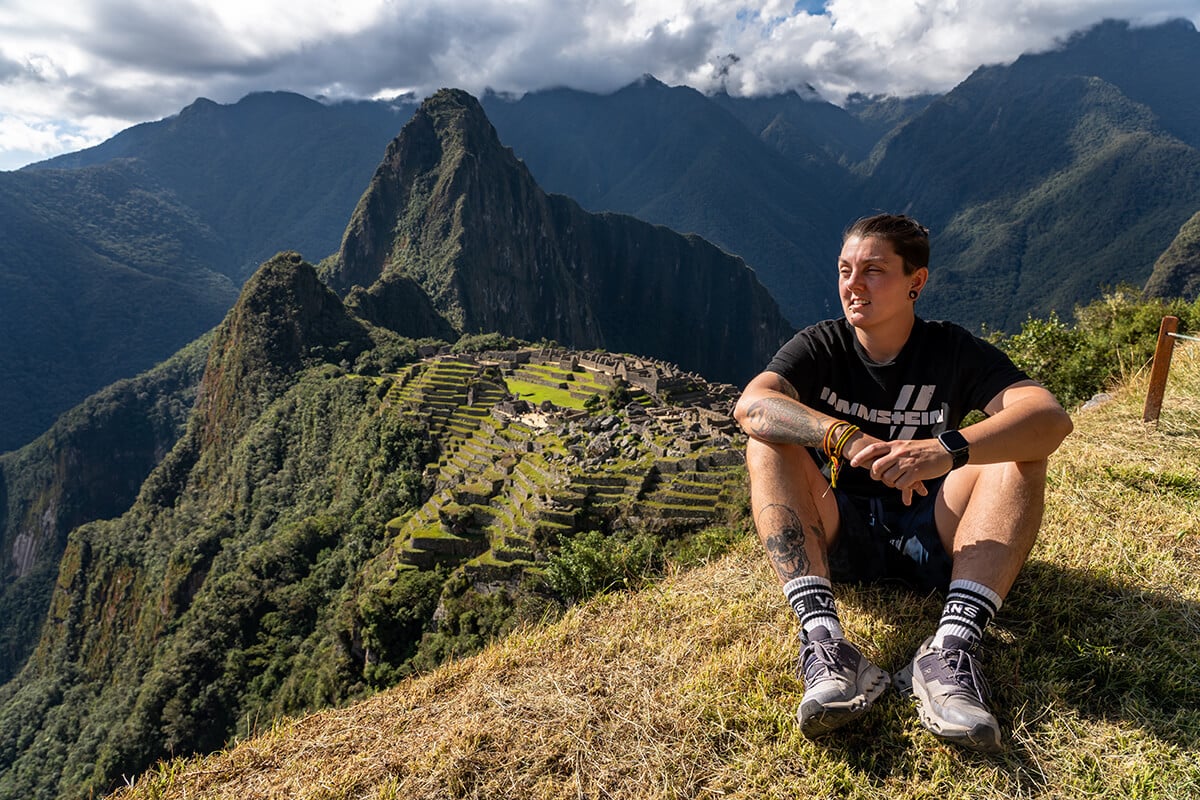
Image: Nic Hilditch-Short
The Broke Backpacker is supported by you. Clicking through our links may earn us a small affiliate commission, and that's what allows us to keep producing free content 🙂 Learn more.
- South America in 60 Seconds
- Is South America Still Worth Backpacking?
- Backpacking South America: Routes and Itineraries
- The ULTIMATE South America Tour
- South America Backpacking Costs
- Best Places to Visit in South America – Country Breakdowns
- Top Things To Do in South America
- Accommodation in South America
- Best Time to Travel to South America
- Best Time to Visit – Country Breakdown
- Safety, Scams & Common Backpacker Mistakes
- Getting Into South America
- How to Get Around South America
- Working in South America
- What to Eat in South America
- South American Culture
- Unique Experiences in South America
- FAQs About Backpacking in South America
- What’s New for South America
- What I’d Do Differently Next Time
South America in 60 Seconds
- Best country to start with: Peru
- Best 2-week route: Lima – Huacachina – Cusco – Machu Picchu – Arequipa
- Best 1-month route: Lima – Huacachina – Cusco – Machu Picchu – Arequipa – Puno – La Paz – Uyuni – San Pedro de Atacama – Santiago
- Best 3-month route: Rio de Janeiro – Florianopolis – Buenos Aires – Mendoza – San Pedro de Atacama – Uyuni – La Paz – Arequipa – Cusco – Huaraz – Medellin – Salento – Cartagena
- Daily budget reality: $30 on average, less in Bolivia or Peru, more in Brazil or Uruguay.
- Biggest first-timer mistake: Underestimating distances, this is a whopper of a continent!
- When to book ahead: Flights, ASAP, certain tours 1 month ahead, accommodation 1 week ahead.
- Best time to visit: Andean countries are best visited in the dry season (May – October), while Patagonia is best visited from November – February, Colombia and Brazil are all year round options.
- Biggest safety risk: traffic + motorbikes, watch out when crossing roads!
- Budget killer #1: Not shopping about for tours
- Budget killer #2: Using the least efficient ATM machines
- Budget killer #3: Paying ‘Gringo Tax’ on meals and market purchases
- Must-have app: BusBud, gives travel times and great prices for bus travel throughout the continent.
Is South America Still Worth Backpacking?
The short answer to this question is absolutely yes. While it is true that package holidays in Colombia are a thing or that Machu Picchu appears on increasingly more people’s Instagram, this continent is not overcommercialised, and it is still possible to have transformative experiences there.
Take it from me, I have spent ten-months there and the south American continent is one of my favourite places on earth. It was always a place that mystified me: the traveller group was generally older and more mature. So when I got invited (by a sexy South American), I jumped at the chance.
It’s a place where I learned the art of budget travel, fell in love countless times, and had a multitude of life-changing experiences along the way. If you want to get off the beaten track whilst still having the option to meet plenty of other travellers, South America is the place to level up your backpacking skills and head on a real adventure…
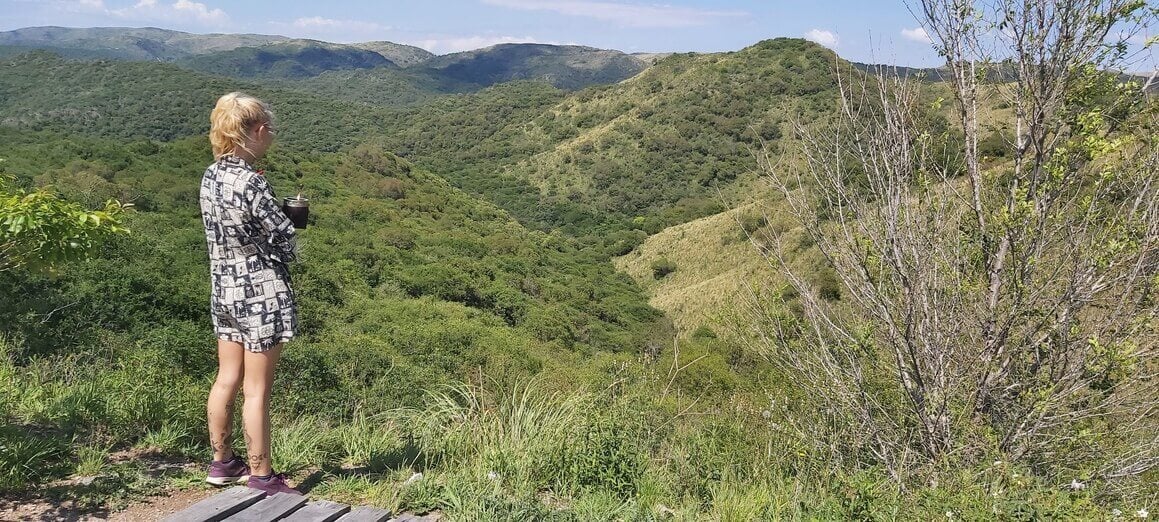
Photo: @Lauramcblonde
You will love South America if you love the outdoors and are keen to embrace new things. The best of the continent is found outside, on the slopes of Patagonia, the Uyuni saltflats, the vineyards of Mendoza, the Caribbean coast of Colombia or a rave in Rio.
With so much to do and openness of the people, there is an abundance of side quests – learn salsa, try ceviche, see an Argentine indie band play an alley gig or road trip to meet some indigenous weavers in Peru. South America suits those who compulsively say yes.
If you are completely averse to discomfort, backpacking South America may not be right for you. You will spend huge spells on buses (I once spent 27 hours on a coach in Argentina), mountain roads are bumpy, hot water is not always a given, altitude sickness is a constant concern and some of the hikes are hard work – those views do not come free!
There is much coverage on the political turmoil in South America, but honestly, it rarely interferes with travellers. Most backpackers are happily unaware of the names of the presidents, let alone the news. I was in Peru during the deposition of their president, aside from some protests in central Lima, life went on. As did life in Ecuador as the cartel assassinated politicians and drove crime surges.
Tourist cities are well policed and aside from the occasional risk of a road block, a favoured protest technique, backpackers have the privilege of being isolated from Latin politics.South America is one of the most diverse continents on earth.
It is home to the world’s second-highest mountain range in the Andes, world-class surf beaches, the Amazon Basin, the world’s driest desert, huge plains of lush grassland, glaciers, and unique wildlife not found anywhere else on Earth…
Each country you visit whilst backpacking South America offers up the opportunity to experience the incredible natural and cultural forces unique to that region.
Backpacking South America is generally a cheap endeavour – although it’s not as cheap as Southeast Asia or India. There are some fairly expensive corners of South America that you should avoid if you’re travelling on a budget.
You will fall in love with South America (and maybe a person or two along the way). So let’s dive into some South America travel itineraries and backpacking routes for your trip.
Backpacking South America: Routes and Itineraries
When making a South America backpacking itinerary, remember that travel distances are HUGE, internal flights expensive, and sometimes you want to stay somewhere longer than anticipated or perhaps a side quest will present itself, as often happens in South America.
Short of having years on the road, you will not be able to see it all, so planning is an exercise in choosing priorities.
If you only have 2 or 3 weeks for travelling South America, forget about seeing the whole continent, or even all of a single country. I recommend sticking to one region like Southern Peru or Patagonia and seeing it properly, and not wasting all of your time on a bus.
In one month, you could explore some countries closer to each other. You could visit Bolivia and Lake Titicaca in Peru for example. It’s good to have room for spontaneity in your South America travel itinerary too.
2 Week South America Travel Itinerary – The West Coast Appetizer
You’ll have to keep moving to make this itinerary happen in 2 weeks, but I believe in you!
Start your backpacking South America itinerary in Colombia by visiting Cartagena. After a few days, head to Santa Marta, the jump-off point for Minca – a charming mountain town – and Tayrona National Park. Plus, there are so many good places to stay in Santa Marta too.
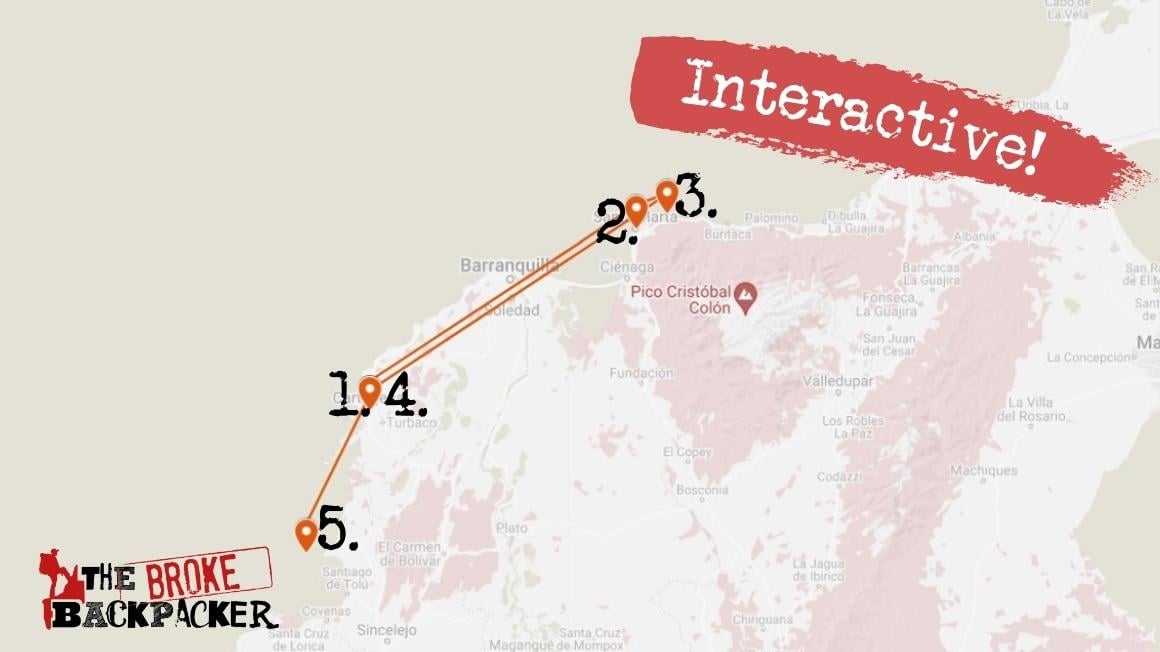
Get a bit off the beaten path, and head east to Cabo de la Vela (where the desert meets the sea) and Punta Galinas, where you can feast on fresh seafood along the Caribbean coast. Doubling back to Cartagena, head to nearby Playa Blanca and Tolú (mangrove) before heading to Islas de San Bernardo (white-sanded islands).
Or you could start in Lima, Peru. Explore the city for a day or two before heading to the Nazca Lines, Arequipa, and Colca Canyon.
Then head to Cusco in the Andes. Take a few days to explore the city and get used to the altitude before setting off on a multi-day trek to Machu Picchu.
Alternatively, start in Buenos Aires. Then you can head south to trek in Patagonia. In southern Argentina and Chile, you can do the world-famous Torres del Paine circuit. 2 weeks is cutting it fine but – if you hustle – you could pull it off.
Ecuador is a brilliant country for two-week itineraries as its small size and variable altitudes compacts mountains, jungles, beaches and UNESCO cities into a small area. Begin in Quito, venture into the Amazon, see Cotopaxi, a Mount Fuji Clone and shred waves at Montanita.
1 Month South America Travel Itinerary – The Starter
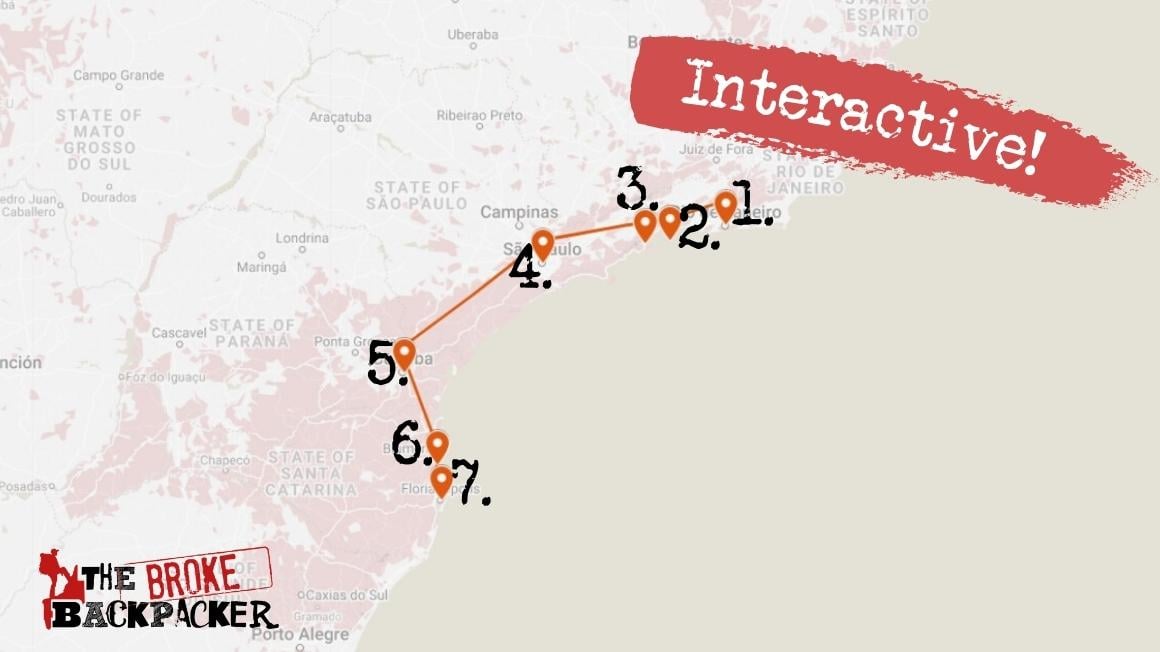
With 1 month, you can make an epic backpacking South America itinerary. If you want to explore more than one country in South America, you’re gonna need more than 3 weeks.
For surf bums, you could easily spend a month heading beach to beach from Southern Peru all the way to Colombia, in 1 month. Or you could do 2 weeks in Argentina followed by 2 weeks of hiking in Chilean Patagonia.
If it were me, larger countries like Argentina, Chile, and Brazil are better to explore with more than 1 month. You can do it but you will spend a long time on bus journeys, so I would just stick to one area.
Southeast Brazil is a good choice for 1 month on a South America itinerary: travel from Rio de Janeiro all the way south to Florianópolis and hit up everything in between. Bear in mind that you’ll probably want to stay in Rio AND Floripa longer than you expect.
Highlights of this route include exploring the megapolis of São Paulo, idyllic getaways of Ilha Grande and Paraty, eco-friendly and laidback Curitiba, and the crazy nightclubs of Balneário Camboriú.
Or, you could fly into Ecuador and spend 3 weeks exploring here: stay at a great hostel in Guayaquil before heading to Montañita. In Montañita you can party and surf to your heart’s content. Head North towards Bahia de Caraquez and Canoa for surf towns that are more off the beaten path.
Next head to the mountains, stopping first in Quito. There are some excellent treks in the Ecuadorian Andes.
If you have time, definitely hit up the Quilotoa Loop Trail on the outskirts of Cotopaxi National Park. A trip to the jungle around Puyo is recommended as well. Then head for a week of trekking in Colombia.
3 Month South America Travel Itinerary – The Great South America Main Course
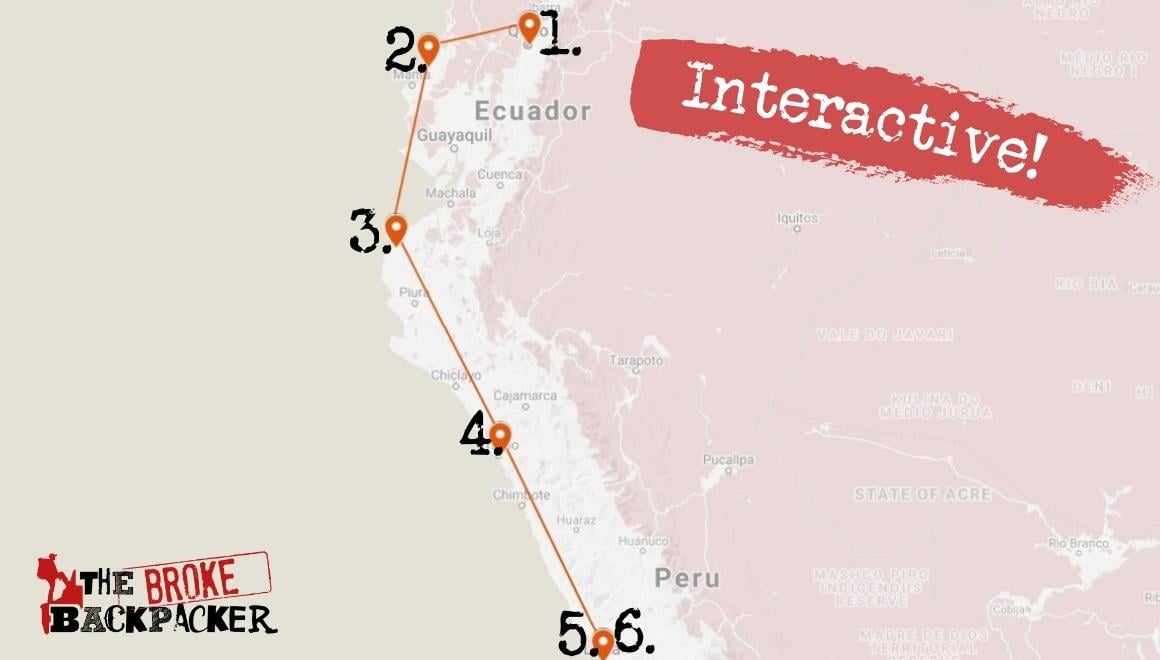
3 months backpacking South America, eh? Hell yes!
I recommend flying into Lima, Peru unless you know you want to start in the north (Brazil or Colombia) or further south (Argentina or Chile). Explore Lima and the coast before heading to the Andes. There Machu Picchu awaits in all of its glory.
Definitely do a trek to the famous Inca city! (More on hiking in South America later). From here, you can either drop down on the other side of the Andes and explore the Amazon basin or you can head south to Bolivia and eventually Argentina and Patagonia.
Alternatively, you can slowly start making your way north via the Coast. You could spend a month (or more) in Ecuador, Colombia, or Brazil respectively.
Buenos Aires is also a brilliant place to begin. As well as my favourite city in South America, it is an internal flight or long bus from Patagonia, it sits on the road to Brazil via Uruguay or Iguazu Falls or the beginning of a route across to Mendoza and up into the Andes where Uyuni and then the wonders of Peru lie. This was my pick.
Travelling in South America is never a quick affair, so plan your itinerary accordingly.
6 Month South America Travel Itinerary – The Full 3-Course Latin America
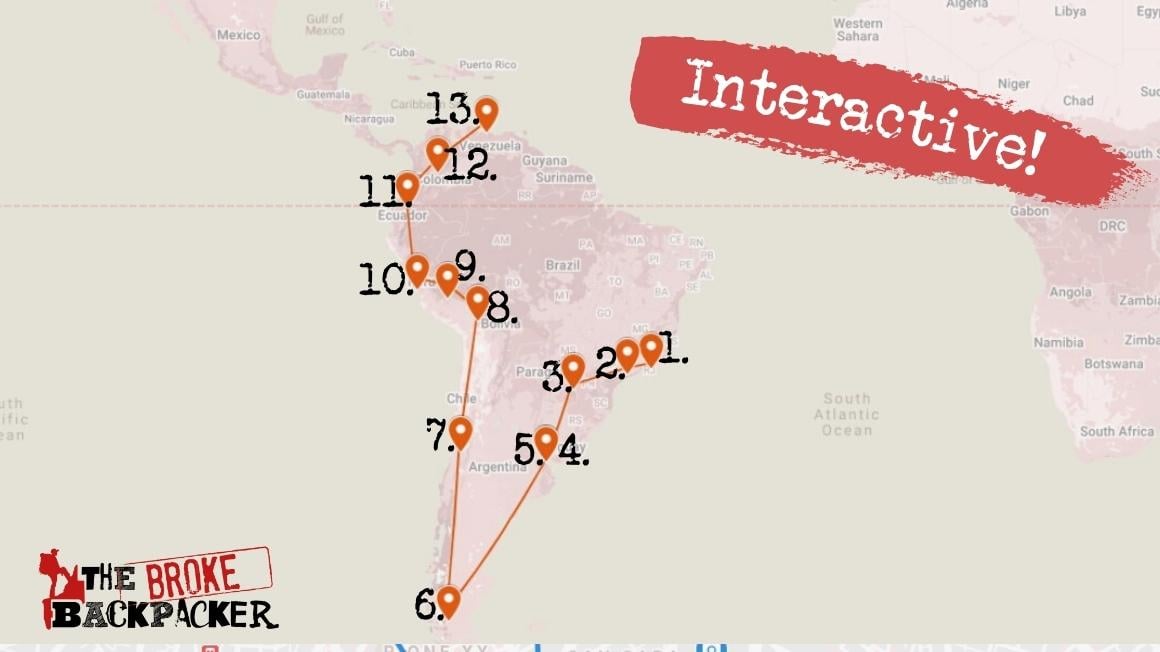
Life has brought you to the fortunate crossroads of having 6 months to travel South America? Good on you!
With a 6-month backpacking South America itinerary, you have the luxury of really being able to take your damn time. To see multiple countries, it’s a practical choice to begin your journey either in the north or the south to avoid backtracking. It also feels more satisfying to see a straight line on a map!
With a 6 month itinerary, you can explore many South American countries in depth. I’ll be honest with you, the itinerary shown on the map is slightly ambitious. But hopefully, it gives you an idea of what crossing this vast continent would look like.
Starting your journey in Rio de Janeiro or São Paulo might be a bit of a rough landing, hang onto your phones! though you will be a primed bad-ass by the time it comes to move on to another country. Buenos Aires is an easier introduction to South America, though I would not skip Brazil’s Florianopolis.
You could be surfing it up on the coast of Ecuador one day, and be in the mountains of Peru several days (and many bus rides) later. I advise taking a chunk of your time to really explore and get off the beaten path in top destinations like Peru, Colombia, and Bolivia.
Having 6 months or more to go backpacking truly means you have a total blank slate to work with. So get ready to write your own beautiful backpacking destiny! If you prioritise history, Peru could occupy months of the trip as could Colombia if you are into beaches above all else.
The ULTIMATE South America Tour
If you want the logistics to be sorted for you, the best option is to book a tour. I went on this Buenos Aires to Rio de Janeiro last year and it was without a doubt one of the highlights of my travels. Whether you’re new to travel or just want a trip with all the fun and none of the admin… this one is epic!!
- Number of days: 17 Days
- Group Size: Max 18, avg 14.
- Fitness required: Average
- Accommodation type: Simple and clean hotels and hostels
South America Backpacking Costs
It is the common belief that backpacking in South America is dirt cheap. In some places this is true, but it doesn’t go for the entire continent.
But fear not! Travelling South America on a budget can definitely be done.
Due to the nature of Patagonia being one of the most remote areas on earth, expect higher travel costs than the rest of South America. Peru also takes some navigating in order to travel on a tight budget.
Brazil is one of the most expensive countries in South America. The cost of living in Brazil is higher and it is notorious for jacking up accommodation prices during the high season.
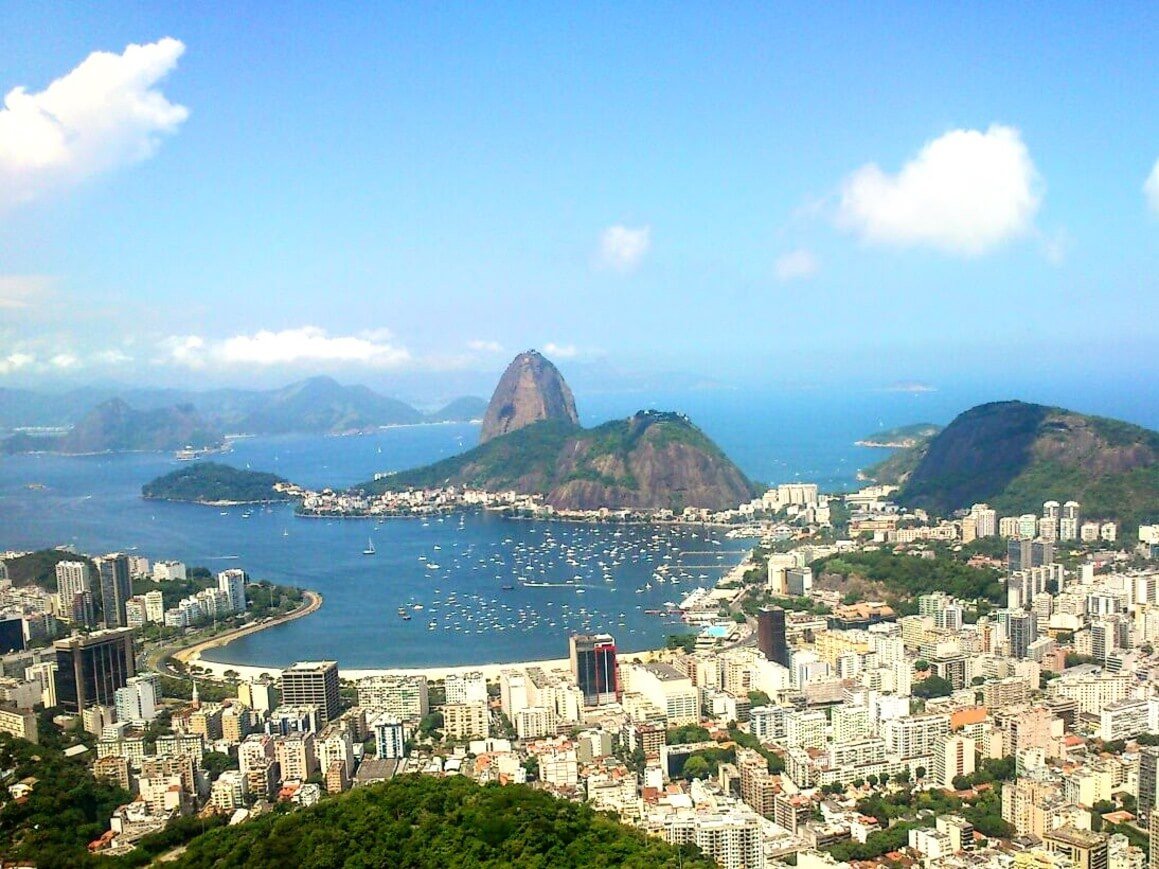
Photo: @Lauramcblonde
With a few travel tips up your sleeve, you will save a ton of money and have the time of your life. Bring your haggle game whilst backpacking through Latin America to ensure you get the best possible price for things, including accommodation. South Americans love smooth talkers so keep it playful but don’t get too cheeky.
Taking long-distance buses, buying beer and drugs, paying entrance fees to national parks… these things add up fast. But sometimes you have to shell out the dough in order to do the things you want. Overnight buses are a good way to save some money.
Remember to always leave a little extra wiggle room in your budget so you can go scuba diving or go on a trek that you have been dreaming about!
Daily Budget Ranges
Here is a breakdown of what you can expect to pay on a daily basis on a backpacking South America trip…
| Country | Dorm Bed | Local Meal | Bus Ride (Depending on Distance) | Average Daily Cost |
|---|---|---|---|---|
| Argentina | $6-15 | $2-10 | $5-50+ | $20 – $70+ |
| Bolivia | $7-10 | $2-5 | $2-5 | $20 – $40 |
| Brazil | $10-15 | $4-9 | $20-50+ | $40 – 50+ |
| Chile | $12-15 | $4-9 | $10-40+ | $35 – $65+ |
| Colombia | $8-10 | $1-12 | $5-30 | $35 – $60 |
| Ecuador | $8-10 | $2-5 | $2-8 | $25 – $50 |
| Peru | $8-15 | $2-8 | $5-45 | $30 – $60 |
How to Save Money in South America
Hey, all those dollaridoodles add up to more fun times. So saving whatever you can on your journey means you can be on the journey… for longer. So here are a few budget travel tips for South America:
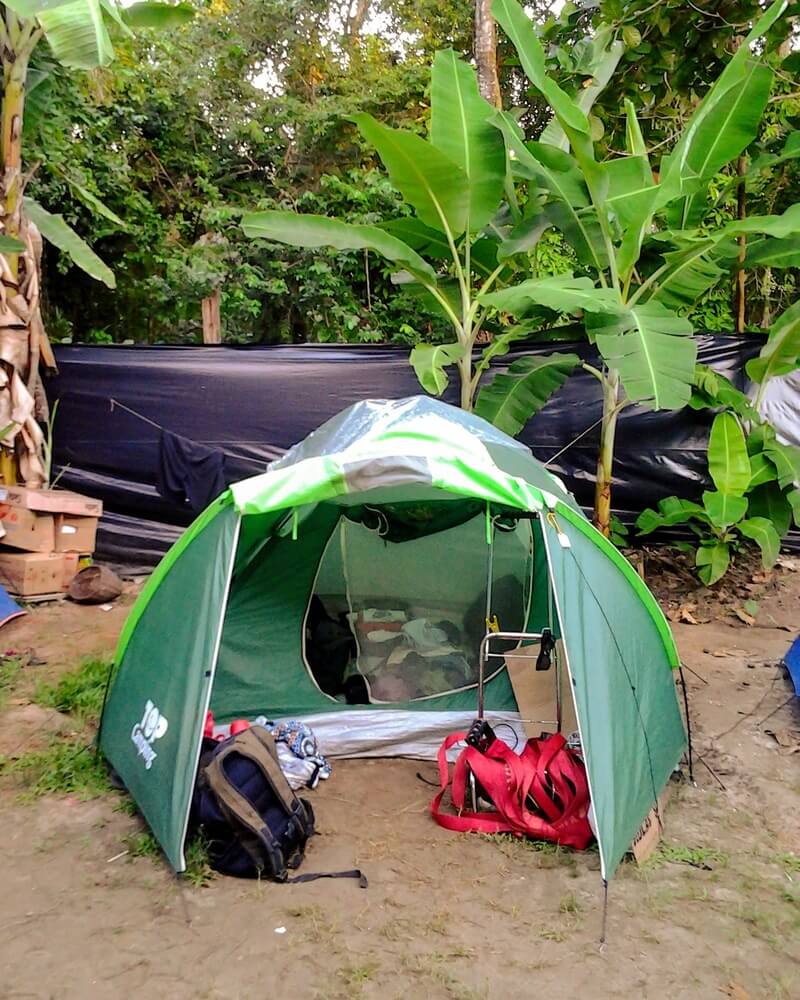
Photo: @Lauramcblonde
- Camp: With plenty of untouched beaches, forests, stunning countryside, and far-flung jungle, South America is a great place to carry a good backpacking tent. Camping saves you money and can help you get off of the beaten path.
- Haggle: Haggle as much as you can. You can always get a better price for things, especially while in local markets. Learning Spanish will go a long way!
- Use the right ATMs: Lots of South America is cash-based, meaning that you will need to frequently withdraw cash. Dodging extortionate fees by using free-withdrawl services like Banco de la Nacion, or sending yourself money via Western Union in Bolivia for a better conversion rate will save you plenty of pesos.
- Couchsurf: South Americans are awesome. Get to know some! Check out Couchsurfing to make some real friendships and see the real continent. When using Couchsurfing, be sure to send personalized messages to your potential host. A generic copy-and-paste message is much more likely to get turned down. Make yourself stand out.
- Hitchhike: Although some countries are friendlier than others, hitchhiking across South America is common practice, so you won’t struggle too much to find a ride. Speaking at least a little Spanish will go a long way though. You want to explain exactly what you’re doing and where you want to go.
- Travel with a water bottle. Water quality varies across South America, so bring a reusable bottle and refill it from trusted filtered water stations or your accommodation where available. It’s an easy way to save money and reduce single use plastic.
- Travel by overnight bus. South America’s long-distance bus network is extensive, and overnight journeys can save you both travel time and the cost of a night’s accommodation.
- Eat the lunch specials. Many countries offer excellent value set lunches, such as menú del día or almuerzo, making it easy to enjoy local food on a budget.
- Learn some basic Spanish. Even a few key phrases can help you negotiate prices, order local food and avoid paying tourist prices in many parts of the continent.
Best Places to Visit in South America – Country Breakdowns
Each country in South America has something unique and profoundly exciting for backpackers. But they also have some common themes: they are Spanish speaking (minus Portuguese in Brazil), they have stunning natural beauty, and some of the nicest people you will meet whilst travelling.
The biggest contrasts are between Andean and non-Andean countries, Uruguay is a very different beast to Bolivia.So finding the best places to backpack in South America has a lot to do with your own interests.
Photo: @Lauramcblonde
Maybe you’ll explore the epic snow-capped peaks of Patagonia in Argentina and Chile or party with beautiful people at the Carnival in Brazil. Or perhaps trek to the Lost City in Colombia or experience the Dali-esque salt flats of Bolivia and gaze at the colourful Rainbow Mountains of Peru.
Backpacking through South America truly is a life-changing journey through one of the planet’s most fascinating landmasses. When you visit South America, you can be sure that it will be some of the most fun you will have in your life.
Photo: @Lauramcblonde
Once you begin to discover a few of the South American countries, you will be entranced by the jaw-dropping landscapes, fascinating history, vibrant culture, and awesome food.
Let’s take a look at the countries that make backpacking in South America so damn special.
Backpacking Brazil: The Rainbow Nation
- Best for: Parties, surf, wildlife
- Budget vibe: Pricey, having South America’s biggest economy brings prices up.
- Time needed: Minimum 2 weeks.
- Getting there: Cities like Sao Paulo and Rio de Janeiro are major international airports, alternatively, it is accessible by bus from Uruguay and Iguazu in Argentina.
- Don’t miss: Florianopolis
- Skip it: If snowcapped mountains are a non-negotiable.
- Overrated: Copacabana Beach
- Where to base: Rio de Janeiro
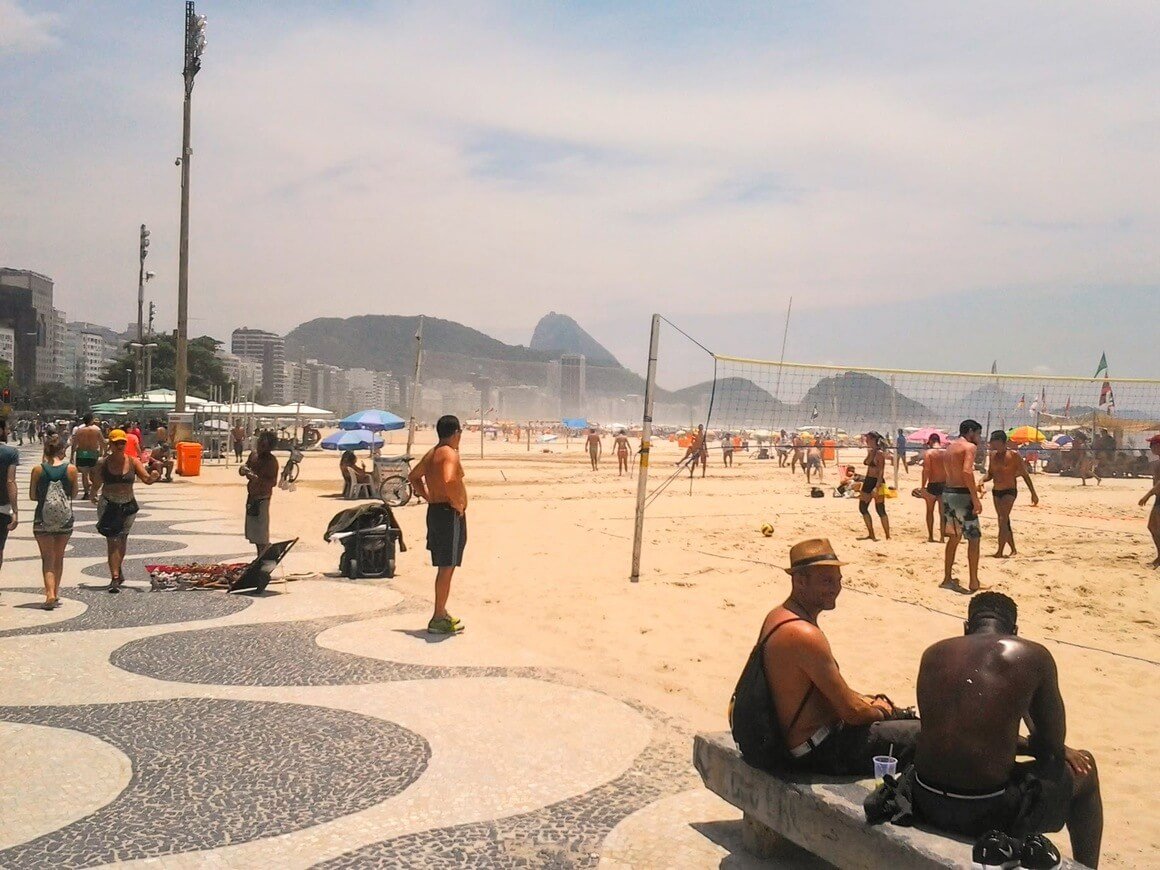
Photo: @sebagvivas
Brazil is one of the most diverse countries on earth. It has German speaking towns in the South, huge African-descended populations and uncontacted rainforest tribes all sharing the same country. The culture here is simply mind-blowing.
Trekking also probably isn’t the first thing that pops into your mind when you think about backpacking through Brazil. It’s a shame because Brazil has truly gorgeous trails spread throughout the country, like Vale do Pati. It’s also home to Iguazu, one of the most incredible waterfalls on Earth, where you can choose to stay in three different countries!
The best hiking opportunities are usually found in Brazil’s national parks (parques nacionais). Brazil has over 70 national parks and – in terms of beauty – these can contend with any other on Earth.
It also offers the chance to see the Amazon at its widest and most majestic. Take ship at Manaus to explore this kingdom of river and trees.
What to Know Before Visiting Brazil
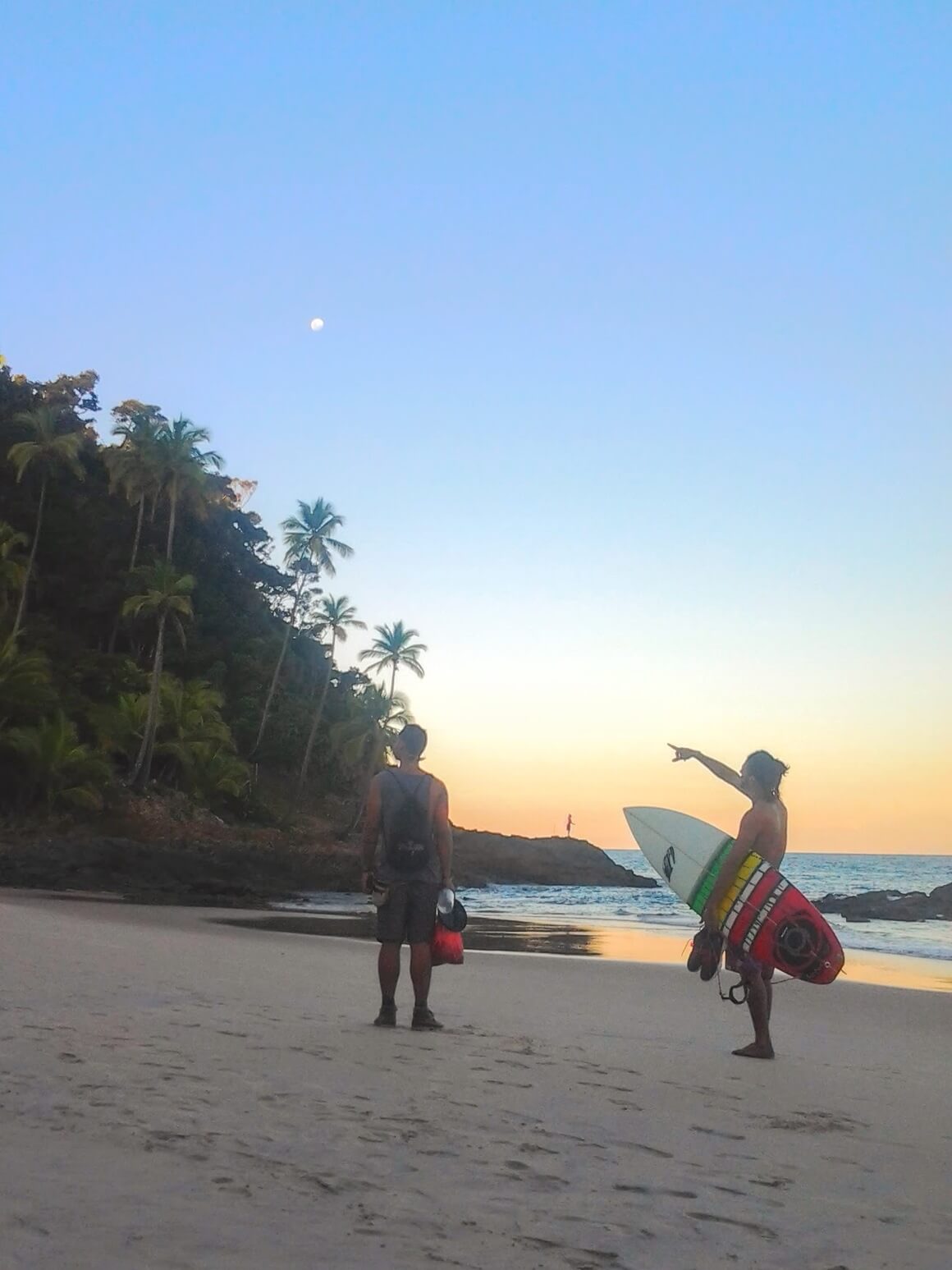
Photo: @sebagvivas
- Don’t miss out on… Florianopolis. The Brazilians favourite place to visit for a reason. It’s chilled, safe, and gorgeous. You plan to stay in Floripa for a week, it grabs you by the balls, and you get stuck for months.
- Keep an eye out for… Travel distances. Don’t be fooled: they’re way longer than they seem on the map. Give yourself plenty of time to get from A to B.
- The coolest hostel is… Hostel do Morro. In one of my favourite destinations in Brazil, this hostel is a true nature immersion. In the “mato”, with sea view and monkeys visiting. A true good vibes place!
- The best food is found in… Belo Horizonte. There is an amazing energy to this place; everyone hangs out on the streets, eating and drinking at plastic tables, all night long.
Backpacking Colombia: Where the Andes Meet the Carribbean
- Best for: Parties, cities and beaches
- Budget vibe: Mid range
- Time needed: 2 weeks to a month
- Getting there: Bogota and Medellin have major international airports, it is also accessible by bus from Ecuador or by boat through the Amazon from Peru for the intrepid.
- Don’t miss: Salento coffee plantations
- Skip if: Hot climates are not your thing
- Overrated: Cartagena, tourism is out of control in some places.
- Where to base: Medellin
Colombia really is the full package. While people unfairly associate it with Pablo Escobar, the age of Narco rule is long gone, leaving this paradisiacal medley of salsa, Caribbean beaches and jungle safe to explore.
Cali, Cartagena, Bogotá, and Medellín are a few major cities to visit in Colombia. A jungle city connected by cablecars, you often feel as if you are walking through a botanical garden. That is before you even get onto the nightlife.
Looking down at Medellin from a rooftop club with a wad of pesos in your pocket and a Pilsen in your hand is one of life’s ultimate experiences. Go and have some extraordinary conversations with the locals about life in Latin America and not taking life too seriously.
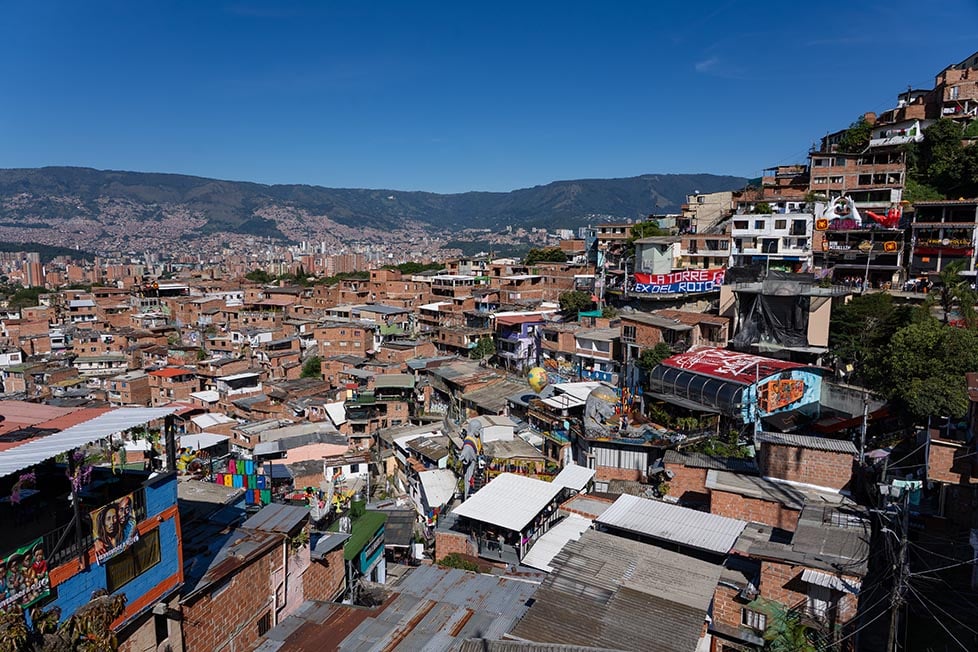
Is Colombia safe? Perhaps your mum would love to know. Hell yes, it is!
Colombia is for adventure junkies and nature lovers too. In terms of landscape, you’ll find it all. Minca in the cloud forest has one of the planet’s highest diversity of birds, jungles meet the Caribbean sea at Tayrona national park and you can trek through snowscapes in Los Nevados National Park.
The northern terminus of the Andes Mountains ends here and you can take your treks into the deep jungle in Colombia’s National Parks.
What to Know Before Visiting Colombia
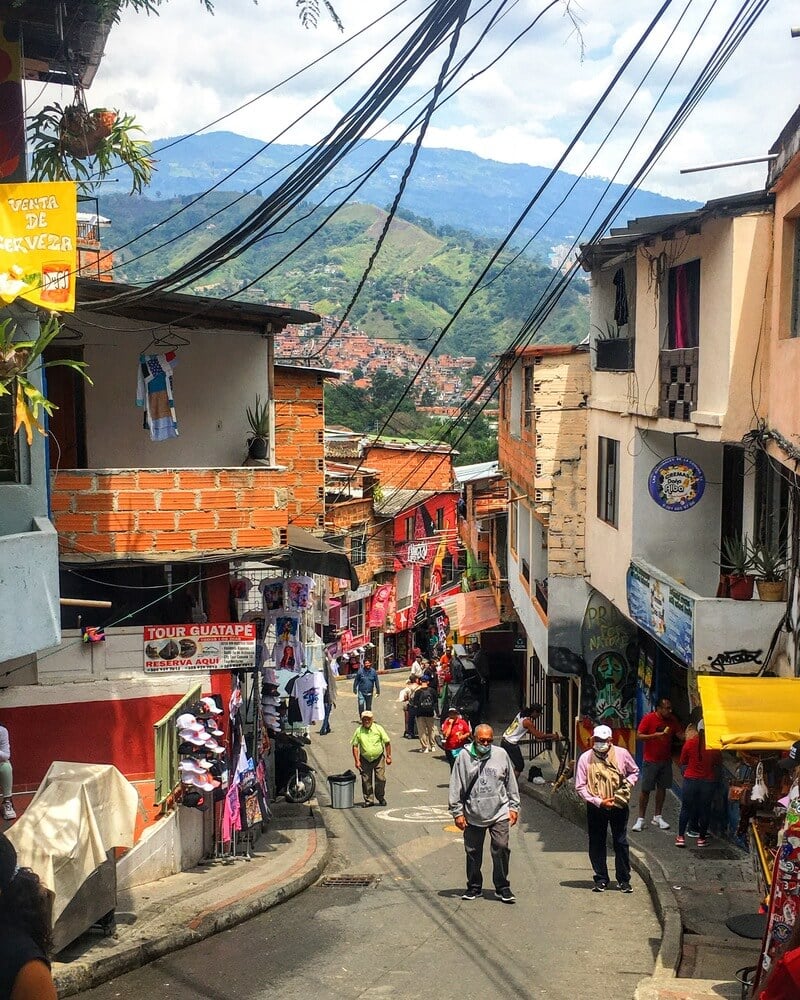
Photo: @Lauramcblonde
- Don’t miss out on… Carnival in Barranquilla. Most of the time, this industrial town is overlooked by travellers. But for one week of the year, this place goes NUTS.
- Keep an eye out for… how difficult the trek to Cuidad Perdida is. It’s long, treacherous, and hot as shit, but absolutely worth the effort in the end. The Lost City is one of the best places to visit in South America.
- The coolest hostel is…Viajero Santa Marta Hostel. Great location and has lazy and peaceful vibes. Amazing rooftop and activities to connect and meet other travelers.
- The best food is found in… the local restaurants. Look for the menu del dia to feel like you’ll never need to eat again.
Backpacking Ecuador: The Four Worlds
- Best for: those looking for the maximum in a short time frame.
- Budget vibe: Mid, less than Colombia, more than Peru.
- Time needed: 2 weeks – this goes a long way here
- Getting there: Fly into Quito internationally or catch a bus from Peru or Colombia.
- Don’t miss: Galapagos Islands
- Skip if: Your experiences overlap with those of Ecuador.
- Overrated: Guayaquil, Ecuador’s largest city has little to offer.
- Where to base: Cuenca
Ecuadoreanos often say that their country has four worlds: the jungle, the mountains, the coast and the Galapagos Islands. After spending two months there, I am inclined to agree.
The diversity is incredible and it’s a great place to experience Andean Highland culture. The people who live in the Andes have a distinct and ancient culture rooted in mountain life. They even speak another language called Quechua. Plus, it’s a relatively safe country, and isn’t ruined by mass tourism.
Like most South American countries there is a huge diversity of experiences. However, Ecuador has this without a massive area. Being able to travel between 6000m tall volcanoes to the Amazon in a short bus journey is not common in South America.
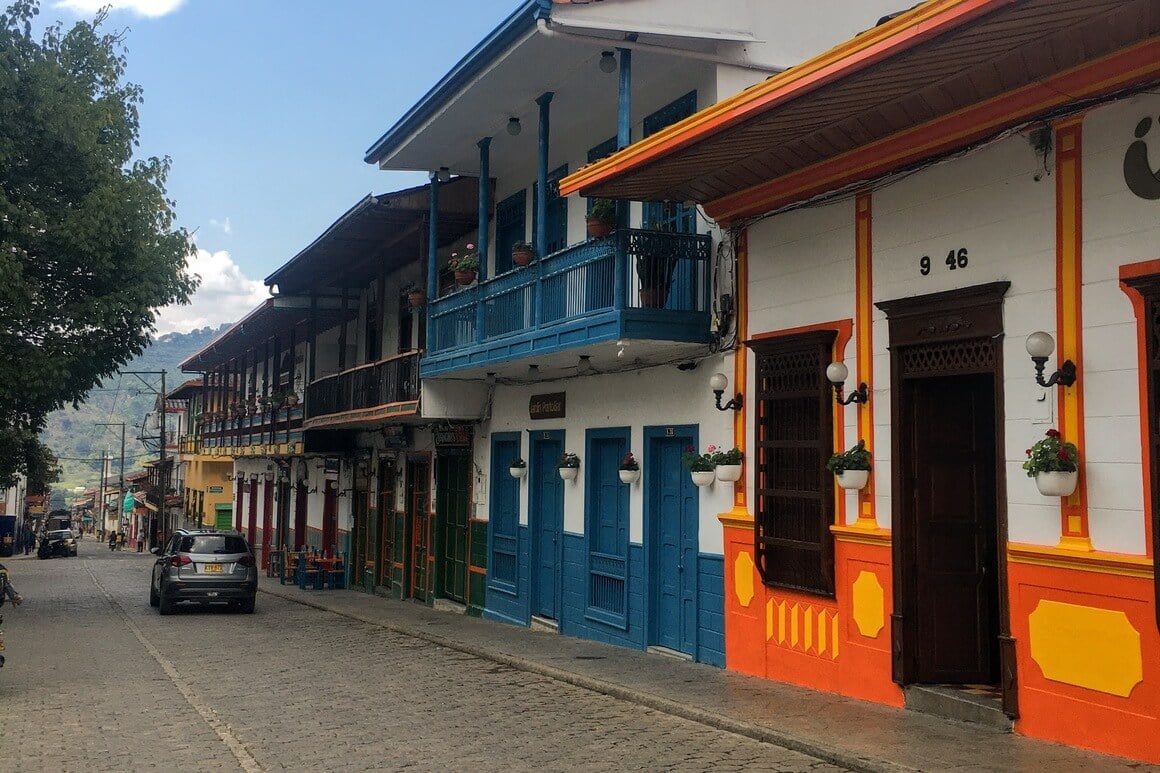
Photo: @Lauramcblonde
This handy compactness makes it ideal for those on a short trip looking to see what South America is all about without wanting to sacrifice vital holiday time on long bus journeys.
What goes under the radar is how nice Ecuador’s cities are. I did a Spanish school in Cuenca for a month, and it was one of the most liveable cities I have ever visited. It could have been Vienna with its UNESCO listed architecture, trams and cafe culture. Quito is one of the oldest cities in the Americas, sits on the Equator and has a cable-car-accessible volcano.
The Galapagos Islands are really a unique experience. To see animals behave with no fear of humans in pristine environments is something that sticks with you long after the trip.
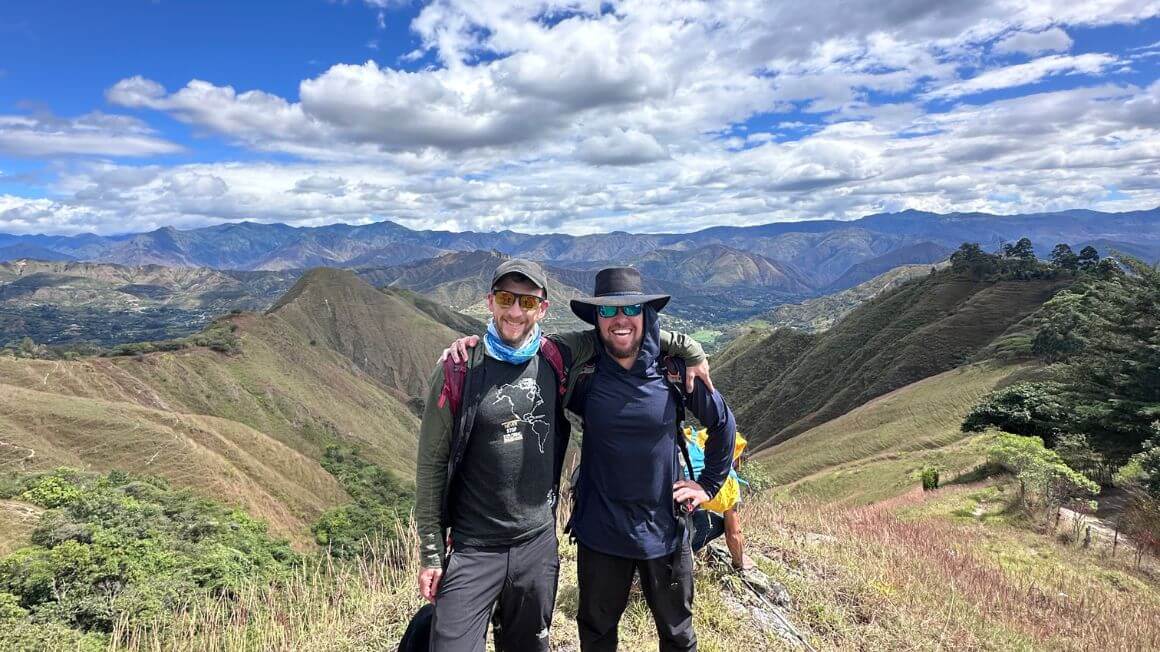
Photo: @willhatton__
In addition to staying in colonial cities like Quito, Ecuador’s natural landscape is the biggest draw. You can spend weeks or months exploring the coast before heading to the mountains and vice versa. Towering over the shore, volcanoes, waterfalls, and massive snow-capped mountains all make incredible trekking routes. Wherever you go, there are heaps of great hostels in Ecuador too, perfect for meeting other backpackers.
Surfing reigns supreme on the Ecuadorian coast. It attracts surfers from all over the globe. Even if you’re a beginner, it’s a great place to catch your first waves. Towns like Montañita and Canoa are famous surf beaches and party hotspots.
Then there is the Amazon Basin of Ecuador. The Amazon region is what helps make Ecuador one of the most biologically diverse places on earth. The Amazon is best explored by boat with a local guide and is bound to be the adventure of a lifetime!
What to Know Before Visiting Ecuador
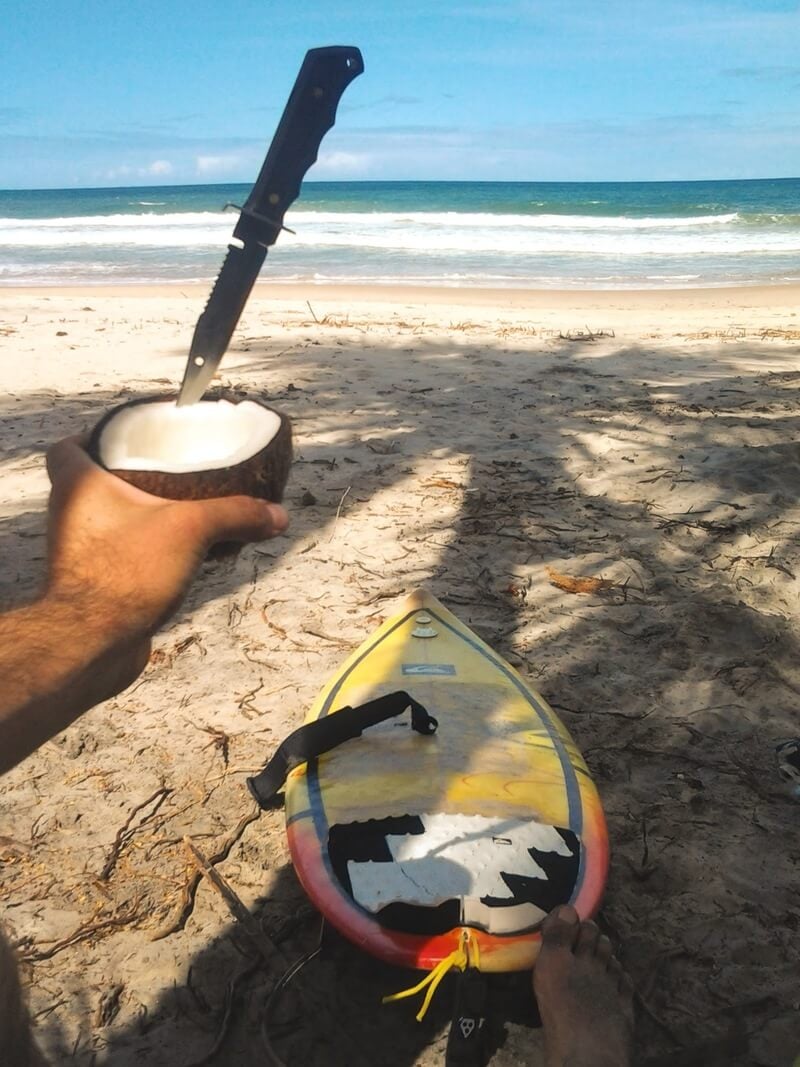
Photo: @Lauramcblonde
- Don’t miss out on… exploring the highlands and Cotopaxi National Park. Easily accessed from Quito and totally epic.
- You know what’s overrated… Montañita. It’s not all it use to be and is mostly catered to foreigners who want to get wasted and high. If you want real Ecuadorian culture, there are better places nearby.
- The coolest hostel is… Casa del Sol. Relaxed vibe at a few steps from the beach. Close enough to go party and far enough to have a good sleep. THE place for yoga and Surf.
- The best food is found in… the small almuerzo (lunch) cafes found across the country.
Backpacking Peru: Land of Lost Cities
- Best for: History, hiking, food
- Budget vibe: Cheap
- Time needed: 2 weeks for the highlights, 1 month + is ideal.
- Getting there: Fly into Lima internationally, or by bus from Bolivia and Ecuador
- Don’t miss: Machu Picchu
- Skip if: Hiking is not your forte
- Overrated: Paracas
- Where to base: Cusco
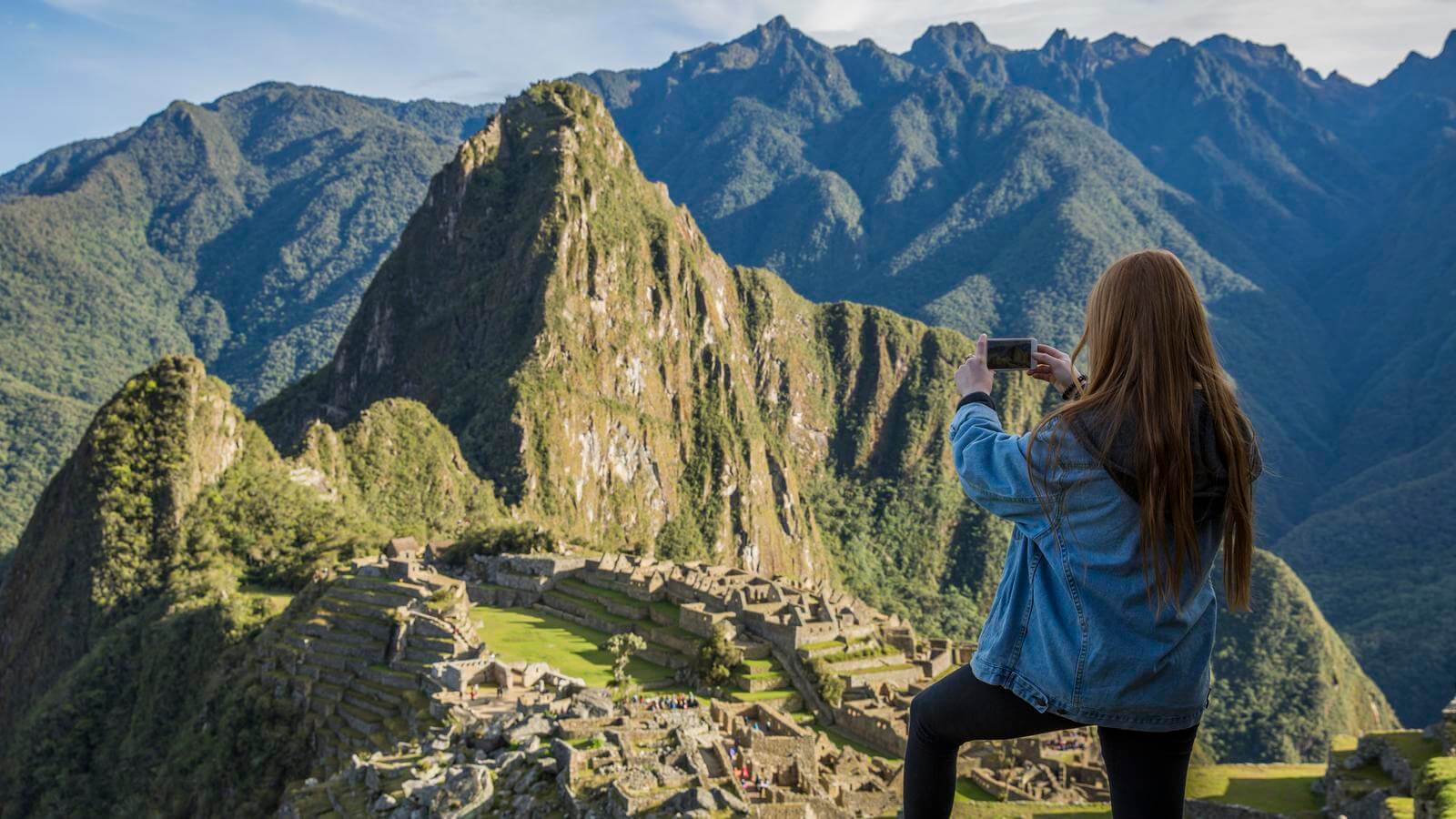
Ah Peru. Chances are that you are reading this guide in part from a photo of Machu Picchu. Yes, it really is that good. Maybe seeing the sun rise over the lost city is why I found myself returning to Peru a year after my first trip to stay for four more months!
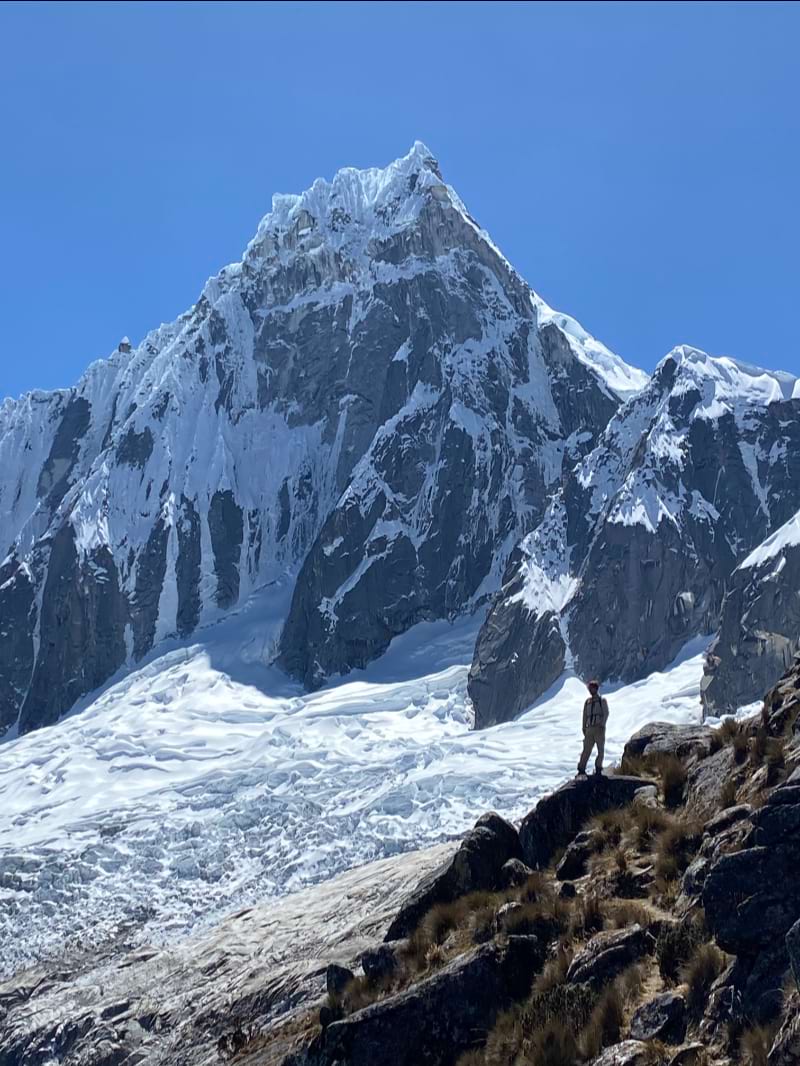
Photo: Tom Hennessy
Traditions go deep in Peru. It was one of the only places to develop civilisation independently, alongside places like China or the Indus Valley.
The living ancestors of the Inca still speak Quechua and wear beautiful alpaca garments. Peru has the richest culture in South America in my opinion.
It’s here where you’ll find the continent’s best hiking outside of Patagonia. Throw yourself into a snowy adventure in the Cordilliera Huayhuash or weave your way through the Seven Lakes of Ausangate.
Peru even has a super long coastline dotted with prime surf beaches and scuba diving sites!
The cost of backpacking Peru is a little higher than you might expect. Expect to pay between $30-40 USD a day whilst travelling here.
I mean, who isn’t aware of Machu Picchu and hiking the Inca Trail? Besides the obvious, there is much, much more to the Peruvian Andes than Machu Picchu. Although, you still have to go there!
Peru has some truly fascinating colonial cities as well, including Cuenca and Cusco, which is the gateway city to Machu Picchu. The off-the-beaten-path potential in Peru is enormous.
What to Know Before Visiting Peru
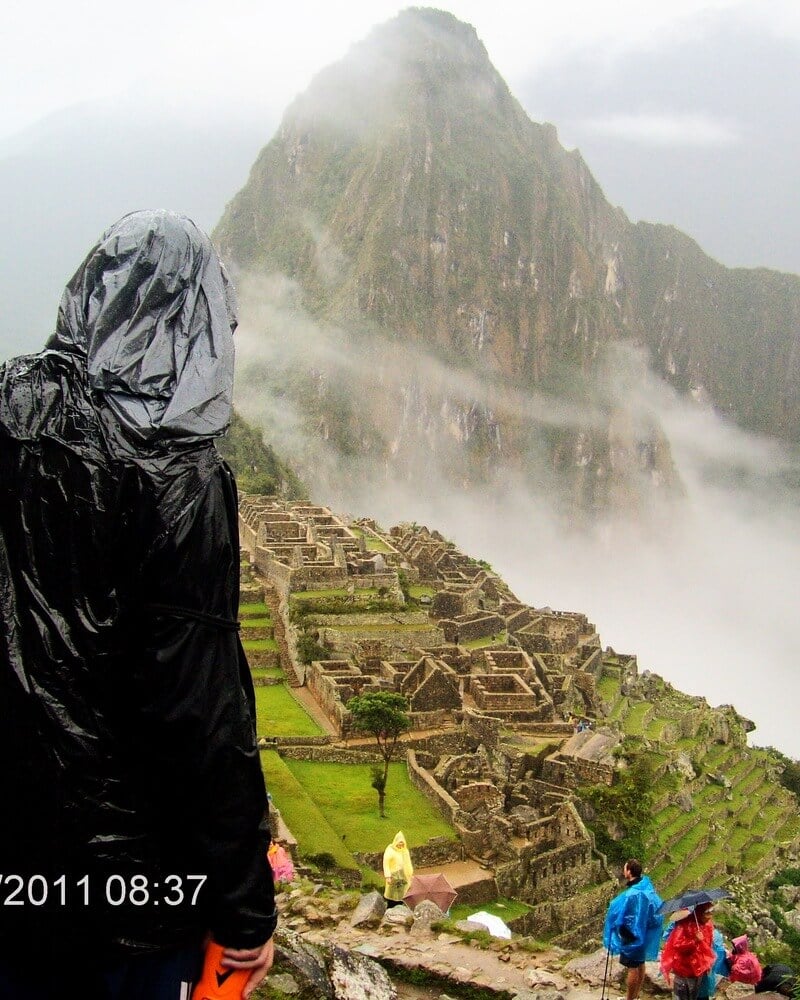
Photo: @Lauramcblonde
- Don’t miss out on… a motorcycle journey through the Sacred Valley outside Cusco. It’s definitely worth staying in Cusco a little longer for this.
- You know what’s overrated… the Inca Trail. Go for the less-trod Salkantay Trek to Machu Picchu instead.
- The coolest hostel is… Banana’s Adventure Hostel. In an unreal location (an oasis in a desert) this is a sociable and relaxed vibes hostel. With a great rooftop plus a lovely garden with hammocks, and an outdoor pool.
- The best food is found in… Lima. This city is full of cafes, local lunch spots, and street food vendors. The best are in Barranco and Miraflores. Pig out on ceviche!
Backpacking Bolivia: The Mountainous Heart of South America
- Best for: Authenticity, value and craftsmanship
- Budget vibe: Cheap, it is currently suffering from an economic crisis that increases the value of foreign currency.
- Time needed: 2 weeks
- Getting there: Fly into Santa Cruz or La Paz, or enter by bus from Chile, Peru or Argentina.
- Don’t miss: Uyuni salt flats
- Skip if: Comfort is a non negotiable
- Overrated: Cochabamba
- Where to base: La Paz
Bolivia was my biggest surprise of my time in South America. It offers up a glimpse of what South America was like 30 years ago. It’s a country looking to the future in many ways whilst still having one foot firmly rooted in the tradition of the past.
While the likes of Brazil and Peru get the limelight, experiences like the Uyuni Salt Flats or cycling down Death Road were among my favourites of the whole trip.
The warmth of the people was also astounding. I wound up working on a ranch near Santa Cruz for a month by some crazy coincidences. I also made local friends in La Paz very easily, and received some marriage proposals!
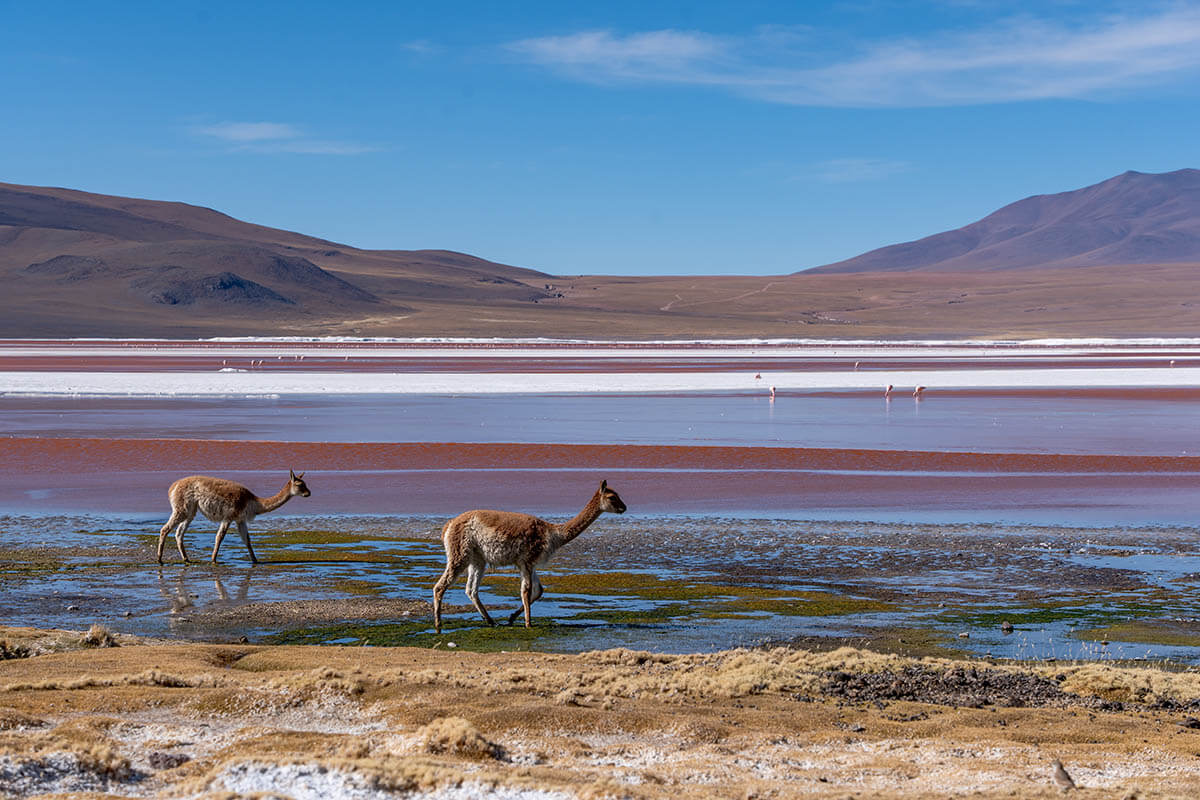
Image: Nic Hilditch-Short
Expect super friendly locals, dramatic desert and mountain landscapes, and the kind of low prices which make the dirtbag within us very happy. You could easily get by on $20-25 a day here, and even less by roughing it a bit. Bolivia also offers the cheapest way to see the Amazon via Rurrenabaque!
Bolivia is home to plenty of adrenaline-pumping activities including the Road of Death, which, in essence, is a road down through the mountains in which people ride bicycles to the bottom at top speed. The ride goes on for at least 30 kilometres and it is straight down. Can you guess why it’s called the Road of Death yet?
Aside from the high-risk adventure activities, Bolivia is safe for the most part as well.
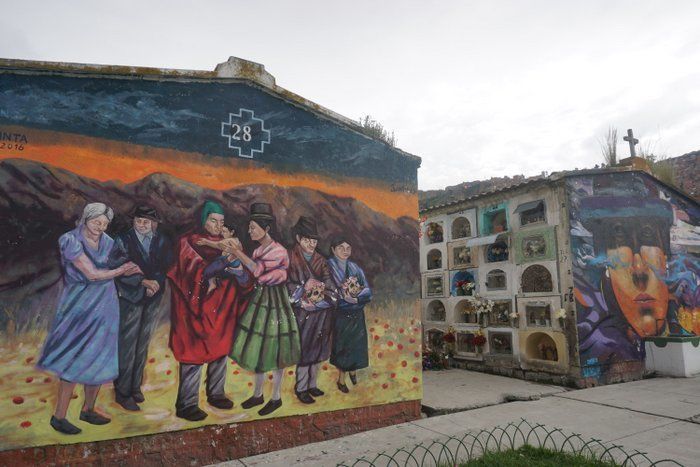
Photo: Sasha Savinov
World-class trekking is abundant in the Bolivian Andes. If you love to hike, all the more reason to visit Bolivia. Bring along a good sleeping bag as temperatures can plummet at night.
La Paz has the best hostels (particularly for partiers) and is a cool city to base yourself in. Lake Titicaca is breathtaking, however, it has become far too touristy – I personally can’t deal with that many people taking selfies. I don’t blame the locals as they need to make a living. Just the way it has been done is unfortunate.
The Salt Flats are also cool AF. Okay, admittedly it’s pretty touristy too, but it’s still worth a visit.
What to Know Before Visiting Bolivia

Photo: Sasha Savinov
- Don’t miss out on… the Salar de Uyuni. Yes, everyone who comes to Bolivia does this and, yes, it’s touristy. Regardless, it’s still in-fuckin-credible.
- Keep an eye out for… the altitude. Some people fly directly to La Paz from sea level and get sick almost immediately. At 3640 meters, La Paz is the highest major city in the world.
- The coolest hostel is… Wild Rover La Paz. A dynamic and festive hostel. The perfect place to start your Bolivian experience connecting with other travellers. Great location in the central area.
- The best food is found in… La Paz. This is the epicenter of Bolivia’s newly emerging food culture.
Backpacking Chile: The Thin Country
- Best for: Deserts, hiking, stars
- Budget vibe: Pricey, its level of development comes at a cost.
- Time needed: 2 weeks minimum
- Getting there: Fly into Santiago internationally, or cross by bus from Peru and Argentina, or via a salt flat tour from Bolivia.
- Don’t miss: Atacama Desert
- Skip if: Price is an issue
- Overrated: Santiago, mountain views aside, it did not feel too distinctive.
- Where to base: San Pedro de Atacama
Chile is the weirdest shaped country on earth, no doubt about it. A country should not be that long and thin! You do understand the shape a bit when you travel down it, as the Andes run its full length and create a narrow corridor against the Pacific. You are never out of sight of mountains.
The length of the country also ensures vastly different environments. Its Northern extremity is the driest desert on earth, the martian bone-dry Atacama, while its frozen Southern tip points the way to Antarctica. It brings that old travel writing cliche, ‘a land of contrasts’ to life.
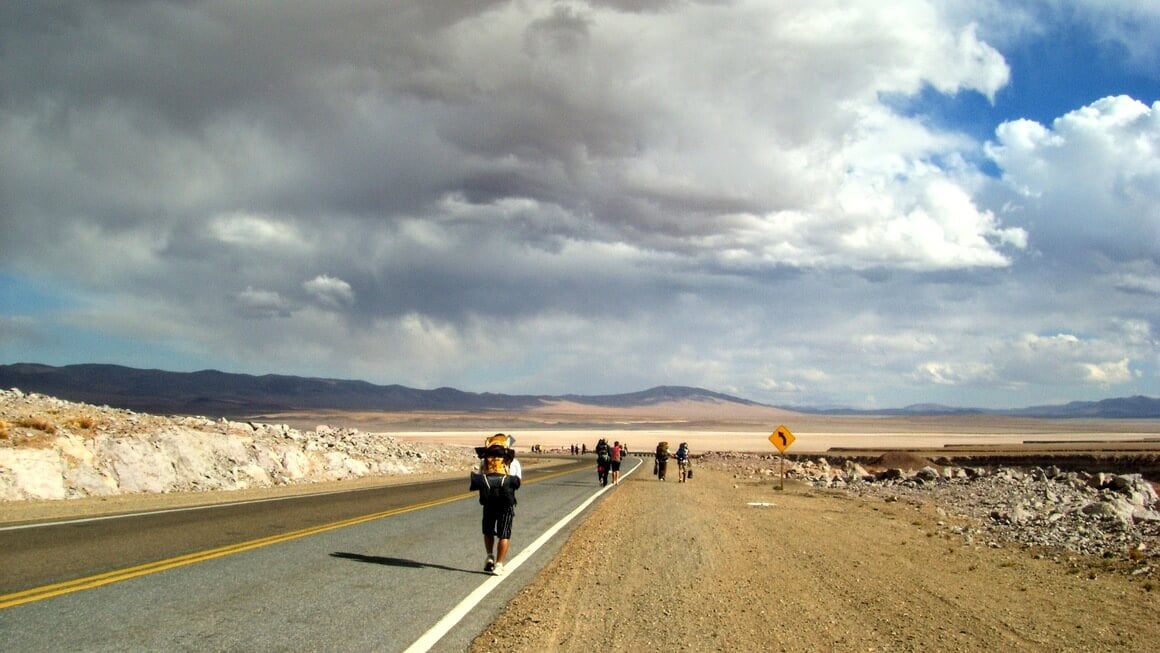
Photo: @Lauramcblonde
There are 36 National Parks in Chile; all of them are beautiful and unique in their own way. Chile is also home to Easter Island, one of the most mysterious places on the planet.
Like Argentina, Chilean Patagonia is a paradise for trekkers and adventure types – though it does take some effort to reach the places you want to go trekking in. That said, the journey is well worth it; experiencing some of the planets last truly wild places is an indescribable feeling that you can only understand by doing it!
Most backpackers will start their backpacking journey in Santiago. But you can come to Chile from one of its borders in the South (as I did).
Oh yeah, one more thing: Chilean wine is cheap and it is damn good! Do you need more reasons?
What to Know Before Visiting Chile
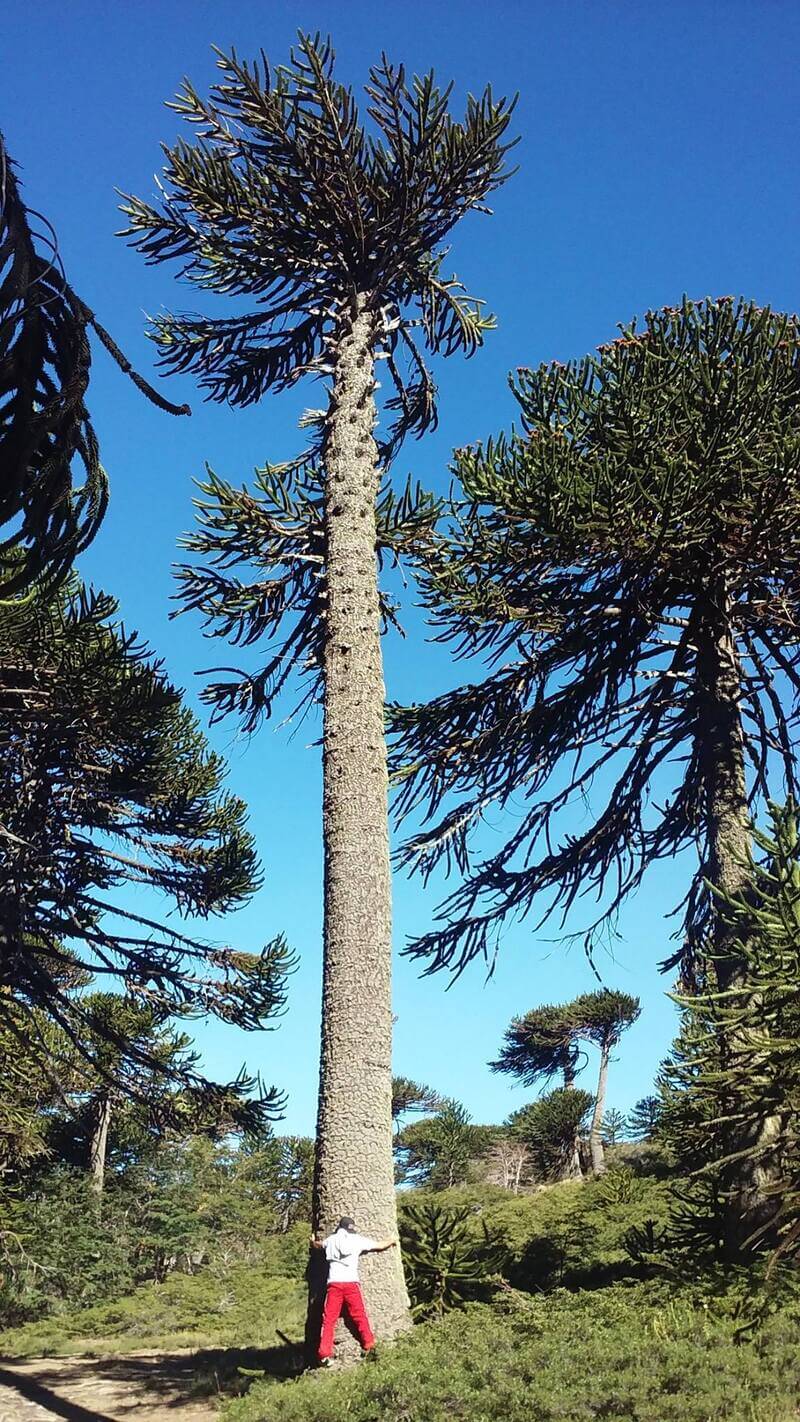
Photo: @Lauramcblonde
- Don’t miss out on… Patagonia, and not just the usual spots. Chilean Patagonia is vastly unexplored, especially the fjords. Look out for whales, dolphins, penguins, and elephant seals.
- Keep an eye out for… fire bans in Torres del Paine. A lot of nature has been threatened because of dickhead backpackers using gas burners, despite warnings.
- The coolest hostel is… MaPatagonia Hostel. Near a beautiful lake, this place has what you need. Kitchen facilities, a nice big garden, some cats, and a jacuzzi! There is also a fireplace for those cold nights.
- The best food is found in… Santiago. Staying in Santiago will unlock the most culinary options, including the cheap street food stalls.
Backpacking Argentina: Campeones del Mundo
Viva Argentina!
If I had to live in South America, I would choose Argentina. More specifically, Buenos Aires. It feels as if New York, Paris and Naples were combined, but if the price of steak was cut, tango music constantly blasted and it was filled with the most fun loving people in the world. The quality of life here will really shock you.
Unquestionably, you’re going to find incredible hostels in Buenos Aires and reasons to stay. But don’t stay too long!
Rosario and Cordoba are cities like Buenos Aires but, in my opinion, better. They’re a perfect place to head to if you want to steer clear of the heavily populated capital. Mendoza is the wine region home to the “best wine in the world” (according to Argentinos).
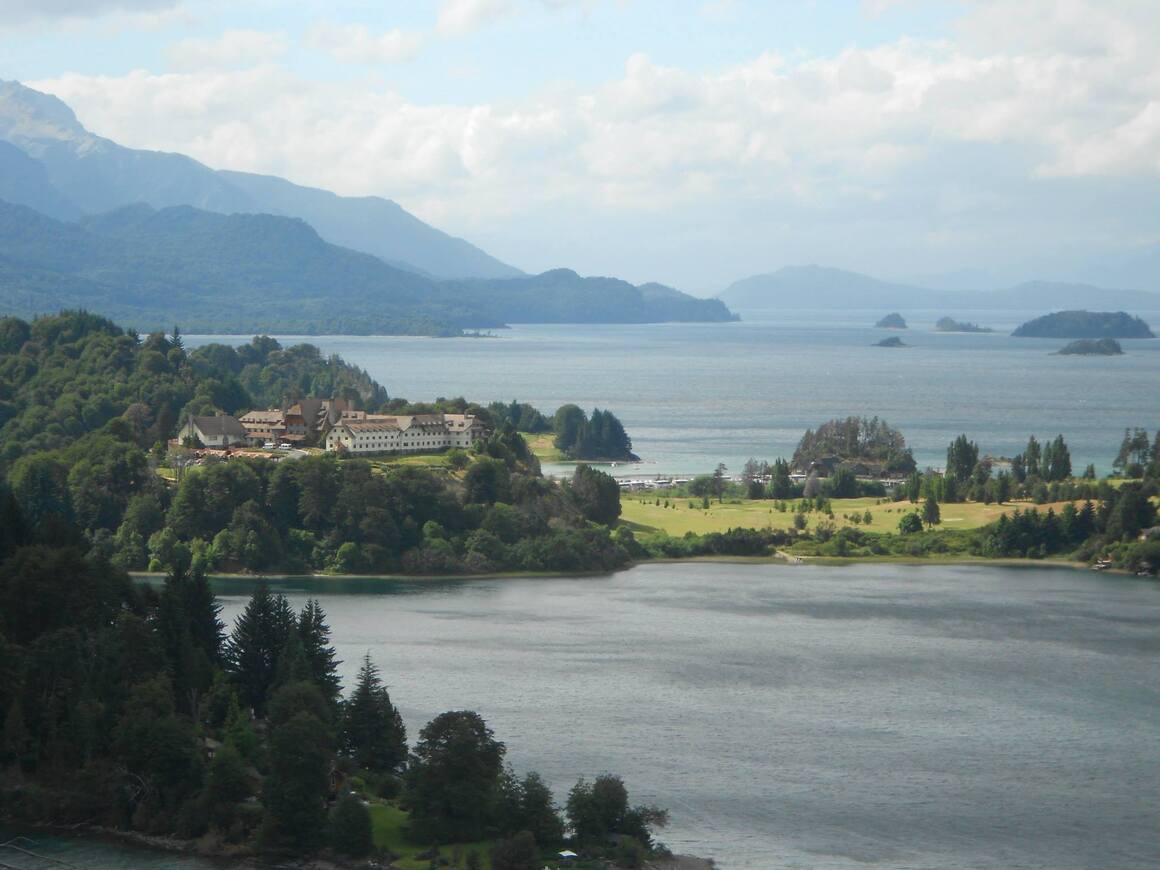
Meanwhile, you still have Malbec, its tastiest and Salta, a colonial gem at the skirts of the Andes.
Argentina changes as you head South into Patagonia. This is true wilderness with utterly pristine lakes, soaring peaks and glaciers between curiosities like Bariloche, a Swiss town lost in Patagonia and the surreal Welsh settlement at Trelew.
But do visit at your own risk, Argentina will permanently fry your sense of wonder. Welcome to the land of wine, excessive meat, football, tango, incredibly passionate people, and the final frontier – Hiking in Patagonia on a budget.
Patagonia is a truly expansive, desolate wilderness area where the weather is harsh and civilization is few and far between.
Trek mountains and glaciers, or sea kayak around them,. There, you could go days without seeing many (if any) backpackers! Now THAT’S the dream.
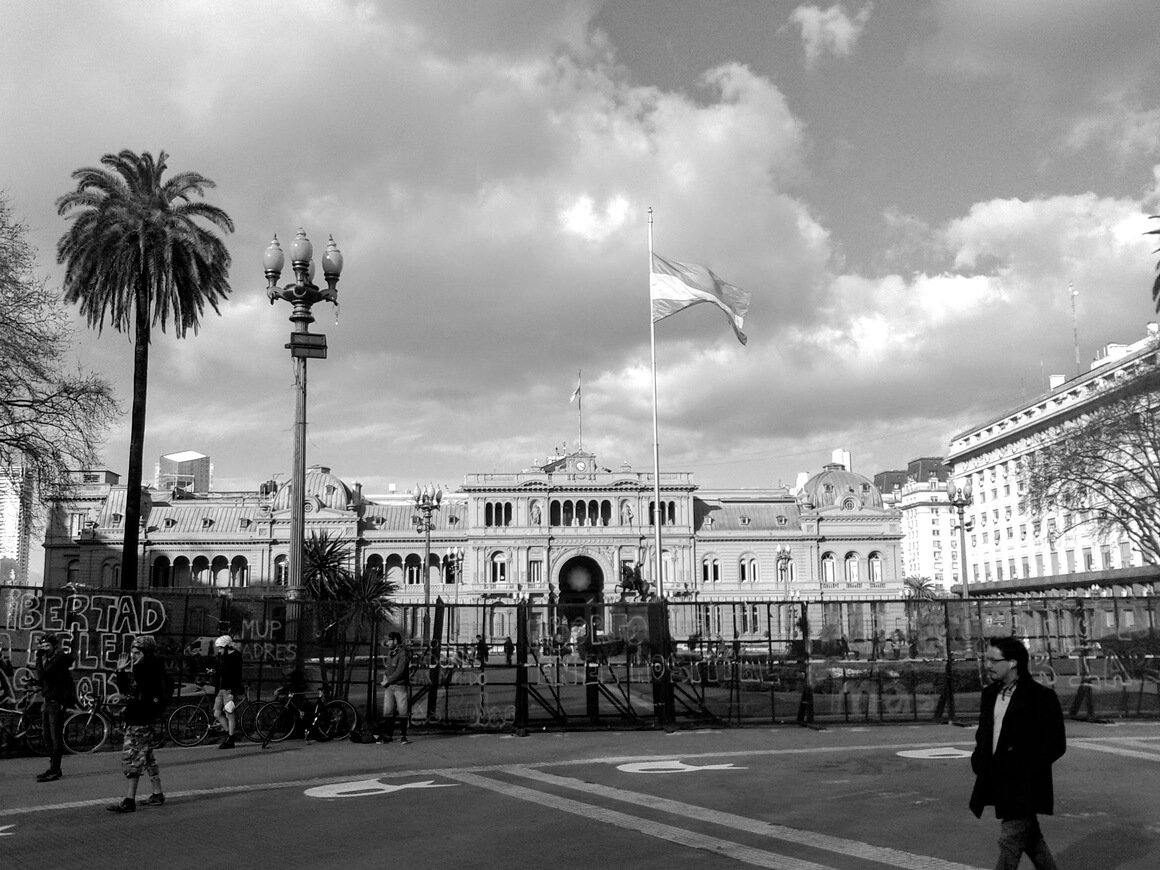
Photo: @Lauramcblonde
Staying at an Argentine mountain hut (refugio) is a wonderful experience not to be missed. Few who travel to Argentina manage to make it as far as Tierra del Fuego (the Land of Fire). Visit one of the most dramatic places in Argentina with its long summer days and epic arctic landscapes.
Speaking of the arctic, you can arrange trips to Antarctica from Ushuaia! This would be the adventure of a lifetime but it’s by no means cheap.
What to Know Before Visiting Argentina

- Don’t miss out on… El Chaltén, which is the base for seeing some of the most dramatic peaks on Earth: Cerro Torre and Fitz Roy.
- You know what’s overrated… La Boca in Buenos Aires. These much-hyped multi-coloured houses are pretty rundown and actually quite dangerous, I strongly suggest you avoid it. The whole area feels like a tourist trap. There are much better things to do in Buenos Aires.
- The coolest hostel is… America del Sur Hostel (El Calafate). Cozy, super social, and with an insane view of the lake, the town, and beautiful sunsets. Great place to chill, and work (if you need to).
- The best food is found in… your neighbour’s personal asado. Nothing beats grilling grade-A Argentinian beef with some locals.
- The official exchange rate is NOT THE EXCHANGE RATE. Because of the fluctating exchange rate, many of the locals withdraw their cash by using what is referred to as a “blue dollar rate” from Western Union. This way gives you 50% more pesos than withdrawing pesos from an ATM or exchanging currency.
Backpacking Uruguay: More Than Argentina-lite
- Best for: Peace, surf and quality of life
- Budget vibe: Pricey, being known as the Switzerland of South America due to living standards does not come for free.
- Time needed: 1 week
- Getting there: Fly into Montevideo, or get a bus from Florianopolis in Brazil or a ferry from Buenos Aires.
- Don’t miss: Cabo Polonio
- Skip if: You are short on time.
- Overrated: Punta del Este
- Where to base: Cabo Polonio
Backpacking Uruguay is often ignored by guides, and derided as boring by some. In a continent of extremes and chaos, is that always such a bad thing?
After months in South America, you too may long for an end to the din of car horns or buses that run on time. Uruguay has the continent’s best living standards, and is a peaceful, happy country that punches above its weight, much like they do with football World Cups, they have won two.
Uruguay may not have a Machu Picchu or an Iguazu Falls to lure visitors, but that is not what it is about. It is about the intangibles, like the sun on your skin while surfing world class waves or hitting a legal joint around a campfire in a hippy town.
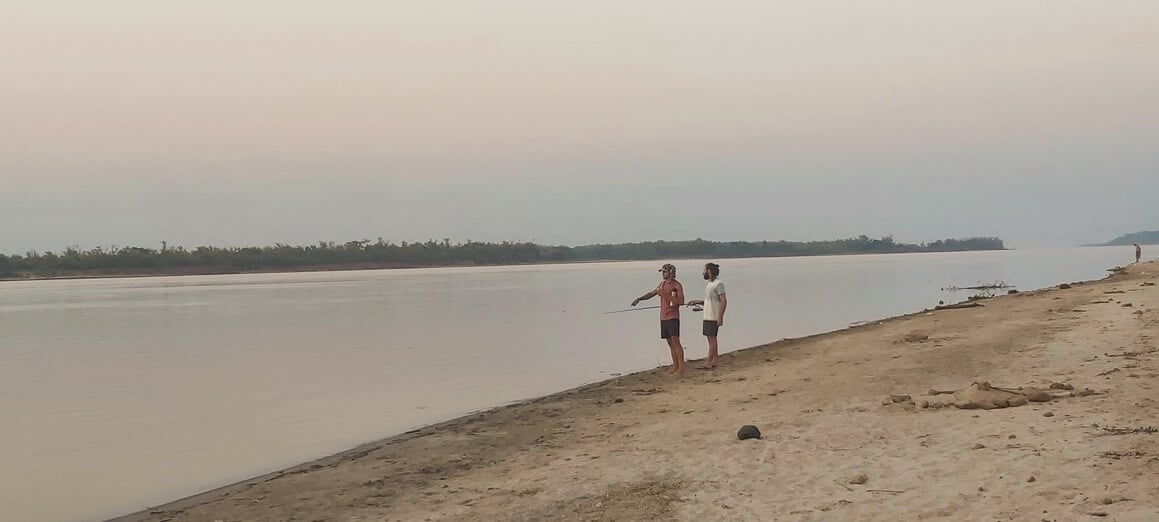
Photo: @Lauramcblonde
I found Uruguay very tranquil, and a bit of a trap, where you meet lots of people who enjoyed their daily routines of surf and steak sandwiches so much that they wound up staying for far longer than they planned.
One of the perks about Uruguay is you don’t HAVE to do anything here. People are friendly and, compared to some chaos you find in other areas of the continent, it’s pretty chill. The beautiful coast is the perfect place to get away from the usual backpacking South America route and to avoid traveller’s burnout.
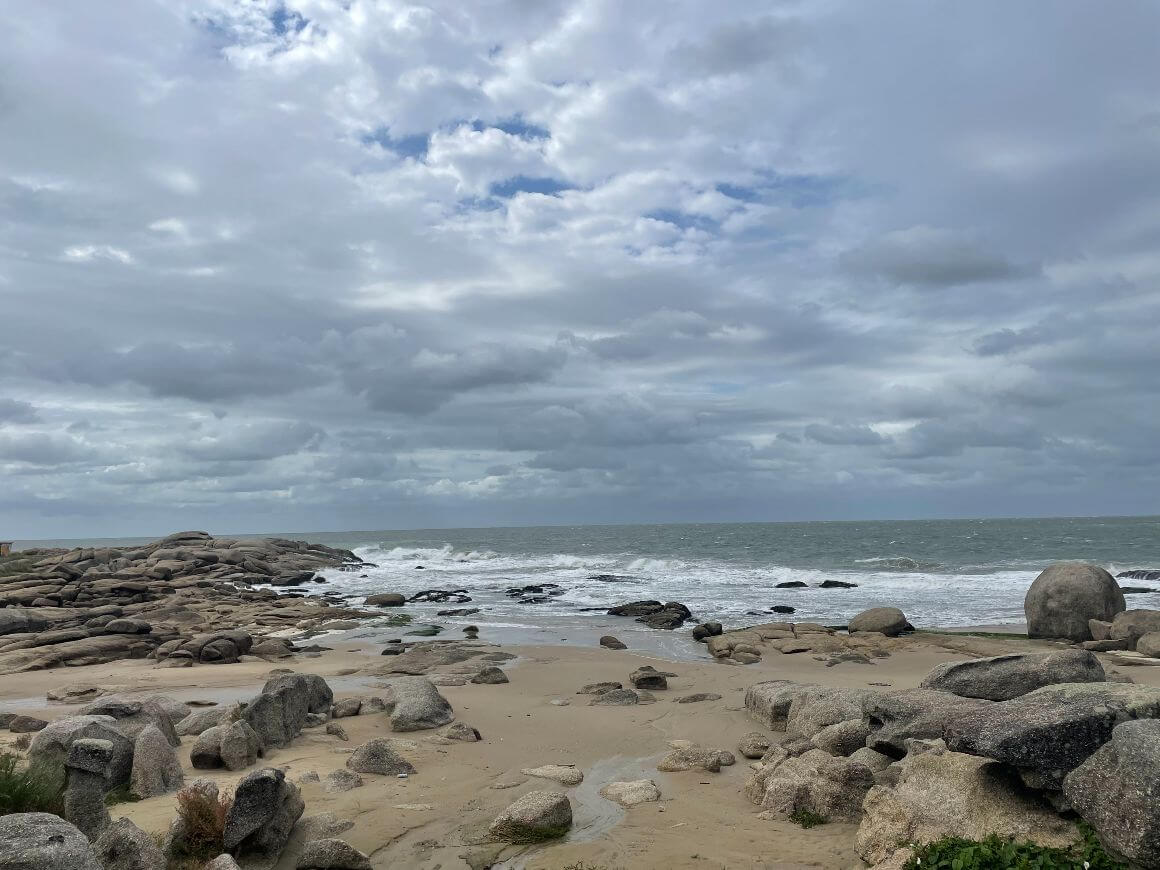
Photo: Tom Hennessey
Outside of Montevideo, there are nice beach towns worth crashing at; Punta del Diablo is the quintessential lazy surfer town. Punta del Este is fun in the summer if you like partying. Colonia del Sacramento is an old colonial outpost and UNESCO heritage site.
Oh but here’s the kicker: weed is legalised. Yes, Uruguay is famous for allowing the smoking of the devil’s lettuce. And the quality of it is surprisingly good.
Lots of locals keep a weed garden on their balconies. Perhaps your hostel in Montevideo will have one?
What to Know Before Visiting Uruguay
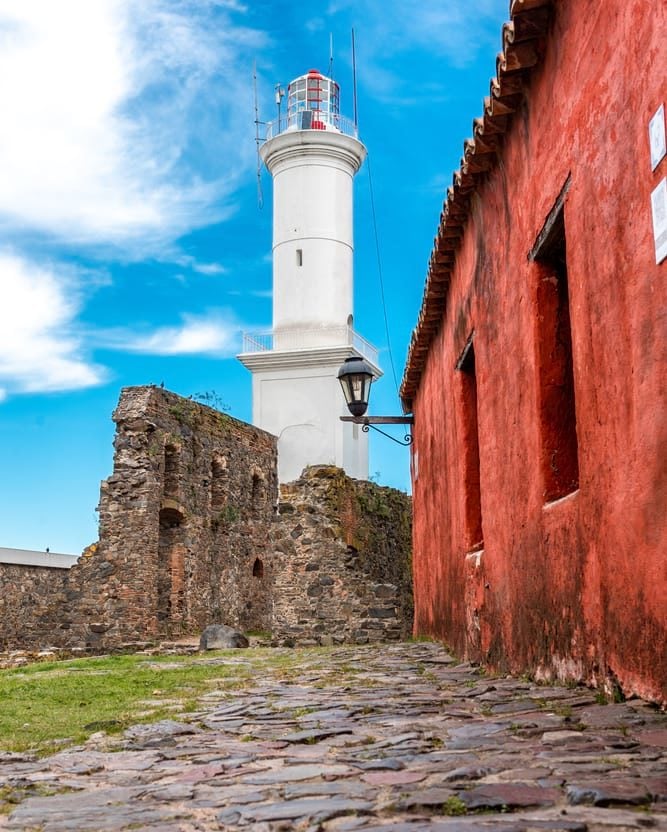
- Don’t miss out on… Punta del Diablo. This is laid-back surfer town evades most backpackers. It is arguably one of the best beach towns in South America.
- You know what’s overrated… Punta del Este. This place literally exists for the sake of Argentinians on holiday. In the off-season, it’s empty.
- The coolest hostel is… La Brújula Hostel. It’s near the beach, eco-friendly, has a family vibe, and is great to meet new people. This is a gem next to the sea.
- The best food is found in… Montevideo. Can’t beat a giant chivito after you’ve got the munchies!
Backpacking Venezuela
Venezuela is a truly incredible country. With towering mountains, steaming forests, endless beaches, and just enough danger to keep you on your toes, this country is every budding adventurer’s dream destination.
A Disclaimer on Visiting Venezuela
Unfortunately, due to the political situation in Venezuela, The Broke Backpacker absolutely does not condone visiting the country right now. It is simply not safe and it would be irresponsible to even attempt to Venezuela at present. Unless you somehow have absolutely solid and trustworthy contacts on the ground, Venezuela is not the place to travel for the foreseeable future. We do not have any contacts to give out. That being said, there are many team members at The Broke Backpacker that hold a special place for Venezuela in their hearts. For this reason, we are leaving this information available to you, our readers, as an homage to a country we love. We can’t wait for the day that it will be safe to visit again.Backpacking Venezuela has a truly terrible reputation. Don’t get me wrong, travelling Venezuela has been dangerous in recent years: this is a country where you need to keep both eyes on your gear, watch who you’re with, and be on the lookout for iffy situations before they get the chance to rear their ugly head.
Backpacking in Venezuela is, in my opinion, one of the last great adventures out there. Plus it’s one of the cheapest countries in the world to backpack in.
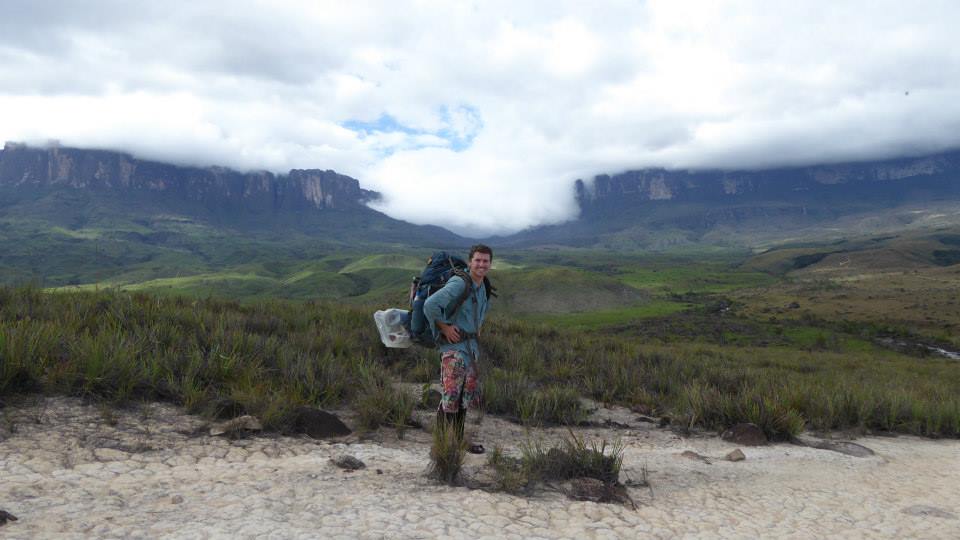
Photo: Will Hatton
Venezuela is a mysterious country. It attracts adventurers looking for a raw adventure.
It’s a country yet to be polluted by heavy tourism with incredible landscapes of mountains, forests, lakes, and caves. It is a kind of Shangri-La for adventurers and extreme sports lovers.
A South American backpacking trip to Venezuela is getting into the wild. To feel like the old explorers, Venezuela will not disappoint you. But backpacking Venezuela is not for the faint-hearted: this is a veteran explorer country. Plus, dealing with money there is a bit of a nightmare.
What to Know Before Visiting Venezuela
Photo: @amandaadraper
- Don’t miss out on… Mt. Roraima – the highest tabletop mountain in the world; an incredible place to explore. Sometimes you feel like you’re walking on an island in the sky.
- Keep an eye out for… the seasons when visiting Angel Falls. When it’s dry, the falls are actually quite weak (it’s more like a trickle).
- The coolest hostel is… El Sofá Caracas. Safe, quiet, cozy place in the big city. You’ll feel at home instantly. And they have a unique boat pool to chill when it gets too hot.
- The best food is found in… the buffet places where you pay by the weight of your plate. A little goes a long way here and you won’t be disappointed!
Getting Off the Beaten Path in South America
South America is still one of the wild places of the world. Its mountains are dotted with villages that time forgot, ruins lost to the forests and untouched steaming jungles… Point being, there are plenty of great places to get off the beaten path.
The Andes offer possibilities to lose yourself amid icy walls of 6000m tall mountains as condors wheel overhead. Peru’s Cordillera Huayhuash or routes like the O-Trek in Chilean Patagonia’s are best for this, their mountain views are only really challenged by the Himalayas.
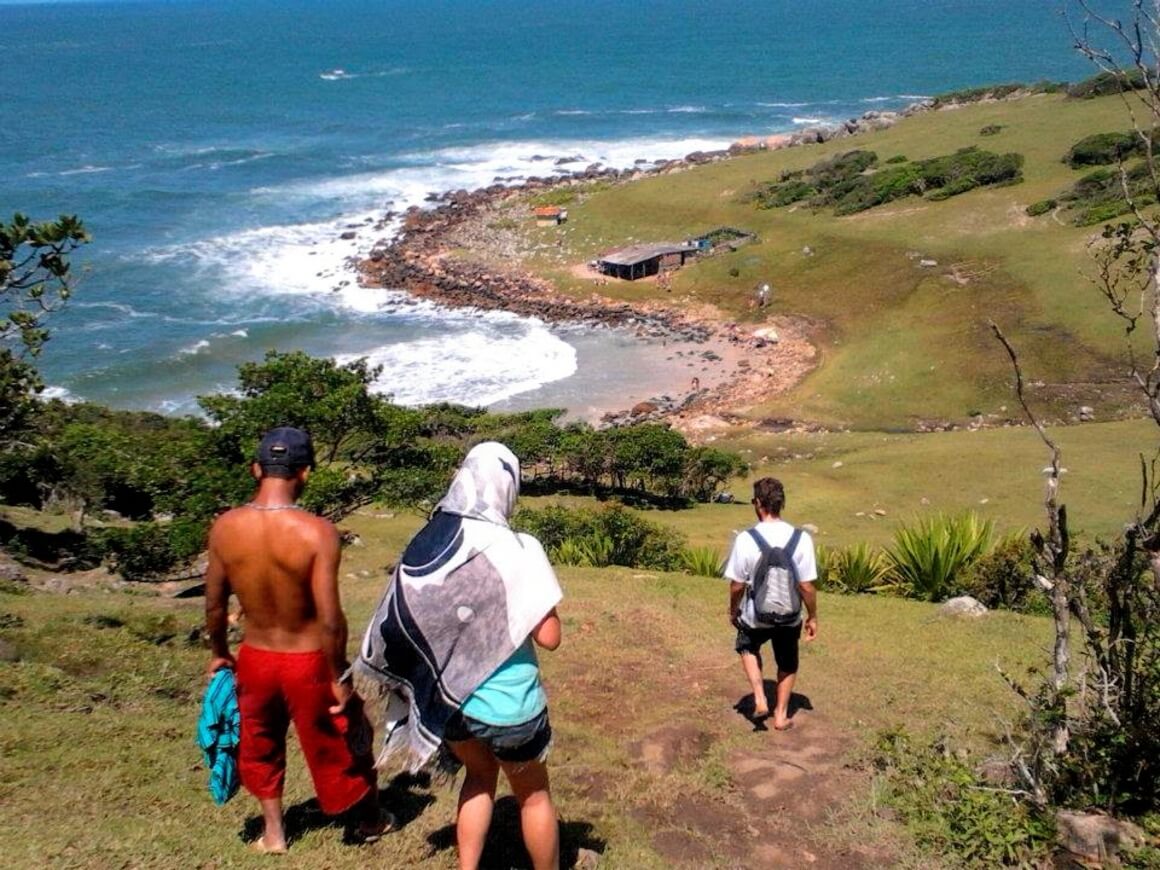
Photo: @sebagvivas
Argentine Patagonia, Bolivia’s Cordillera Real, Colombia’s Los Nevados and Ecuador’s Avenue of the Volcanoes are also adventures of a lifetime.
For those of you looking for even more ice and snow, Antarctica lies below the Southern tip of South America. Cruises leave from Ushuaia, a town known as Fin del Mundo (the edge of the world), across the Drake Passage to the wildernesses of Antarctica. It does not get much more off the beaten path than that.
On the other extreme, South America also borders the Carribean. Tayrona National Park in Colombia allows for trekking through pristine rainforest that caresses the seashore. There is even a lost city in the jungle to trek to!
Top Things To Do in South America
You can make your South America backpacking route totally unique. No matter what things you get up to, they’re going to leave a big print on your heart. But here are some things I definitely recommend considering planning for your itinerary.
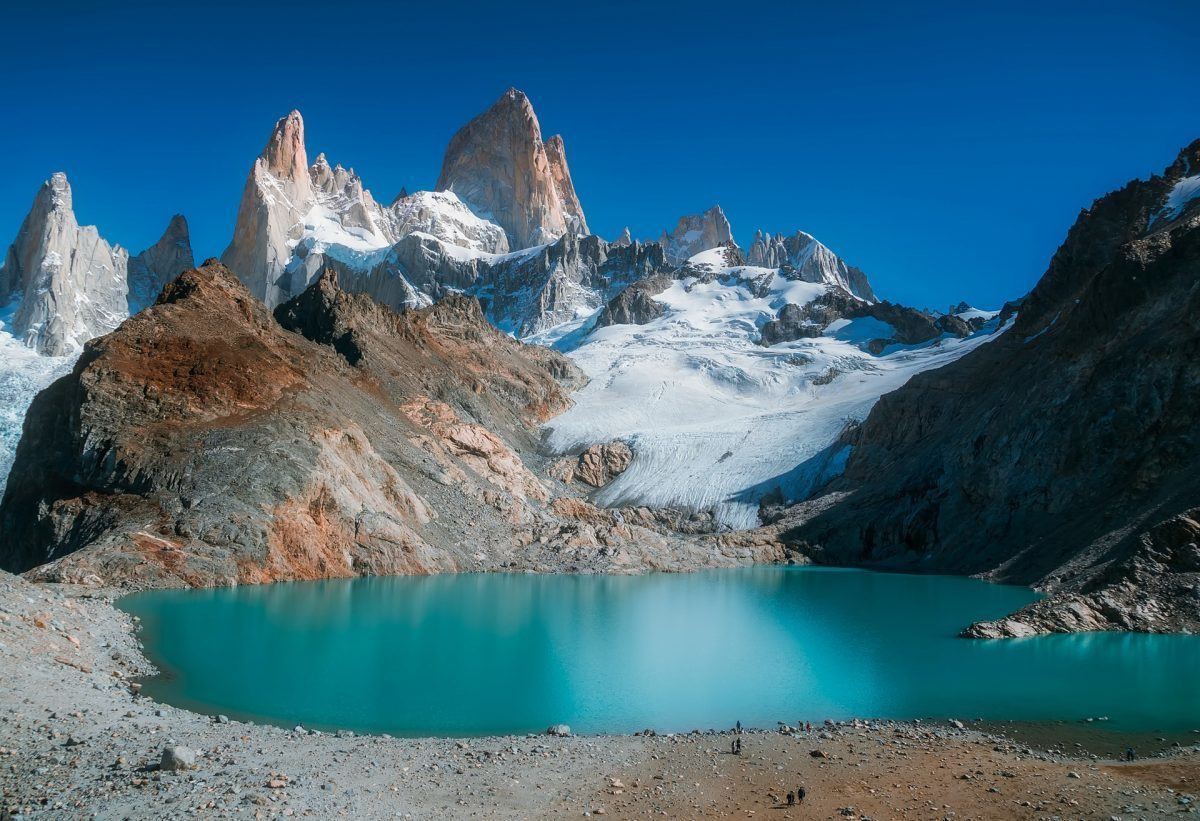
1. Explore Patagonia
Patagonia is still one of the last untouched wildernesses on the planet. Not everyone gets to experience this in their lifetime! In addition to the usual superlative locations, like Cerro Torre and Torres del Paine, there are heaps to discover off-trail.
2. Check out Medellín
Medellín is one of the most popular cities to visit in South America right now. The choice between Medellín or Bogota has never been easier.
It’s fun, safe, comfortable, and (most impressively) completely different than it was before. Medellín has shed its violent past and is ready to host the next wave of backpackers.
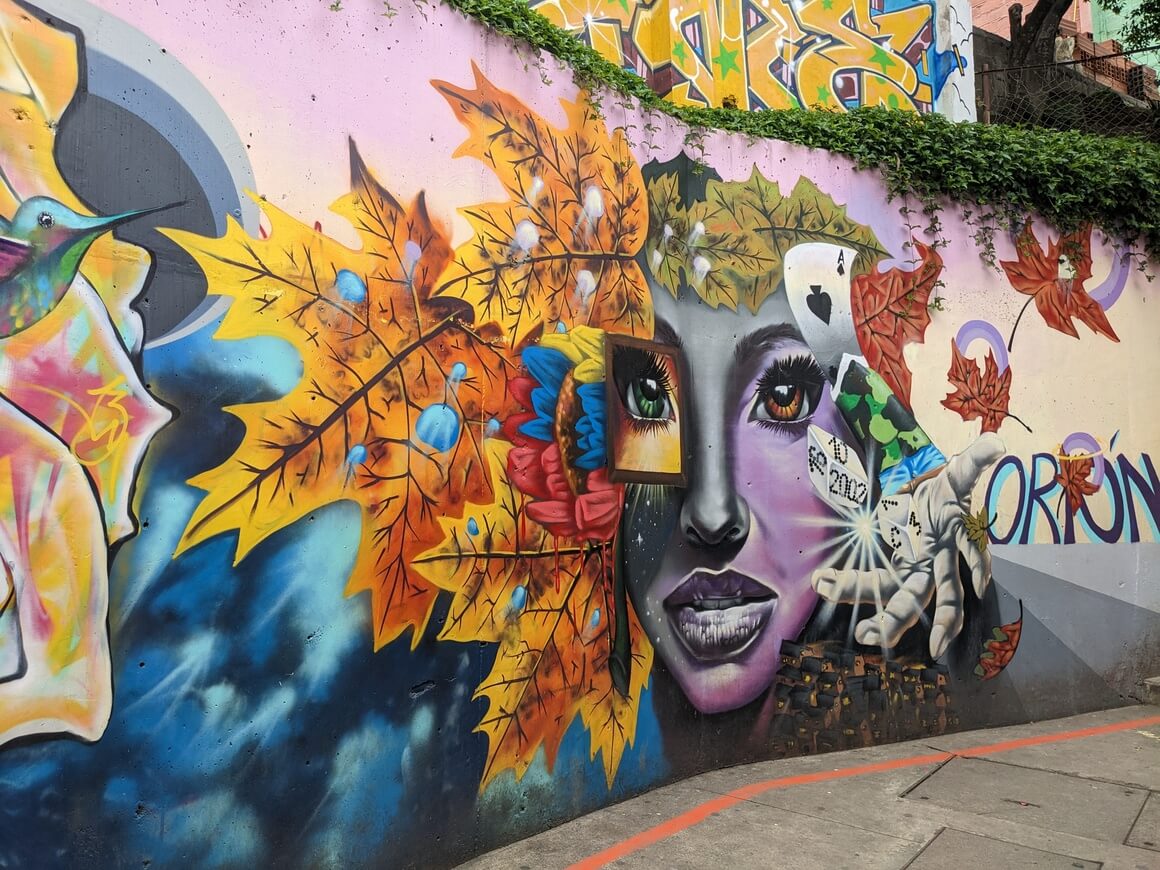
Photo: @Lauramcblonde
3. Explore the Salts Flats of Uyuni
It’s one of the most unique places on the planet and a highlight of any South America backpacking trip. Get ready to be wowed by this alien landscape.
I know broke backpackers usually cringe hard at the idea of an organised tour (because I’m one of them) but the Salt Flats is one that’s really worth shelling out for. Other tour highlights include lakes of flamingos and bubbling mud volcanoes.
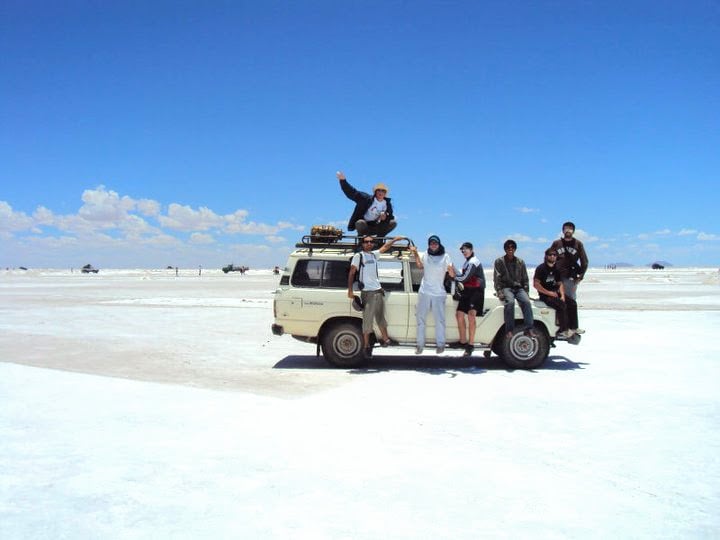
Photo: @Lauramcblonde
4. Shred Some Waves
It wouldn’t be a proper backpacking South America itinerary without some beach time! Every kind of beach imaginable is found on the continent.
From tropical slices in Brazil to surfer’s paradises in Ecuador to even fjords in Chile, you won’t be lacking in choices. Whether you want to spend your days riding waves or relaxing with a cold one in hand, there are plenty of spots for those magical beachy days. Grab a beer, catch some waves, get busy.

5. Visit Machu Picchu
I mean, you’re reading a backpacking South America guide: I know you already know about this one. It is the place that attracts most people to visit South America… but I’d be lying if I said it wasn’t worth visiting.
You can hike the Inca Trail like everyone else. But if you want to visit Machu Picchu in an alternative way, try one of the other Inca trails like Salkantay Trek.
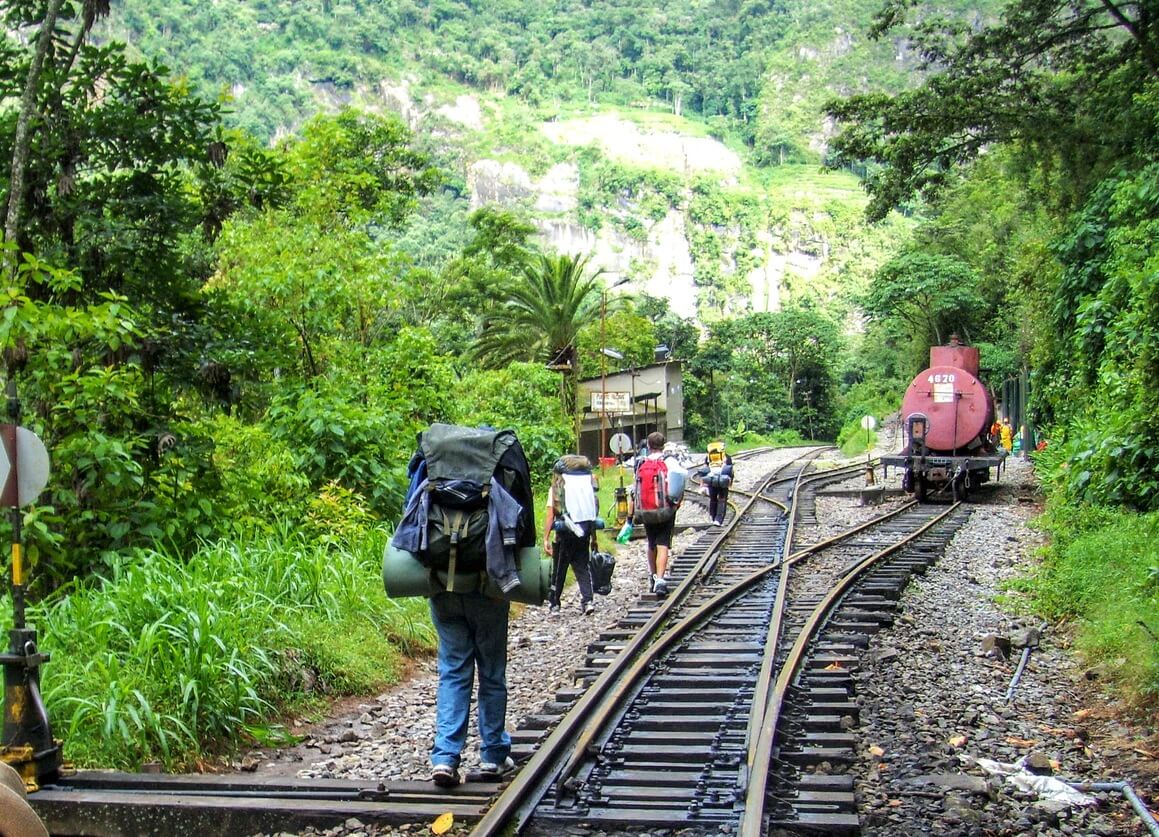
Photo: @Lauramcblonde
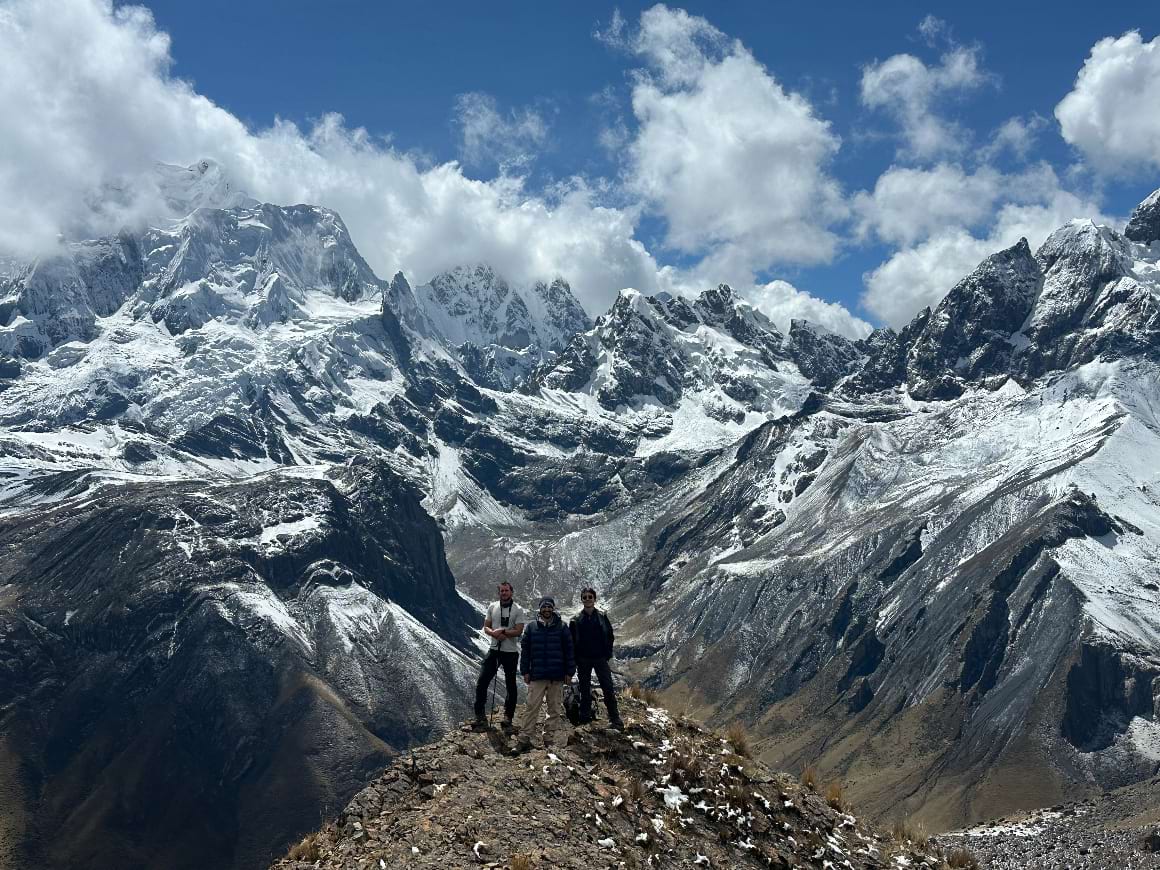
6. Hike in the Andes
The Andes are the longest mountain range in the world, and the tallest outside of Asia. That they stretch from the Caribbean to the Sub-Antarctic means that their range of environments is unmatched. S
ome are carpeted with jungle like Machu Picchu, while others are crowned by eternal winter like Aconcagua or Huascaran. Check out volcanoes like Cotopaxi and Chimboarazo too.
But there is more to these mountains than just these popular destinations: the highlands of Ecuador, Cordillera Huayhush in Peru, the Cordillera Real in Bolivia are all stunning. Even Colombia gets a slice of the pie at Cocuy National Park.
7. Party hard at Carnival
It’s the biggest party on the planet! Grab yo’ body paint, yo’ finest feathers, whatever else you can get your hands on, and join the festivities!
You won’t ever forget the time you spent Carnival in South America. The carnivals in Bahia, Rio, and Barranquilla are particularly good.
8. A South American
Hey, most backpackers will vouch for love and sex on the road being something memorable to take part in…
They love, and they love passionately. And the sex… well, maybe you’ll find out.
9. Get “stuck” somewhere
South America is full of sticky places AKA places where you get stuck for months on end. La Paz, Medellín, Mancora or just another beach bum hostel in Florianópolis… All of these locations start off as a simple stop on your South America backpacking route but turn into temporary homes.
Don’t fight it! Find your sticky place and stay awhile.
10. Learn to dance
Latino music and dances are famous the world over for good reason. Whether it is Samba in Brazil, Salsa in Colombia or Tango in Argentina, it is all about moving your body to soulful music.
Learning a dance is a great way to meet local people, enhance your dance food repertoire and show off to your friends back home.
11. Learn Spanish or Portuguese
Learning a language is such a life enhancing skill, being able to navigate a foreign country and strike up a conversation with anyone is just plain cool. It is also far cheaper to learn it in South America rather than paying full-whack back home.
If you learn the basics, being immersed in the language will mean that your skills will naturally snowball. You will put smiles on the faces of locals and save yourself some Gringo-Tax!
Accommodation in South America
South America has an array of budget accommodation options for backpackers. Airbnbs are fantastic for private rooms if you’re travelling as a couple or as a group.
For solo travellers, when you are not passing the night from the comfort of your tent in the Andes or with a Couchsurfing host, you’ll likely be booking hostels.
Whether you just need a place to lay your head or a spot to meet fellow backpackers like yourself, hostel life is clearly where it’s at… In fact, I love South American hostels, even travelling with my partner, you get perks in a hostel that you don’t get in a hotel or Airbnb.
I’ve had some of the best nights of my life in them and met some of the best people in my life. South American hostels seem tailor-made for creating these profound connections with bars, rooftop terraces and organized activities like salsa lessons.
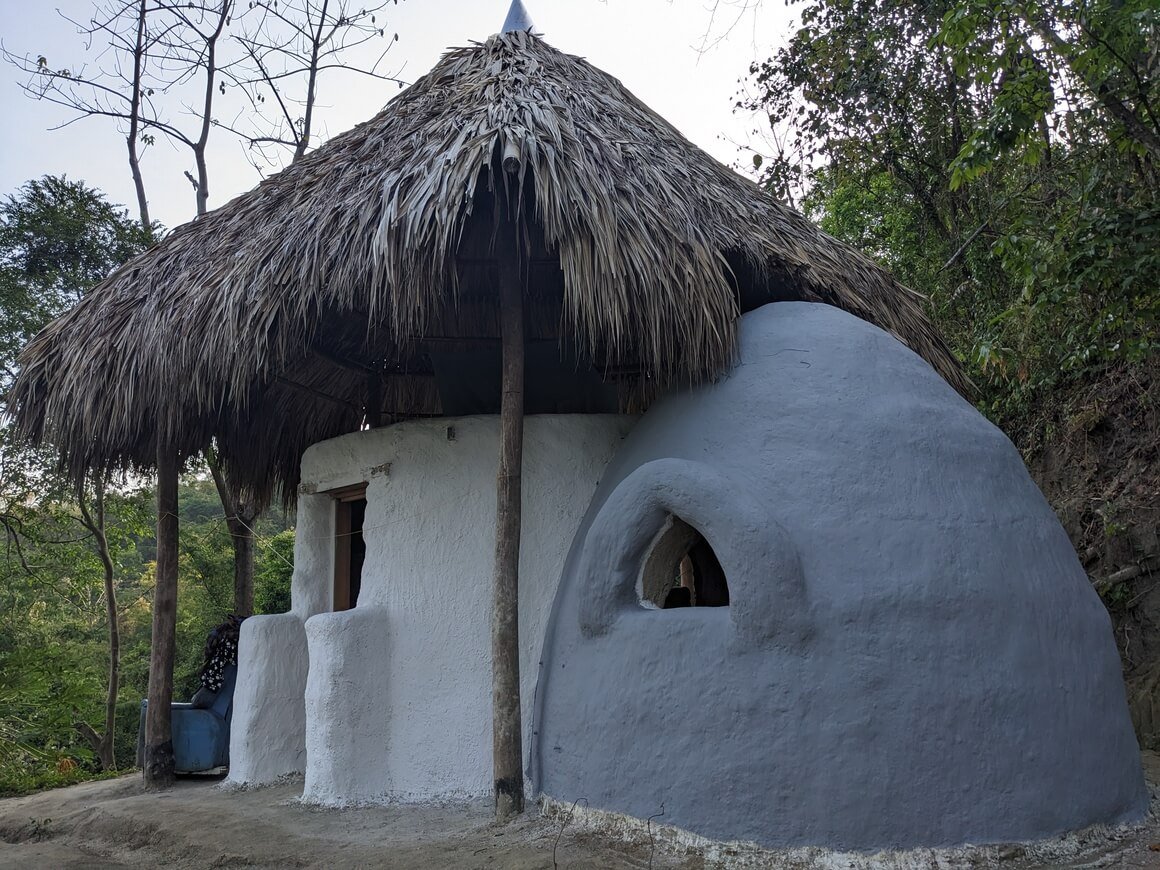
Photo: @Lauramcblonde
I’ve had some of the best nights of my life in them and met some of the best people in my life. The South American countries are home to some of the best hostels in the world.
In terms of booking hostels, it is definitely best to book your first accommodation, and the premier hostels in backpacking hotspots like Medellin or Cusco can sell-out, so it is best to book ahead there. In destinations with less footfall, you can preserve spontaneity by just rocking up at the front desk whenever you arrive.
Insider tip: If you want to see all your hostel options to visitbackp South America, Booking.com is the perfect one-stop-shop to book hostels. You can even filter your personal travel needs to find the perfect place for you.
Best Time to Travel to South America
You know by now that we are talking about an enormous amount of land with regards to the South American continent. Countries in South America near the Equator do not experience distinct seasons. As you start to head south you will find the seasons to be the opposite of what they are in the Northern Hemisphere i.e. winter in June.
Patagonia experiences bitterly cold and windy winters. I do not advise travelling there during the winter unless you are a serious mountaineer and have all the right gear. However, it’s probably one of the best places to visit in December in South America!
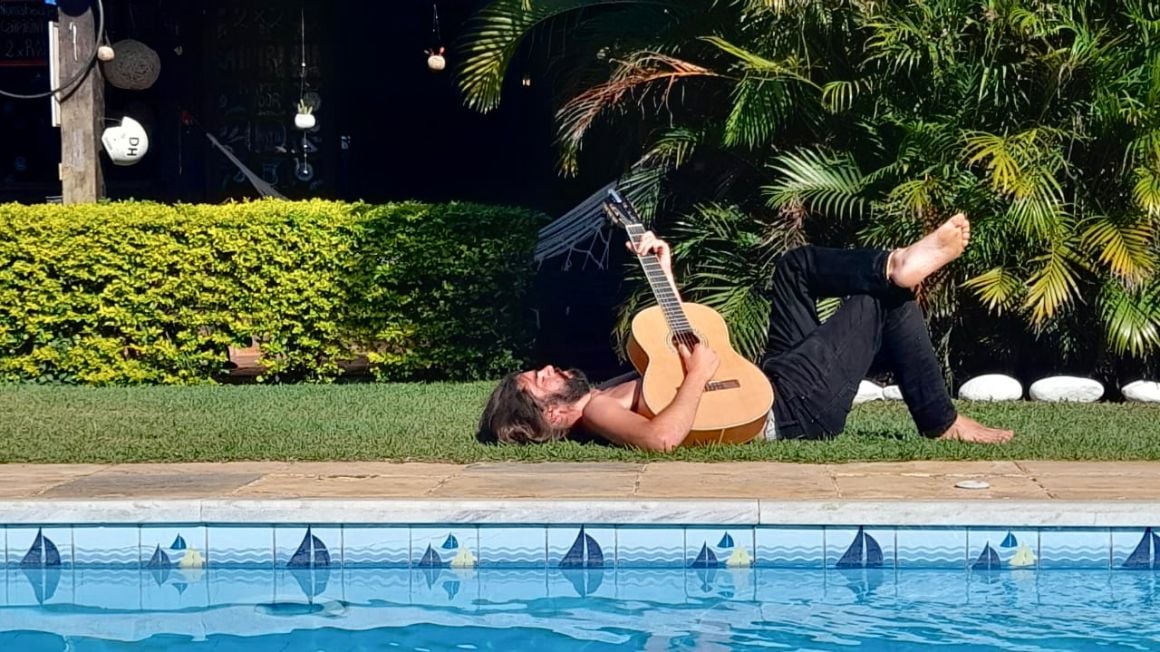
Photo: @monteiro.online
Dry season depends on the country. Generally, the cooler months from June to September are the driest in the coastal areas. In the Amazon – given that it is the world’s biggest rainforest – is wet pretty much all year. The Andes are the driest from April – November.
High season for all countries is, without a doubt, from December – February. This is due to holidays occurring over that time and it is also the time when many gringos and locals alike take their holidays. Backpacking in the low or shoulder seasons will definitely make for a cheaper trip, especially with regards to accommodation.
Best Time to Visit – Country Breakdown
Here are the best times to visit South America broken down by country!
Brazil
- Best Months to Travel: September – April
- What’s the climate in Brazil like? In the south, the hot, wet summer season runs from November – March. In the north, the rainy season is from April – August. In the Amazon, it rains pretty much all year. If you want to visit during the festival season though, September-March is best.
Colombia
- Best Months to Travel: November – March
- What’s the climate in Colombia like? Generally speaking, travellers should visit Cartagena and the Caribbean coast between November and March when the weather is dry. The rest of the country is good year-round. Bogota, Cali, and Medellin are always pleasant weather-wise.
Ecuador and Peru
- Best Months to Travel: March – May, September – November
- What’s the climate in Ecuador and Peru like? Lots and lots of micro-climates in the Ecuador Peru region. But there are some general trends:
- The highlands/Andes are dry from May – September. These are the best months for hiking and visiting Machu Picchu.
- The coast is warm and dry from December – May. This is the best time for the Galápagos.
- The Amazon is always wet and humid as shit.
- The south of Peru is much drier than the north, and Ecuador for that matter.
Bolivia
- Best Months to Travel: May – October
- What’s the climate in Bolivia like? The winter season (May – October) is also its dry season, and the best time to visit Bolivia. This means that nights can be very cold, especially when you’re at higher altitudes. Although Bolivia is generally drier than its neighbours, it stills gets dumped on in the wet, summer season.
Chile
- Best Months to Travel: March – April, October – November
- What’s the climate in Chile like? Summers in Chile are generally the high season. That being said, this may not be the best time to visit. Prices are at their highest, the Atacama Desert is a furnace, and the winds are VERY strong in Patagonia. Like almost anywhere, the shoulder months (October – November & March – April) are better.
Argentina and Uruguay
- Best Months to Travel: October – April
- What’s the climate in Argentina and Uruguay like? Summer for most of the country is from December – February. In the north, the summers can see rain and temperatures that soar to almost unbearable. In the south and Patagonia, summers are dry(ish) and pleasant. The winters, obviously, are extremely cold in the south. Whereas the north generally has pretty mild winters.
What to Pack for South America
Travelling through South America is a lot easier if you have the right gear. A thorough backpacking South America packing list goes a long way – literally.
On every adventure, there are 6 things I never go travelling without:

Ear Plugs
Snoring dorm-mates can ruin your nights rest and seriously damage the hostel experience. This is why I always travel with a pack of decent ear plugs.
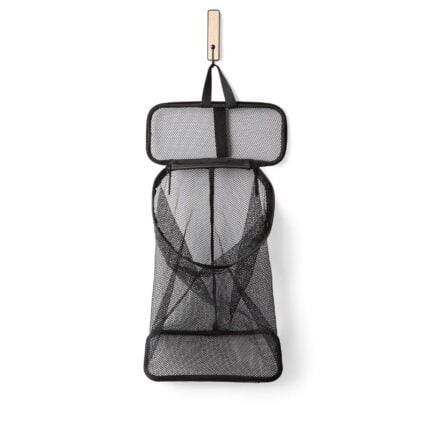
Hanging Laundry Bag
Trust us, this is an absolute game changer. Super compact, a hanging mesh laundry bag stops your dirty clothes from stinking, you don’t know how much you need one of these… so just get it, thank us later.
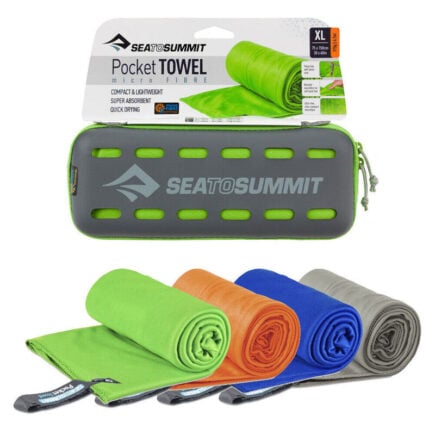
Sea To Summit Micro Towel
Hostel towels are scummy and take forever to dry. Microfibre towels dry quickly, are compact, lightweight, and can be used as a blanket or yoga mat if need be.
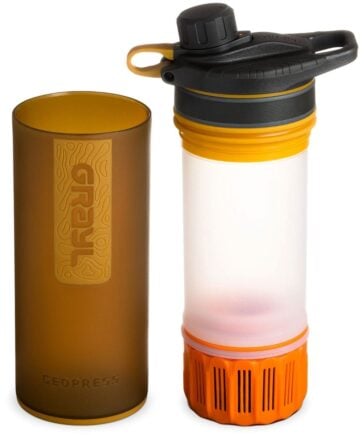
Grayl Geopress Water Bottle
Always travel with a water bottle! They save you money and reduce your plastic footprint on our planet. The Grayl Geopress acts as a purifier AND temperature regulator. Boom!
Safety, Scams & Common Backpacker Mistakes
South America IS a safe place to go backpacking. Is backpacking in South America safe all the time?
Hell no. But nowhere in the world is safe 100% of the time. Does that mean we let it stop us?
Hell no.
In recent years, security in South America is increasing. Using the common sense safety rules of backpacking is usually enough here.
The thing with South America is understanding your surroundings and self-awareness. Coordinating your safety in Rio de Janeiro is completely different than hiking the Inca Trail.
Robberies could happen to anyone – but that goes for any country. Odds are, you should be just fine. If ever you run into a hold-up situation just give them what they want.
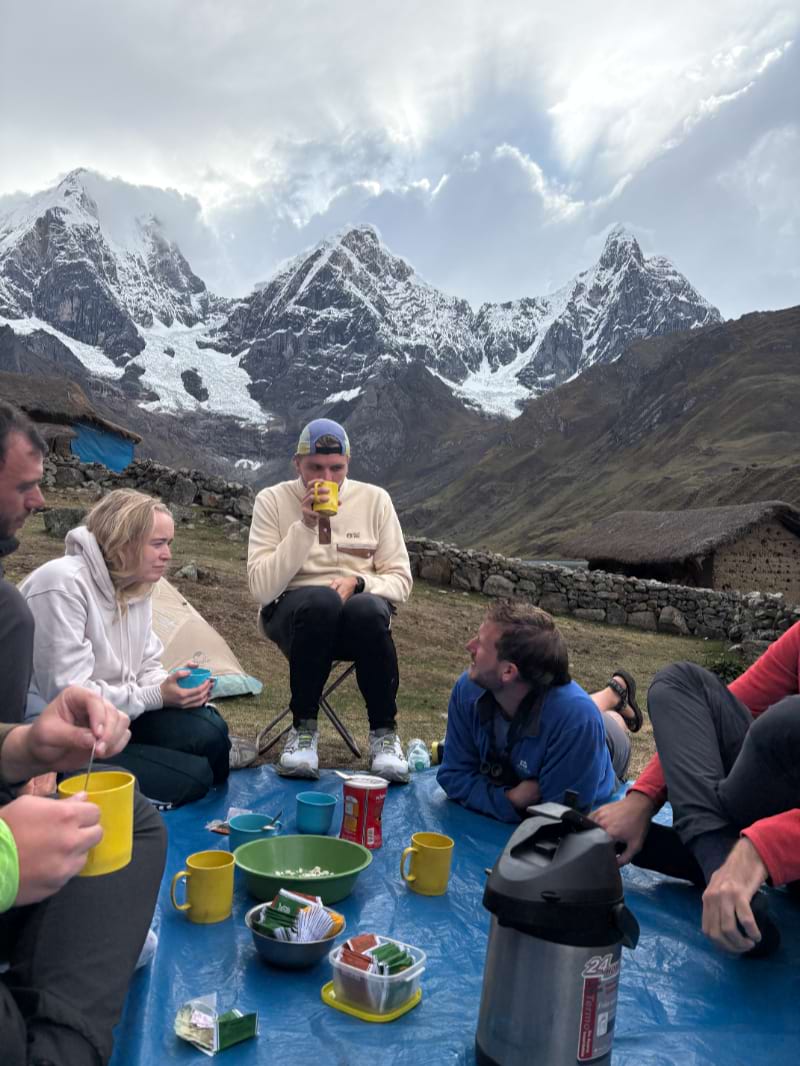
Photo: Tom Hennessy
Your iPhone and wallet aren’t worth dying over, ever! But it’s worth hiding your money well just in case.
Political wobbles are pretty common. Due to the political situation in Venezuela right now, this is probably the most dangerous country in Latin America. I hate to say it but the situation is what it is.
In general, being out late, drunk, and/or alone is a recipe for trouble. Always take a taxi home at night, even in a group. 9/10 of the bad experiences in South America began with getting very drunk, losing your friends, then, something bad happened.
Do know which neighbourhoods you should avoid too, especially in major cities – even during the daytime. Ask the locals which these are. There’s no real reason to head into these areas anyway, but it’s worth noting so you don’t stumble into the wrong places.
Avoid driving in Latin American cities, where traffic rules seem more optional than binding! There are great opportunities for driving, such as a road trip around Salta Province in Argentina, but make sure that you are insured and confident navigating mountain roads.
Drugs are criminalised across South America, though in practice they are fairly plentiful. The biggest danger to the good-time backpacker is an impromptu inspection of a bus with drug dogs, so avoid being that tourist who ends up in jail for 20 years by just not travelling between places with stash.
Watch out for the occasional scam, like a shoe cleaner who drops a brush in front of you. Being a good person, you return it to him. He then proceeds to thank you and clean your shoes seemingly as a gesture of appreciation. This done, he will aggressively demand a crazy sum for the clean!
Sex, Drugs, and Rock n’ Roll in South America
South Americans love to party! They start the party late and they don’t stop until the sun is way up.
Of course, Brazil is very famous for Carnival AKA the biggest party on the planet. But it’s a big deal in most South American countries – so you’ll find great parties everywhere.
The backpacker circuit is notoriously rowdy. Traveller hubs like Cusco, Buenos Aires, Montañita, Mancora, La Paz, and Medellín are legendary for their nightlife.
It is very easy to meet people, stay up all night, and fall in love with a sexy South American. Much of the continent is LGBTQ+ traveller friendly too!

Photo: @Lauramcblonde
Alcohol is freely available, freely consumed, and good quality too. I’m telling you, I’ve had beer in South America which puts Germany to shame.
South America is stoner-friendly too! Weed is legal or decriminalized for recreational use in many places – some countries are more relaxed than others. It’s best to ask the locals how it’s currently being handled where you are.
Cocaine is just about everywhere; particularly in Colombia, Peru, and Bolivia. But be aware, this isn’t the stuff you find back home – it’s much purer. One line is enough to keep you up all night.
To find drugs on the road, just ask a local to help you. Don’t go out alone looking to score in strange places and don’t give cops a reason to shake you down.
Ayahuasca retreats are gaining popularity as well. But remember, it is a ceremonial spiritual medicine of indigenous people. If you do want to try it, make sure you’re doing it with a real shaman, for real reasons; it’s not like acid and not a drug just to get mindless with.
Staying Healthy in South America
Travellers should be properly vaccinated before backpacking in South America. Consult a medical professional before travelling about which shots you should get.
You should have all the usual travel vaccinations before heading out: hepatitis A & B, typhoid, tetanus, etc. Rabies is also recommended particularly if you’re going to the rural areas or parts of the jungle. You don’t want to mess around with that one because it can be really nasty.
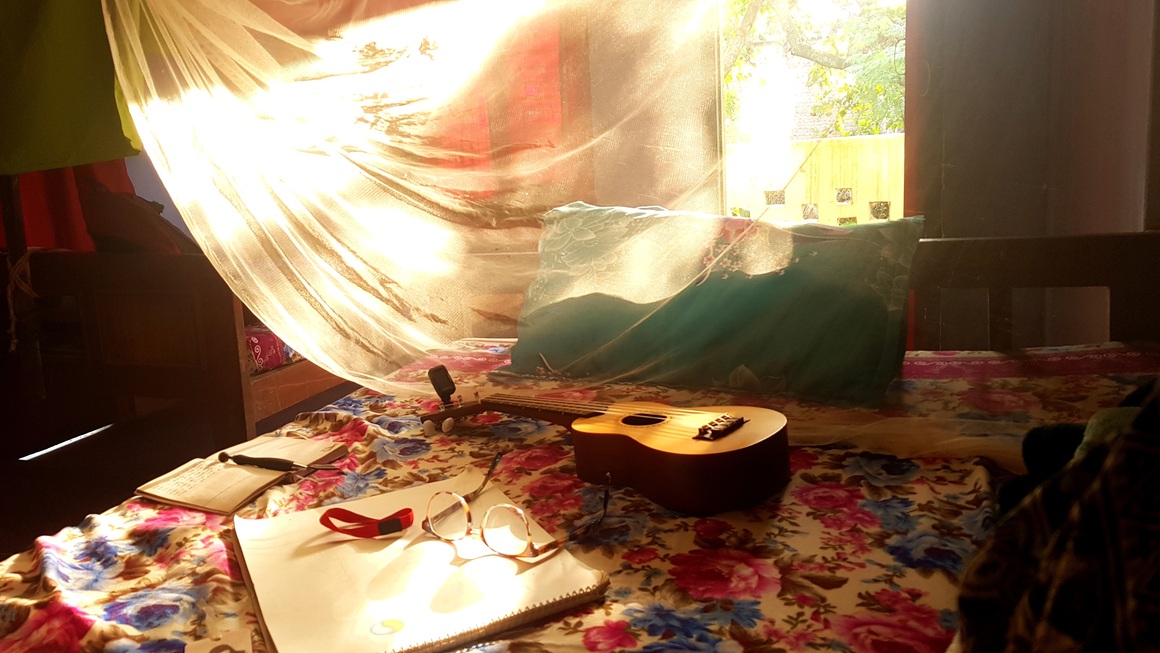
It is worth checking if you need the Yellow fever vaccine before entering some countries. It is a requirement to enter Colombia and Bolivia. In other places that it is endemic, like Peru and Brazil, it is not required, but is highly recommended.
Dengue fever is another concern. This is a disease spread by mosquito bites, and is a danger in tropical areas such as Brazil, Colombia and the Amazon regions of Peru and Bolivia. As there is no effective treatment, the only strategy is preventing bites with long sleeves and insect repellent.
A big risk in South America is food poisoning. For the first week or so of your trip, I would recommend eating less local food as your body adjusts to the new microbacterial environment.
It’s also worth noting that in most places in South America, the water isn’t fit for consumption. The best travel water bottles have a filter.
Getting Insured BEFORE Visiting South America
ALWAYS sort out your backpacker insurance before your trip. There’s plenty to choose from in that department, but a good place to start is Safety Wing. Travelling without insurance in South America is risky. I broke my back in Brazil and will be happy to tell you why GOOD travel insurance is so important.
They offer month-to-month payments, no lock-in contracts, and require absolutely no itineraries: that’s the exact kind of insurance long-term travellers and digital nomads need.
SafetyWing is cheap, easy, and admin-free: just sign up lickety-split so you can get back to it!
Click the button below to learn more about SafetyWing’s setup or read our insider review for the full tasty scoop.
Getting Into South America
Where you will start your trip will be determined by what backpacking route you have chosen. Obviously, if you plan to tackle a specific country, the capital city of that country is a popular starting point and – usually – the logical option.
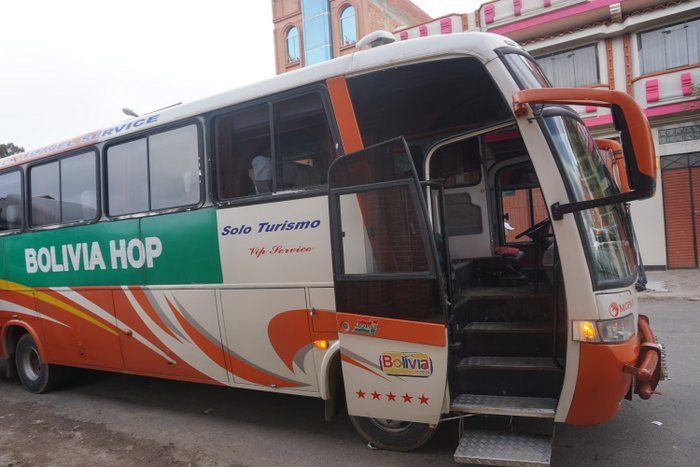
Photo: Sasha Savinov
South America is not the cheapest continent to fly to, your long haul flight will be your biggest single expense. Occasionally, you can sometimes bag a cheap direct flight from another major airport. It’s pretty expensive to fly within South America too. Unless you are coming by boat to Colombia via the San Blas Islands, you will certainly be arriving by plane.
São Paulo, Lima, Buenos Aires, Santiago, Bogota and Rio de Janeiro are all major hubs for South America. Occasionally, good value flights into Quito appear too. Compare the prices between these top destinations, and base your South America itinerary from there.
Entry Requirements for South America
Good news everyone! Most South American nations DO NOT require a visa to visit! This applies to those travelling from the USA, UK, EU, Australia, and most other Western nations.
This is a positive trend in the last few years. A few years ago, travellers sometimes had to apply for (expensive) visas to enter countries like Argentina and Brazil. Luckily, this is no longer the case.
Once you’ve entered the country, you can remain for a period of 90 days visa-free. Extensions are possible but these vary on a country-by-country basis. Most South American governments do not take kindly to people who overstay.
If you want more time in a country, you can do a ‘border run’ where you leave for a neighbouring country and cross back to the original country with a brand new visa. Give it a few days so that it looks less dodgy! It worked fine for me when I needed more time in Peru and Argentina.
Of course, ALWAYS double-check visa policies before travelling.
How to Get Around South America
City Bus. Local Bus. Long-distance bus. Overnight bus.
Buses!
That’s right. Buses are the most economical way of getting around South America. Every major capital has buses going to the far reaches of the country.
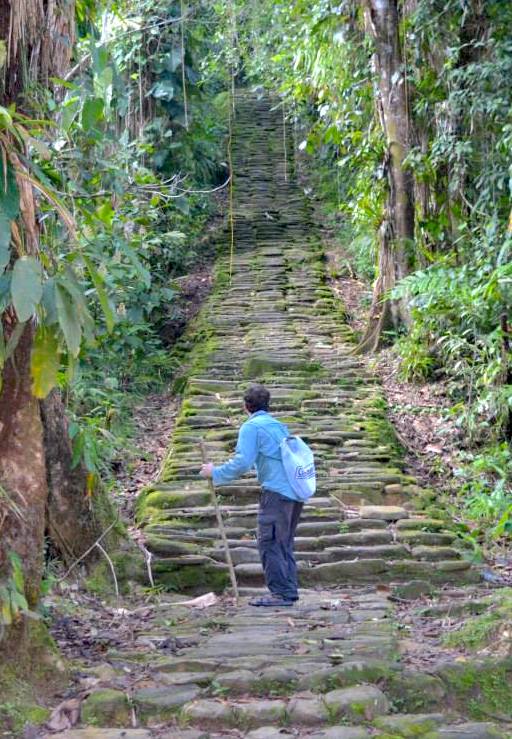
Photo: Will Hatton
Local buses are typically super cheap. You can book online but the bus stations are organised really well too.
Taxis are an option within cities and sometimes Uber too, depending on the city. If you opt for a taxi ride, make sure they are legit, set the price beforehand, and haggle the shit out of the driver without being rude.
Flights between countries in South America can be expensive. Internal flights within the country aren’t the cheapest either, though they are cheaper if you buy them while you’re inside the country (you’ll save money on taxes).
As a general rule when backpacking, cheap travel is slow travel. Buses can be slow but as you will be taking many if you are backpacking South America long term, you want to go for the cheapest option.
If you want to go full Che Guevara style you can travel by motorbike pretty easily (and cheaply) in most places in South America.
I recommend that you have some experience riding motorbikes before you even think about sauntering into a capital city or down a winding road in the Andes. If you do go the motorcycle route you can be sure that it will be the ride of your life.
Renting A Car in South America
While not the most common way to get around, in some countries you may be able to ret your own wheels. Check it out!
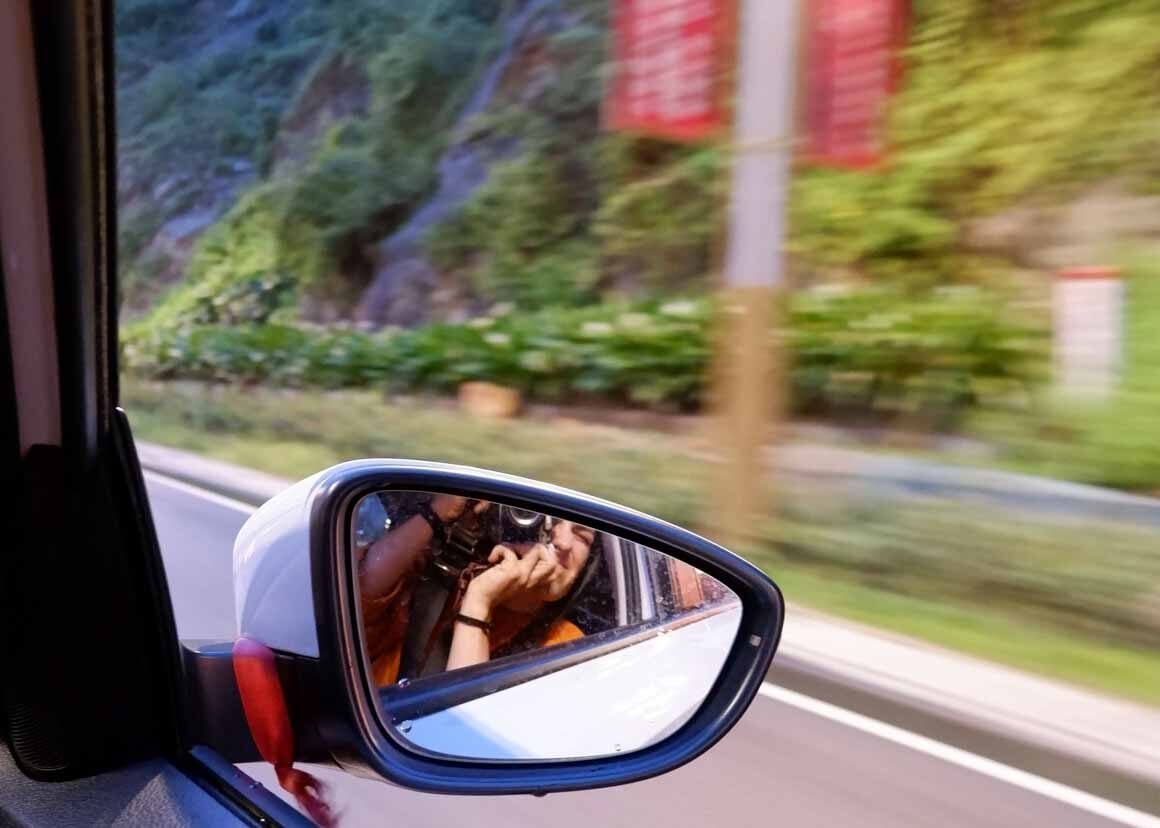
One of the best ways to travel off-the-beaten-path is to hire your own wheels. If you can convince a few mates to join you, it can actually be pretty affordable… and bloody good time!
Check Rental Car PricesHitchhiking in South America
Travelling by hitchhiking is always an option. Your success will greatly depend on the area and the country; I wouldn’t recommend hitchhiking in a major city or at night.
Hitchhikers aren’t that common in countries like Colombia, mainly due to paranoia about the security situation in the country. Not everyone here is a drug lord that wants to kidnap you for ransom money. You can hitchhike throughout Colombia AND it’s such an awesome experience!
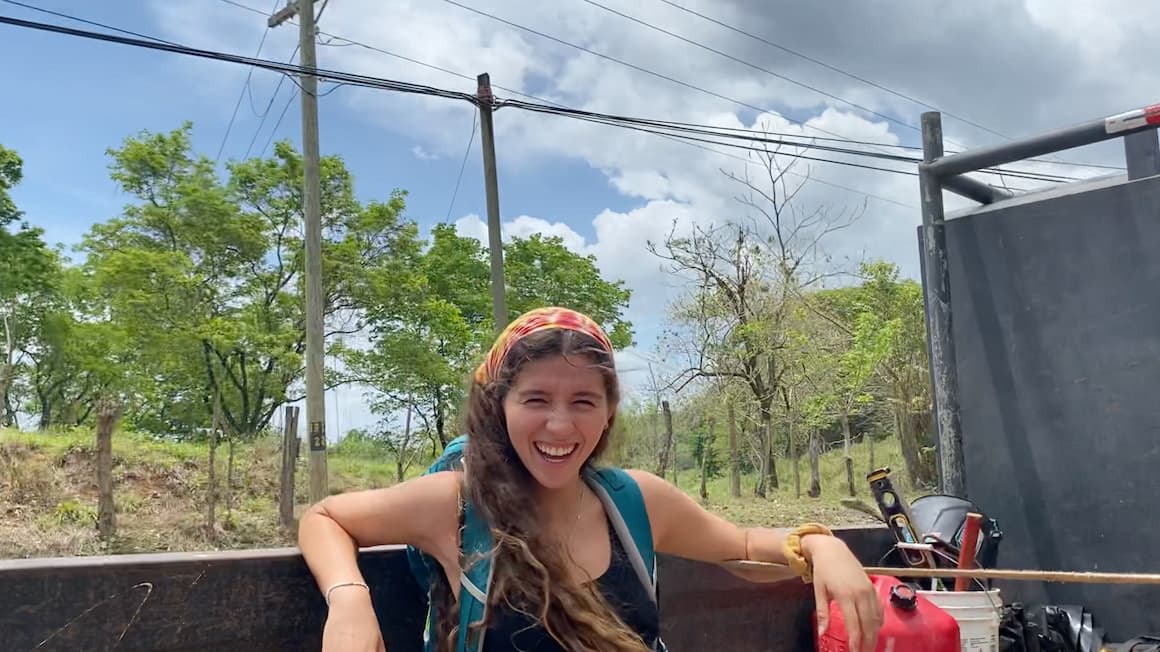
Photo: @amandaadraper
Rural areas of South America are especially impacted by high rates of poverty. Expecting free rides from folks with limited means isn’t morally fantastic. That said, even if you offer the driver a few bucks, it could very well end up being cheaper (and more rewarding) than taking the bus.
I would never assume that the ride is free initially. Always ask to avoid having an awkward scenario in which the driver who picked you up is demanding an unexpected fee. This is when learning Spanish comes in very handy.
Onwards Travel From South America
Your only options for leaving the continent are by boat or by plane. Most likely you will fly out of the country where you are finishing your trip if it makes sense and is the cheapest option. Try to book your flights in advance in order to find the best flight deals.
Photo: @audyscala
It is technically possible to cross the Darien Gap to Panama overland. Rumour has it that you can hire a guide for quite a bit of money and cross the Darien on foot.
In the past, this was impossible though due to narco-terrorist/guerrilla activity. May the Gods of Backpacking be with you if you attempt the journey on your own without a guide.
Working in South America
South America is becoming a digital nomad hub. After the pandemic, the boom really started: a generally low cost of living, relatively reliable internet, and tons of expat communities.
Medellín is the current front-runner. This city is growing at a RAPID pace and is becoming the apple in every backpacker’s eye.
Plus, Medellín is safer than ever. Lots of people want to stay here for an extended period of time, digital nomads included.
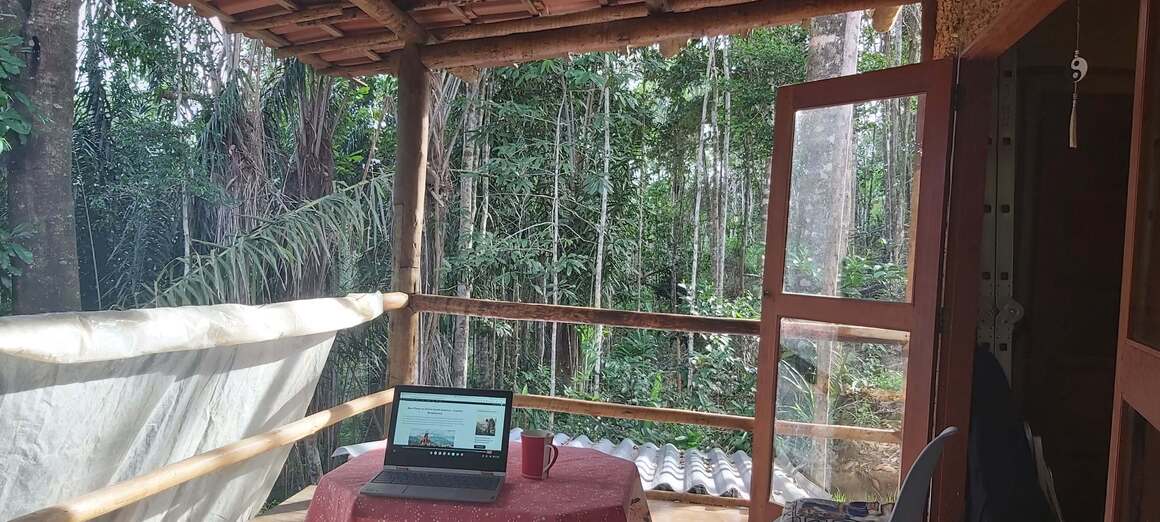
Photo: @Lauramcblonde
Close behind are larger South American cities like Buenos Aires, São Paulo, and Quito. Being big cities though, you’ll have to overcome higher prices and crime. Safety in Buenos Aires can be sketchy but so can every massive city, right?
Note that, at the moment, most South American countries do not offer a special digital nomad visa.
Teaching English in South America
Most people who end up living or staying long-term in South America do one of two things: teach English or volunteer.
Teaching English in South America is very popular. Some people make a living out of just going from one city to the next city and hitting up all the English schools in between. Some are accredited though many find success using their own merits.
Volunteering in South America
Volunteering abroad is a great way to experience a culture whilst doing some good. There are loads of volunteering gigs in South America ranging from protecting the Amazon to teaching in barrios of Buenos Aires.
Arguably, you may need a permit in order to volunteer. But in reality, the continent is pretty chill and this is unlikely to ever be enforced.
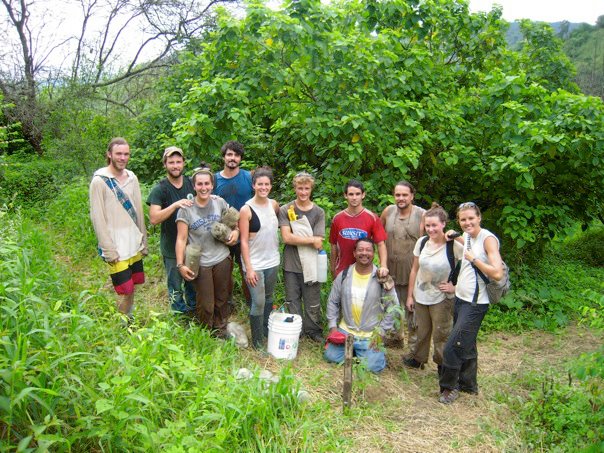
I spent a few weeks volunteering in the mountains in Northern Colombia and it was the best way to get to know the land, people, and lifestyle. Finding volunteering opportunities in South America is about learning, building community, and making an impact in a place you visit.
The best way to find volunteer jobs is word of a trustworthy mouth. But programs run through reputable work exchange programs like Worldpackers, Workaway, and WWOOF help you get your foot in the door of volunteer communities.
They’re a great opportunity for unique experiences and make amazing connections with people. But you do have to stay vigilant, especially when working with animals or children.
If you sign up for Worldpackers with a discount code, memberships are only $39 a year. For that price, it’s often worth giving it a try.
What to Eat in South America
Summing up food in South America is almost impossible because it is so diverse: every country, region, and even household has its own culinary traditions. One common thread, however, is the central role of meat.
Across much of the continent – especially in Argentina, Uruguay, and southern Brazil – grilled beef dominates daily cooking and social gatherings. The iconic Asado is not just a barbecue but a cultural ritual built around slow-cooking different cuts of meat over an open fire while friends and family gather to eat together.
Yet the continent’s cuisine extends far beyond steak. In the Andean countries such as Peru and Bolivia, food scenes are often underrated, with Peru in particular widely regarded as having one of the world’s leading cuisines. Ceviche, fresh fish cured in citrus and chilli is delicious, while guinea pig is a bit more divisive!
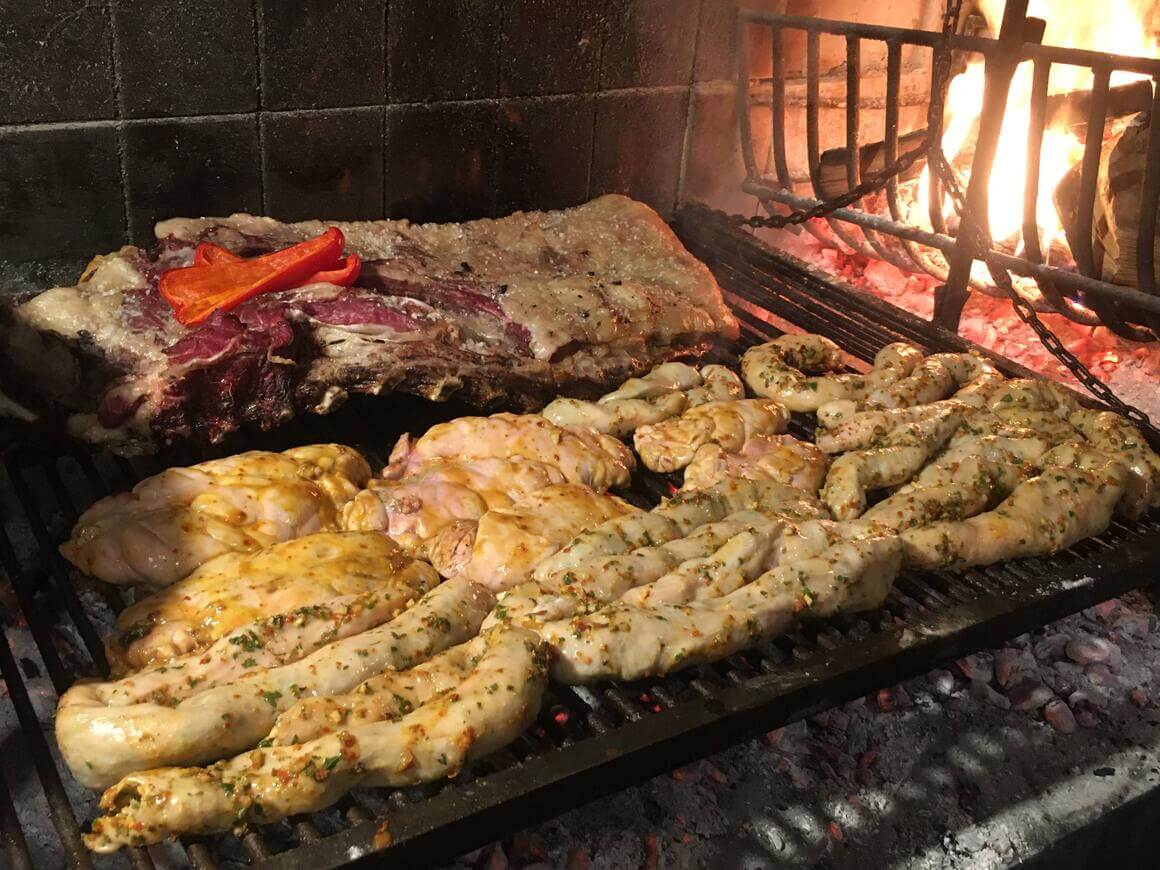
Further north, comfort foods dominate in places like Colombia, where street stalls serve fried snacks and corn-based staples such as Arepa, while in the Amazon rainforest a completely different gastronomy reigns, built around river fish, unfamiliar fruits, and ingredients found nowhere else.
Vegetarian options are growing in cities, although in rural areas meat still dominates and can be difficult to avoid.
This diversity reflects the complex cultural history of South America itself. Although European colonisation shaped many aspects of the continent, it sits on top of much older traditions from indigenous civilisations such as the Inca Empire, whose influence is still visible today.
Modern South American culture is therefore a blend of indigenous, European, and African influences that vary significantly by region. Northern Brazil, for instance, retains strong Afro-Brazilian traditions that developed during the era of sugar plantations and the transatlantic slave trade.
In the southern countries – Argentina, Uruguay, Chile, and southern Brazil – waves of immigrants from Italy, Germany, and France left a noticeable European imprint.
Meanwhile, in Andean nations such as Bolivia, Peru, and Ecuador, indigenous traditions remain highly visible, with communities in the highlands maintaining agricultural lifestyles similar to those of their ancestors and speaking languages such as Quechua and Aymara alongside Spanish.
The result is a continent whose food and culture cannot be reduced to a single identity – there are multiple different worlds to eat and sightsee your way through.
The Best Food in South America
Here are some of the best South American foods that you definitely shouldn’t miss out on.
- Feijão (Brazil) – Beany stew for everyday eating.
- Acai (Brazil) – Superfood berry.
- Empanadas – Your trusty stuffed pastry friend.
- Dulce de leche – Just try it… thank me later.
- Asado (Argentina) – Grilled meat with a side of meat.
- Antichucho (Bolivia) – Mmmm… cow’s heart.
- Ceviche (Peru/Chile) – raw but not raw fish, in lemon juice.
- Cuy (Peru) – A large cooked guinea pig.
- Encebollado (Ecuador) – Ecuadorian Grandma’s comfort stew.
- Arepas (Colombia) – Corn pockets to fill your hungry belly.
South American Culture
South America is a very complex continent. Colonization by Western Europeans technically makes it the youngest member of modern civilization. But saying this disregards all the history that came before the “conquistadors” arrived.
South America has hosted many advanced civilizations like the Incan Empire, whose influence still lasts to this day. Though much of the native culture was lost with the mass killing by said conquistadors.
Long story short: South America is an enormously diverse region, maybe more so than anywhere else. Yes, European culture has largely shaped the entire continent. But indigenous and African cultures are just as important, if not more so.
Northern Brazil is very Afrocentric. This was the first charted part of the continent and ideal for rowing sugarcane. Consequently, it’s the place where all the slaves were brought.
Slavery is over. But it leaves behind a blend of African customs and cultures morphed into Latino culture.
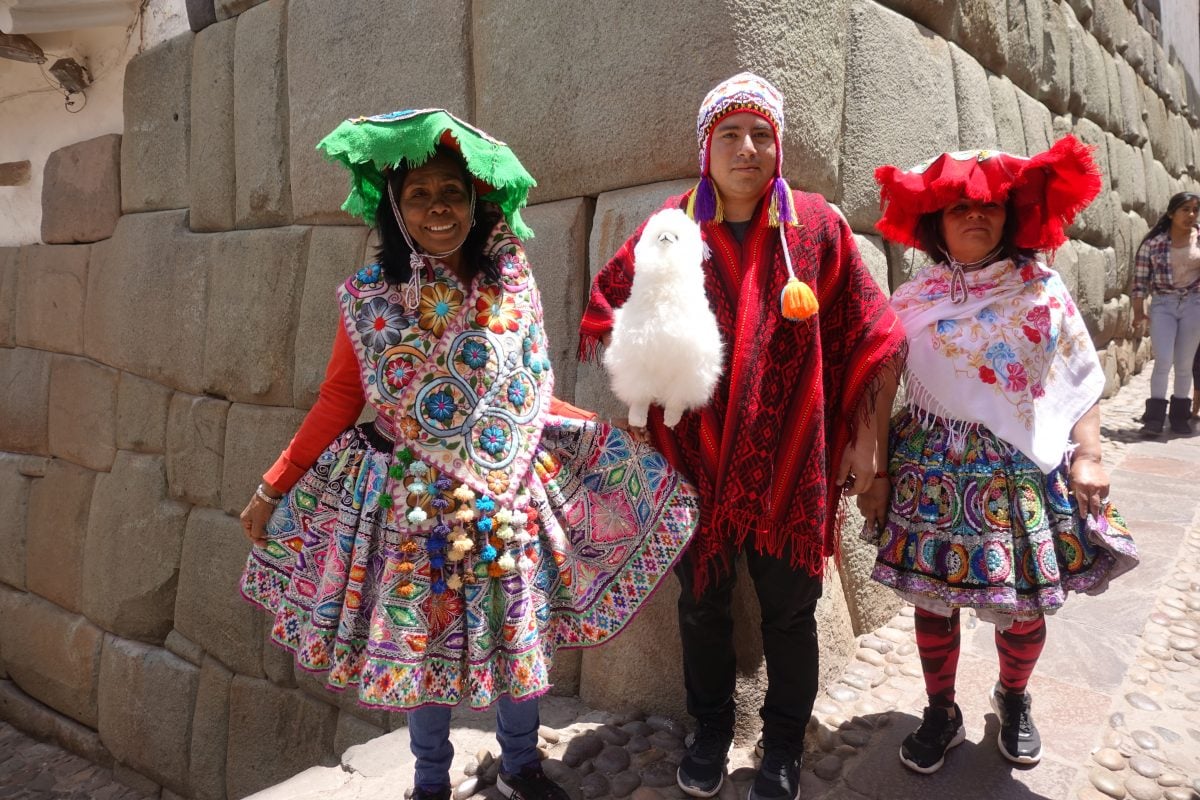
Photo: Ankita Kumar
The south, which constitutes Argentina, Chile, and Southern Brazil, is much more European. Aside from the big players – the Spanish and Portuguese – Italians, Germans, and French all settled here following a huge era of migration.
In the Andean countries of Bolivia, Peru, and Ecuador you see a lot of indigenous cultures. Some people still live like their ancestors, living in the highlands and tending the land. Though Spanish is still the dominant language, several local languages, like Quecha and Aymara, are still commonly spoken.
Don’t make the mistake of thinking that all of South America is just an extension of Europe or North America. You’ll miss out on the beautiful subtleties of the region, which make backpacking in South America so wonderful.
Unique Experiences in South America
A backpacking trip in South America is a unique experience in itself. And within that, there are instance amounts of opportunities to make your South America itinerary different to anyone else who’s travelled here before. Here are some of the best things to add to it:
Hiking in South America
South America has some of the best hikes in the world. Here are a few iconic options to get your bucket list started:
Photo: @Lauramcblonde
- Lost City Hike, Colombia: This hike through the Colombian jungle will certainly be a highlight of your South America travel.
- Sierra Nevada de Cocuy, Colombia: Snow in Colombia? Here you can find peaks are as high as 5,330 meters above sea level. If you have your own gear and a good sleeping bag, you can probably do the hike without a guide.
- Iliniza-Norte, Ecuador. This is a fantastic 2-day trek that does not require any special gear or equipment. If you are planning to tackle Cotopaxi this is a great warm-up. A solid challenge for the dedicated hiker!
- The Salkantay Trek, Peru: Hike to Machu Picchu over 4 days and experience the true beauty of the Andes along the way. One of my favorite South American treks for sure.
- The Cordillera Huayhuash, Peru: Truly one of the most stunning areas in Peru. For serious hikers, planning a trek like this is one for the books!
- Hut-to-Hut in Bariloche, Argentina: Spectacular hike for some of the best views of Nahuel Huapi National Park and its lakes. Tents are optional since you can stay exclusively in the refugios.
- Villa O’Higgins to El Chaltén, Chile/Argentina: One of the greatest ways to experience Patagonia. Walk from Villa O’Higgins in Chile to El Chaltén in Argentina. You’ll see some superlative mountain, forest, and lake scenery along the way.
- Torres Del Paine Circuit, Chile: The hike of all hikes in South America. This epic walk takes 9 – 11 days and passes through some of the most dramatic landscapes one can fathom. A must if you’ve got the time and hiking spirit!
Scuba Diving in South America
You have scuba diving options galore in South America! In general, scuba diving is pricier than it is in other parts of the world but that’s because it’s worth it. If it is something that you really want to do, I say go for it!
Colombia is probably the cheapest and best place to dive AND get certified in South America. You have Providencia and Santa Catalina (a smaller island to the north) which is home to the third-largest coral reef barrier on Earth and includes over 40 dive sites.
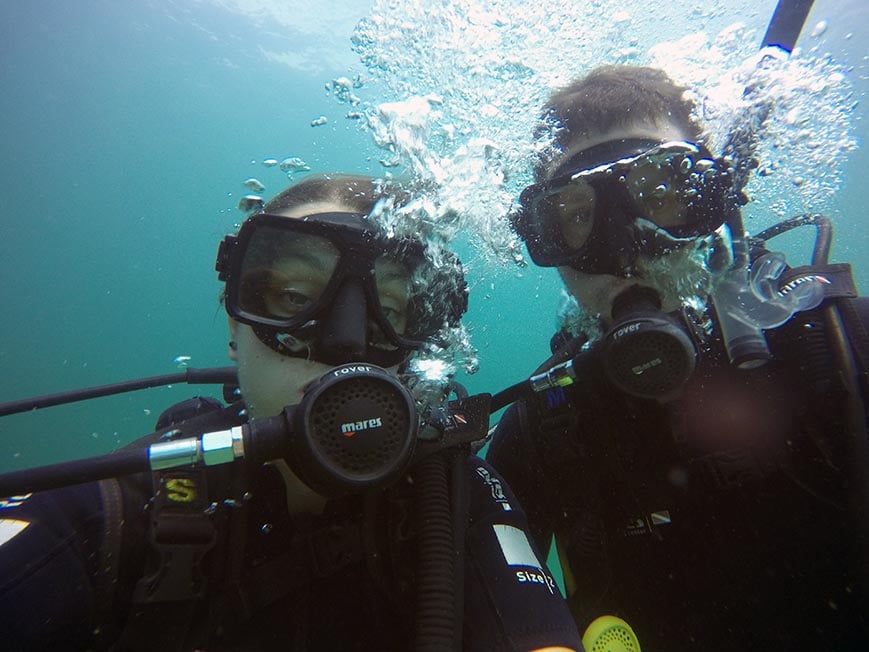
Image: Nic Hilditch-Short.
Malpelo is the harder-to-reach version: a jagged rock in the Colombian Pacific, it can only be reached by boat, and divers can only visit here as part of an organized trip. It’s worth the time and money for sure; Malpelo is one of the best places in the world to dive with sharks, including hammerheads, whale, and the rare sun ray shark.
People have reported schools of up to 500 sharks around Malpelo. That’s right. 500!
Peru and Ecuador both have some decent diving right off their coasts. The diving around the Galápagos Islands is world-class, but it will cost you a fortune go diving there. The hostels in Galapagos are pretty reasonably priced though – check out my guide!
If you truly want to have the scuba diving adventure of a lifetime, I highly recommend joining a Liveaboard trip.
Surfing in South America
Surfing is the number one sport on South America’s coast. From Peru to Brazil, backpackers and locals are coming together and shredding!
Peru is home to the longest left-breaking wave in the world. You can literally ride a wave for five minutes!
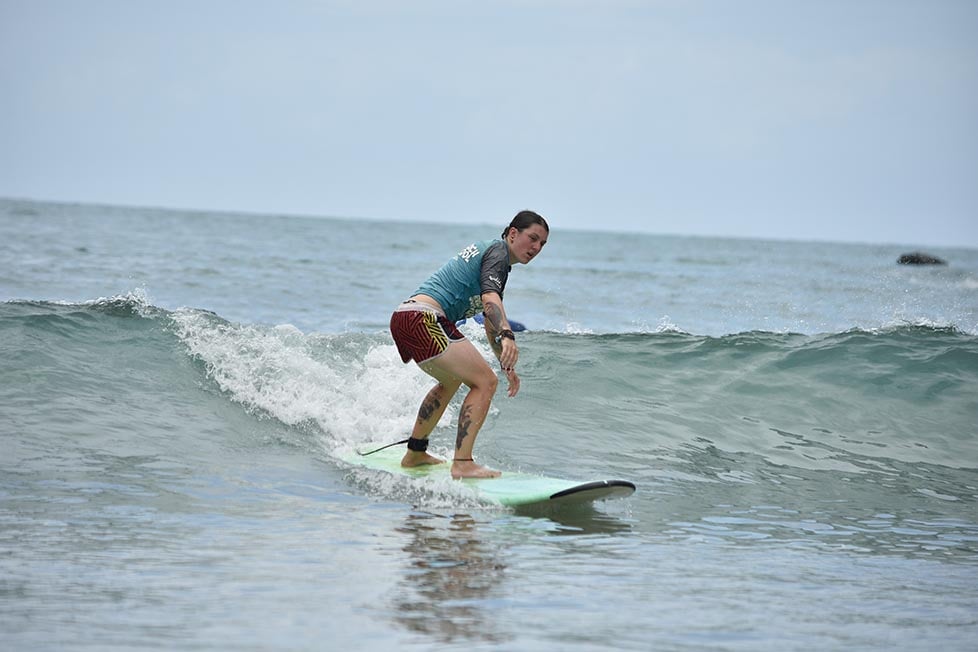
Image: Nic Hilditch-Short
The Pacific Coast is dotted with funky surf towns, where the main activities revolve around the waves and the nightlife. There are a plethora of surf schools in every country. Often these surf schools offer Spanish classes as well if you are wanting to double down (which I highly suggest!).
It is easy to fall in love with the surfing lifestyle. But be careful, you might just fall in love with the whole scene. I wouldn’t blame you for a second.

Our GREATEST Travel Secrets…
Pop your email here & get the original Broke Backpacker Bible for FREE.
FAQs About Backpacking in South America
Here are the questions I get asked the most about how to backpack South America.
What’s New for South America
South America is a very dynamic place where things change quickly. As of late, the visa landscape for US citizens has effectively reversed for two major countries:
This year, the US visa waiver has ended for Brazil. You now need an E-Visa to enter. It costs approximately $50 USD and must be applied for online before travel. Airlines will deny boarding without it.
On the flipside for our American friends, Bolivia is now visa-free for US citizens for tourism (up to 90 days). You just need a valid passport and typically proof of accommodation. This saves you a massive amount of money and headache compared to 2019. There are even less excuses for not getting to the Uyuni saltflats.
If you plan to do the “Guianas Run,” a trip through rarely visited Guyana, Suriname and French Guinea, keep in mind that Suriname now charges an Entry Fee (approx. $25-50 USD/EUR). This must be paid online. It replaces the old “Tourist Card” system but is functionally similar.
It is important to note that Ecuador is facing an internal security crisis involving gang violence. A “State of Internal Armed Conflict” has been declared periodically.
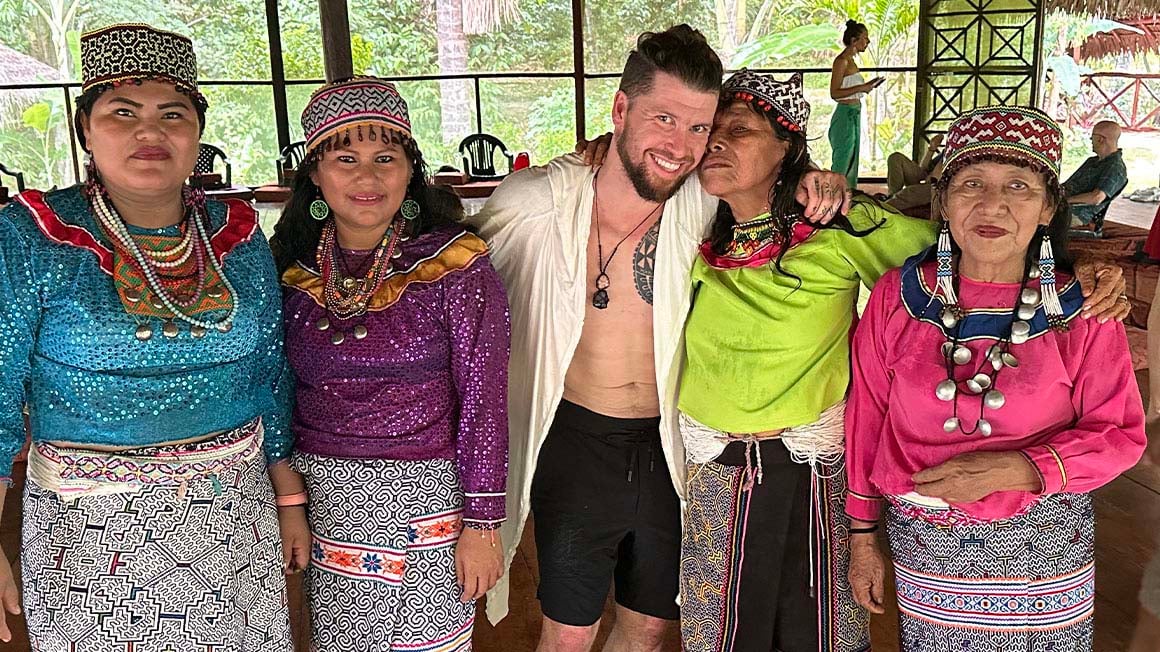
Photo: Will Hatton
Coastal cities like Guayaquil and Esmeraldas are high-risk zones. The land border crossings (especially with Colombia) are dangerous. Backpackers are sticking strictly to the “Sierra” tourist corridor (Quito, Cotopaxi, Baños, Cuenca) and flying between major regions rather than taking night buses, which have seen an increase in armed robberies.
On a more positive note,the first metro line in Quito is finally operational. It is safe, clean, and the fastest way to get from the historic center to the modern northern districts, avoiding the city’s legendary traffic.
Since late 2022, Peru has experienced waves of social unrest and protests, often shutting down Machu Picchu or the trains to it. Always have a buffer day in your itinerary in case road blockades delay buses in the Cusco/Puno region. I would also Avoid the “VRAEM” region (a specific zone in the central jungle) entirely due to narco-terrorist activity.
Things have changed with the “Blue Dollar” Gaps. As Argentina’s famously volatile currency has stabilised under Javier Milei, the legendary run of $3 steaks for those with foreign currency has come to an end. However, Bolivia’s dire economic straits mean that visitors using the blue dollar with hard cash or Western Union will enjoy a big discount.
Chile has introduced a few additional pieces of paperwork for visitors. Instead of filling out a paper declaration on not bringing banned agricultural products into the country, tourists must complete the SAG Affidavit (agricultural declaration) online roughly 48 hours before entering. They have largely phased out the paper forms on the plane.
Visiting Easter Island also requires a unified entry form (FUI) and a mandatory local guide to visit almost all archaeological sites. You cannot wander the sites freely as you could years ago.The biggest change in Colombia is the volatility of the Venezuela border.
With a pretty crazy political situation over there, anything could happen so stay clear. Otherwise, Medellin has become the “Bali of South America.” Prices in Poblado and Laureles have surged, and gentrification is a major local tension.
What I’d Do Differently Next Time
Oh to have the chance to do it all again! Here is what I would change about my Odyssey through the continent if I time travelled back with the wisdom of ten months of travelling.
It can be easy to get stuck in the first place that you arrive in, everything is new, you settle into a nice routine on the far side of the world, it can feel natural to stay in the first major city for longer than necessary like I did in Buenos Aires. Get on the road and jump start the trip.
I found that there were few disappointments in South America. I would not call any of the major tourist attractions like Iguazu Falls, Machu Picchu, Uyuni or Medellin overrated, they are famous for a reason and were some of my favourite places on the trip. My biggest letdowns were maybe those where tourism had run wild but the sites were less interesting than the heavy-hitters, think Banos in Ecuador or Paracas in Peru.
South America is full of great places to slow down in. Being a Brit and starved of sunshine, I always found myself so satisfied by rays and warmth, hence long stints in suntraps like Mancora in Peru or cloud forest paradises like Minca in Colombia or Mindo in Ecuador.
Giving space in your itinerary for being stuck in a place is worthwhile, as you may just fall in love with a place or need for RnR from time on the road. You also may hear of new destinations on your travels. It is unlikely that a plan will completely survive contact with South America. For instance, I worked in a two-week detour to Cajamarca and Chachapoyas in Peru, places I did not know existed until I arrived!
The biggest budget mistakes are when you assume a level of frugality that you just will not have in the face of empanada stands, cutprice alpaca jumpers or the desire for a beer after a long day’s hiking. Make your budget reflect who you are and not what you would like to be!
Well, amigos, the time has come for me to send you on your travellin’ way. Armed with your budget travel knowledge, on you go!
Your South America backpacking trip awaits. Have a few cold ones for me, yeah?




Really solid guide! South America seems like the kind of place where every border crossing feels like a new adventure. So much variety packed into one continent.
Great post, loved the detail and enthusiasm you have for South America.
I am saving up to travel from northern Colombia all the way down the west to Patagonia and then back up the other side (yes I am aware it will take the best part of a year). I wondered if you had any tips on the best time of year to start this adventure?
Plan your time with the weather and seasons in mind! Have a great time.
Is traveling to brazil unwise right now because of the covid situation? Has it become more unsafe because of the covid situation? It’s been really difficult to find solid information, and making a decision wether to visit or not has been quite difficult. Thanks for the otherwise wonderful post! Super informative.
informative post . best of luck
Hi Kami, glad you liked the article!
Very nice blog, congratulations
I found a cheaper way to flight some routes inside Latin America
If someone have plans, after this health crisis is gone, just ask me, I will be glad to help
Interesting. However as a Guyanese, that us from Guyana, South America I always find it odd that many persons leave out the English Dutch and French speaking countries of South America. We too have things to offer.
Hello Malkia, We totally agree with you! As soon as we manage to visit Guyana, we will update this guide! I look forward to exploring your country. Cheers
Hey there!! So I am planning a trip to south America this summer. I have a couples questions. I’m flying into Bogota, Colombia. I plan on spending 2-3 months in SA. I’d like to travel from Bogota to Machu Picchu, then to Buenos Aires, and depending on time Brazil. I am trying to figure out the cheapest way to travel from country to country. I don’t care about long bus rides or any of that. I just don’t know where to purchase the cheapest bus tickets. Please help!!!
Simply the cheapest tickets are usually at the bus station, or wherever locals buy their tickets.
Look out for agencies and the like that might add a fee for booking the very same thing you could yourself.
I have a good tip to move around if you need to do it by plane, just let me know if you plan (after the whole problem is gone) to fly some stretches.
Hey man great blog, been reading so many of your posts recently, can you email me I wanna chat to someone who knows there stuff… I’m going to South America for about 6 to 8 months on a budget and need help planning a route… hopefully you see this and we can chat thank you
Hey Jamie, What is your question specifcally regarding your route? Cheers!
Hi Chris,
Thank you so much for sharing these information – they are so useful!
I am planning a trip of a lifetime to South America. To keep cost down, I am likely to stay in hostels for the first time. I like to understand how travellers wash their clothes in hostels. Are there usually any washer or dryer machines in hostels? Do we usually have to pay to use them? What is the price like?
Look forward to hearing from you.
Hi Tina, Some hostels offer laundry services. Other times you can get your laundry done at local lavanderias. Depending on the country, prices are usually pretty reasonable. They usually charge by the weight. Getting a massive load of clothes washed should not cost you more than $10 (sometimes way less) washed, dried, and folded. Cheers!
Thanks Chris for this wonderful article. Bolivia and Brazil is a magical place! Anyone who went there said it was absolutely amazing! That nature is just wonderful here. keep sharing your travel ides about more places of South America.
Cheers, Mate!
I started my South American journey two months ago and this has been a big help. There’s literally so many options once you get down here. Overwhelming in all of the best ways.
Much love from Peru.
Wow! That’s a marvelous article! Unfortunately, not so long ago, I was in South America, and I really had a lot of predicaments while traveling. If only I had read this article before the traveling, most likely, my trip would have been better!
Great content, congratulations.
Really great and in depth guide, thank you! Planning my first trip to South America and really like the look of your 3 month route across Peru, Ecuador and Columbia, was thinking of taking another couple of weeks on top to see Bolivia as well. What month would you advise starting this travel? (would really like to be home for Christmas)
The autumn months would be a lovely time to visit South America 🙂
Awesome content! I took so much advice and suggestions. I feel like I can plan whatever kind of trip ranging in length of time spent there plus budgeting. Thanks!
It’s great that you’re such a strong advocate of reusable water bottles and avoiding one-use bottles and generally I totally agree. However, I normally refill my water bottle from the tap, which obviously isn’t safe everywhere. Geneally can you drink tap water in South America? Or if not how do you safely refill without buying bottled water?
We’ve used lots of things over the years to harvest clean water from taps and streams. The GRAYL filter bottle is one of our favorites. South America is something of a mixed bag when it comes to drinking water. It ranges from safe to unsafe with every shade of chloriney in between.
I am starting my South America trip new month and I found this website extremely useful. One question though – I am worried about the requirement to show proof of onward travel. Any idea if Argentina, Chile, Bolivia, Peru, Ecuador, and Colombia require this?
Hi Neringa,
I never had to show proof of onward travel during my 6 months in South America. There was never a time when a customs officer/border police questioned me about my onward travel plans. You should be just fine 🙂
Thanks, Chris. You have been right! But I was requested to provide proof of onward travel by Avianca when flying for Cusco to Quito. Maybe because my passport expires soon. My friend, however, did not have one and was still allowed to board the plane 🙂 There was a group of Israeli guys who I think had to show this info, too.
very good
Thanks a lot man, I’m planning a 3 month trip to Colombia, Peru and Brazil next year and this really helped me get my head around how to do it and the kind of money I’m gonna need to save! Cheers dude
Thanks, this really helped me a lot for planning my trip next year!