If I could go back in time and hand my younger self a single piece of paper before my first big Euro-trip, it wouldn’t be a map, it would be this guide.
Being born and raised in the UK, the wonders of Europe were a mere skip, hop and a cheap-as-chips Ryanair flight away. And let me tell you, I have made the most of it – I’ve officially ventured to all of the countries that make up Europe. After basking on Spanish beaches, skiing in the High Tatras, and roaming through many-an-ancient-ruin, I’m hear to divulge all the good stuff that I wish I knew before I started.
Even after all these years of exploring, Europe still blows my mind. Where else in the world can you cross three countries, hear three languages and taste three completely different cuisines within a single day? That’s the magic of this continent.
Whether you’re thinking of a quick beginners’ trip or a full-blown, life-changing interrailing affair, you’re bound to fall in love. Maybe it’ll be a place, or a person or two. ?
However… Backpacking Europe is no cheap thrill. Especially in the likes of Paris, Barcelona, and Amsterdam, even a hostel dorm can set you back and send you home with your tail between your legs if you’re not careful. I’ve heard one too many backpackers calling home asking mummy to pay their return ticket.
But you don’t need to be like them. Because you’ve got this backpacking Europe travel guide!
What you’ll find in this guide:
This guide is literally going to be your bible when it comes to travelling in Europe. Below are the key topics that we will be diving into:
- Why Backpack Europe?
- Pick Your Europe Travel Styles
- Recommended Backpacking Europe Itineraries
- Backpacking Europe Costs
- Where To Go In Europe?
- Off the Beaten Path Adventures in Europe
- Things To Do in Europe
- Where To Stay
- Best Time to Visit Europe
- Staying Safe in Europe
- How to Get Into Europe
- Work and Longer Trips
- What’s New for Europe Travel
- Packing for Europe
- European Culture
Photo: Nic Hilditch-Short
The Broke Backpacker is supported by you. Clicking through our links may earn us a small affiliate commission, and that's what allows us to keep producing free content 🙂 Learn more.
Why Backpack Europe?
Backpacking Europe has no equal. There is no region on earth with such a diverse range of landscapes, cultures and languages contained within such a small(ish) space. Everywhere else is frankly boring when pitted against the technicoloured dream coat of Europe.
The backpacker game is strong in Europe. It’s a path that has been trodden by many-a-wise-traveller before us. There are more hostels than you’ll known what to do with, and you’ll no doubt find a fellow, straggly traveller with a backpack on every corner.
If you’ve landed on this article, you probably don’t need too much convincing to go backpacking Europe. So, instead of spending anymore time telling you WHY you should travel here. Let’s dive into all the info you need to make it doable!
How to Backpack Europe
Right children, as a native European with more travel experience than Leonardo di Caprio’s wandering eyes, I have some juicy advice for you. First things first: Europe is expensive. Learn how to mooch through Europe on a budget and you’ll be able to stretch your trip far longer than your bank account might think!
Staying at a hostel in a well-known city (e.g. London, Rome, Paris, Barcelona) can set you back around $70. If you’re trying to make your trip last, it is worth knowing which countries are cheap, and how to find somewhere to crash in the expensive spots without blowing your entire budget.
It’s also worth remembering which countries aren’t in the Schengen zone. Not only might you need to make additional travel adjustments, but it is worth knowing if you want to extend your stay in Europe. Basically, this is just the UK, a large swathe of Eastern Europe, and Turkey. Good for long stays!
It may go without saying, but to backpack Europe you really do need a backpack. Doing it with a heavy suitcase or a roller luggage is not ideal as these pieces are simply not designed to be dragged over old cobbled streets and tossed on and off busses and rains like a good old backpack is. That said, for my first trip, I cheaped out and bought a £50 pack which lasted about a few trips before the buckles came loose.
These days I highly and almost exclusively recommend the Osprey Aether/Ariel (whether you go the 50L or 70L is a matter of preference) which is a great all round hiking and travel pack.
Image: Nic Hilditch-Short
The Basics I Follow Every Time
Backpacking the massooovity that is Europe can seem chaotic to begin with, but once you’ve done it a few times, you pick up a few habits that make everything run a little smoother, keep the costs down and make the whole experience a hell-ava lot less stressful.
Plan your route:
Europe is an overland travellers dream, but it can also trap you into a zig-zagging oblivion. Backtracking can eat into your (limited) money, time and patience. Look at a map, and find the direction you want to go – then try to stick to it.
- Move in a straight (ish) line and even if you want to leave room for a bit of spontaneity, build out a skeleton route for your trip
- Avoid “popping back” to places you missed (which can be hard when you meet people along the way that convince you otherwise… although this can often be worth it, tbh!)
- Sites like 12Go and Rome2Rio are your friend here – they pull public transport data from all major provided (and most smaller ones) so can really help you work out your route plan.
Lock in the early essentials:
Once you’ve sketched out your route, I usually lock in the essentials. Sure, too much planning can be a kill joy when you meet a cute guy that works at the hostel and you want to extend your trip. BUT, too little planning can leave you last-minute panic booking a €90 bunk bed because you didn’t realise the national football team was playing.
- Book your first few nights, you don’t need that stress in your life as soon as you land
- Book your first big mode of transport, whether than is a train, bus flight
- Then, don’t book too much more. Backpacking is all about embracing a little bit of uncertainty.
- If you do book more than the first week, ALWAYS try to book a cancellable option, this way if your plans change, you have flexibility.
A buffer fund can keep your stress levels on the low:
Financially, Europe can test every the most money savvy of us. Transport spikes, hostel prices can spike and don’t even get me started on the amount you will spend on beer. It all adds up. Give yourself a budget that you want to spend. Then add about 20% more and tuck it away somewhere that you’ll forget it’s there.
- Keep a small emergency stash
- Hide it somewhere separate from your main account. You could open a separate bank account for it, or ask Mum to look after it for you. Out of sight, out of mind.
- Pretend it doesn’t exist, unless you truly need it (and no an emergency is not booking a last minute ticket to Oktoberfest!)
The Budget Levers That Matter Most
Backpacking Europe on a budget really just comes down to three key things: when to go, where you go and how you get around. Once you nail these levers, you’ll be away laughing.
1. Season Choices
The price differences in Europe between seasons can be huge. Travelling in “off” seasons can cut your costs in half. However, you’ll want to toss up cutting costs with cutting the experience. If you’re wanting to relax by the beaches or spend your days hiking, it might not be worth visiting in Winter.
As a rule of thumb:
- Summer is the most expensive time.
- Autumn/ Spring (shoulder seasons) are the best value.
- Winter is the cheapest, but you’ll have limited daylight and potentially crap weather. Unless you’re travelling for skiing or Christmas, this is a real toss up.
Image: Nic Hilditch-Short
2. Country Selection
As I’ve driven home, your route matters. If you don’t choose your countries wisely, your budget can drain on spending stupid amounts on essentially in expensive countries. When travelling in Switzerland, I spent €10 on a coffee… I’ll just let you sit with that one. Building a smart mix of countries into your itinerary can mean that you can splash out on the pricier highlights, but balance it to not blow your budget.
- Expensive: Switzerland, Iceland, Norway, Denmark, Sweden, UK (esp London), France (esp Paris)
- Mid-range: Italy, Spain, Portugal, Germany, Belgium, Netherlands
- Cheaper: Balkans, Baltics, Turkey, Poland, Bulgaria, Romania
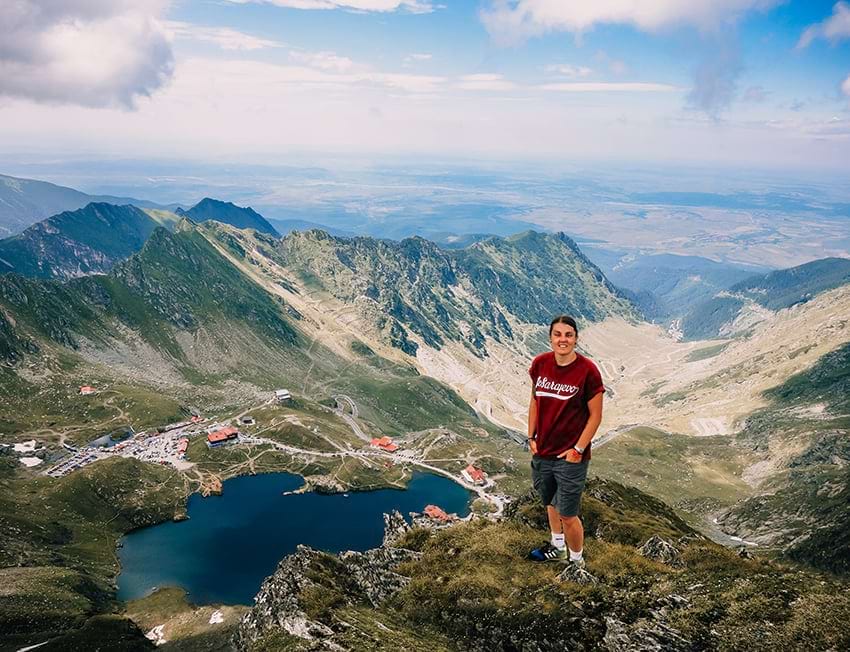
Image: Nic Hilditch-Short
3. Transport Style
This one is huge and can significantly impact the cost of your trip. Europe is massive and how you decide to travel can make or break your budget.
The overland train culture will have you zooming between capital cities effortlessly, and the famously budget airlines can have you crossing borders for less than the cost of lunch. Each mode of transport has it’s pros and cons:
- Rail/ Train: Scenic, comfortable but can be pricey. Inter-rail tickets are still an excellent shout if you want freedom to roam without too strict of a plan.
- Bus: Slow but the cheapest overland option. A good option for shorter journeys.
- Flights: Cheap, if you’re flexible and pack light. If you can manage to travel carry on only, you can pop between cities for less than €20.
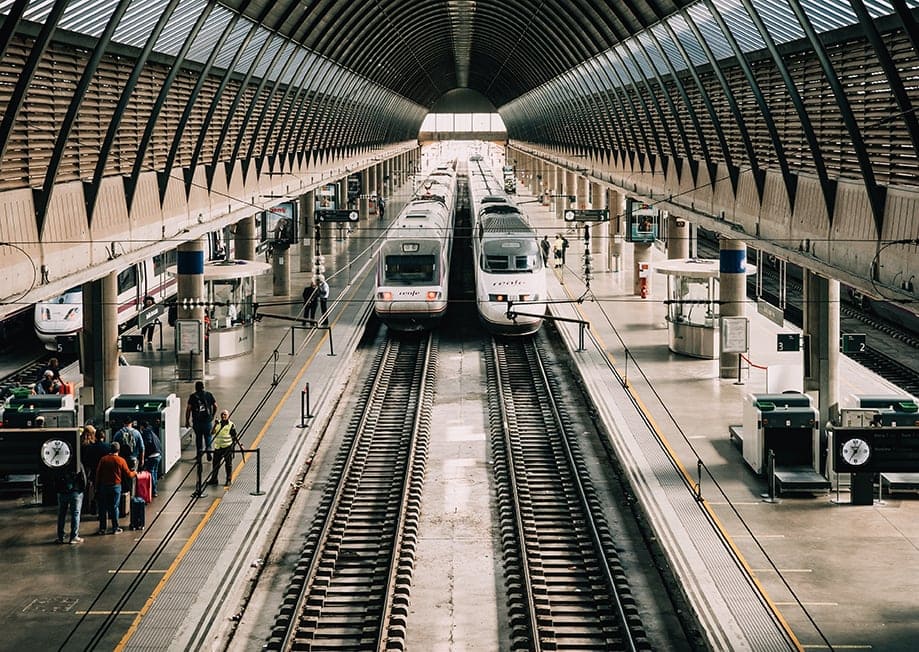
Image: Nic Hilditch-Short
Pick Your Europe Travel Style
Europe is a big place. And with that, means that you have ample choice on the type of style you want to adopt when you hit the road. Are you into the history and buzz of the capital cities? Or are you craving coast and a big ol’ dose of UV?
I’m going to run you through the classic “Europe travel styles” so you can decipher which you slot into which will impact the route you decide to take.
Classic Capitals
- Best for: History & culture lovers, first-timers
- Pace: Fast
- Budget vibe Mid-Pricey
- Best season: Spring or autumn are my favourite times to visit. The crowds thin out but there is still a buzz. Winter can also be gorgeous, especially if there are Christmas markets.
- Suggested route: London – Paris – Amsterdam – Berlin – Prague – Vienna – Rome – Athens
- Short on time: Capitals are well connected with high-speed trains and airports, so they are fairly easy to nip between fairly quickly!
- Tight budget: Accommodation will sting, especially in high season. But street food, free museums, and walking tours can soften the blow (slightly).
- Tip: Don’t worry about seeing every single neighbourhood, just pick 1-2 and wander for a half a day or so. When you slow down, you can really get a feel for what it’s like to live there.
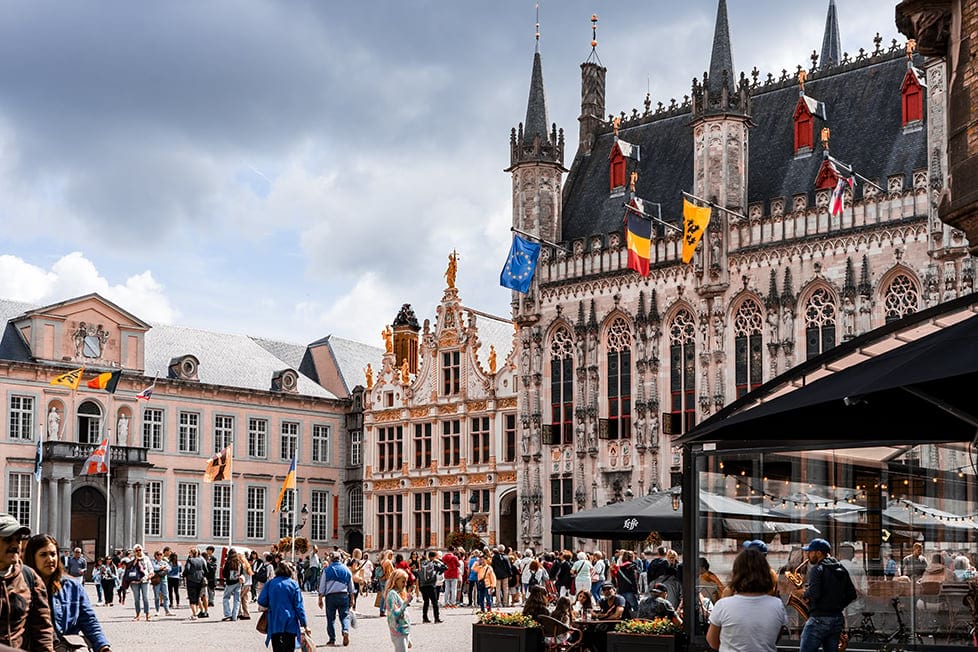
Photo: Nic Hilditch-Short
Coast and Sunshine
- Best for: Beach bums, those we want to “slower” trip.
- Pace: Slower
- Budget vibe: Mid-Pricey
- Best season: Late May to early October. June, July & August will be the busiest and most expensive time to visit.
- Suggested route: Lisbon – Algarve – Costa de Sol – Barcelona – Nice – Amalfi Coast – Dubrovnik – Crete – Athens
- Short on time: Pick one coastline and stick to it, island-hopping eats into your days. Transport takes more time than you think.
- Tight budget: Avoid the peak: July/August; June and September feel identical but cost half as much.
- Tip: Mediterranean towns come alive after 8pm! Wander the streets at sunset and get used to eating a little later if you want to blend in with the locals.
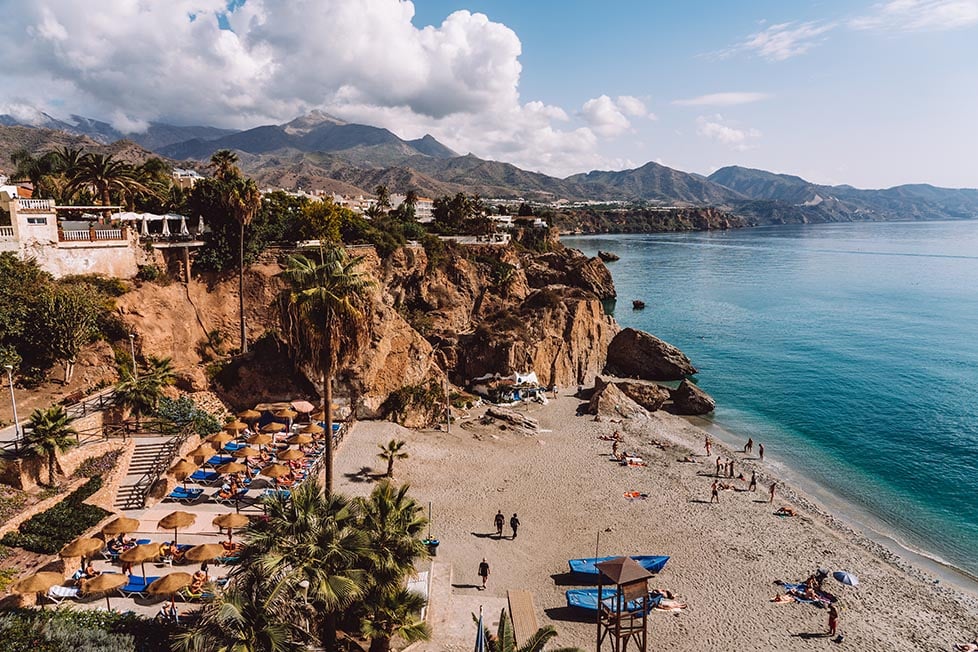
Image: Nic Hilditch-Short
Mountains and Lakes
- Best for: Hikers, nature lovers, those we need a “reset”
- Pace: Medium
- Budget vibe: Depends where you go but it can be pricey.
- Best season: June-September for hiking trails, or December-March if you’re after the snow.
- Suggested route: Interlaken – Zermatt – Lake Como – Dolomites – Innsbruck – Salzburg – Hallstatt – Lake Bled
- Short on time: Base yourself in one valley and do day trips. Sometimes just experiencing 1-2 places and exploring them well is much less stressful and just as beautiful.
- Tight budget: Swap Switzerland for Slovenia or northern Italy; same views, half the price. You can thank me later 🙂
- Tip: Start hikes early! Mountain weather changes fast. I’ve watched blue skies turn into full cloud cover in less than 20 minutes.
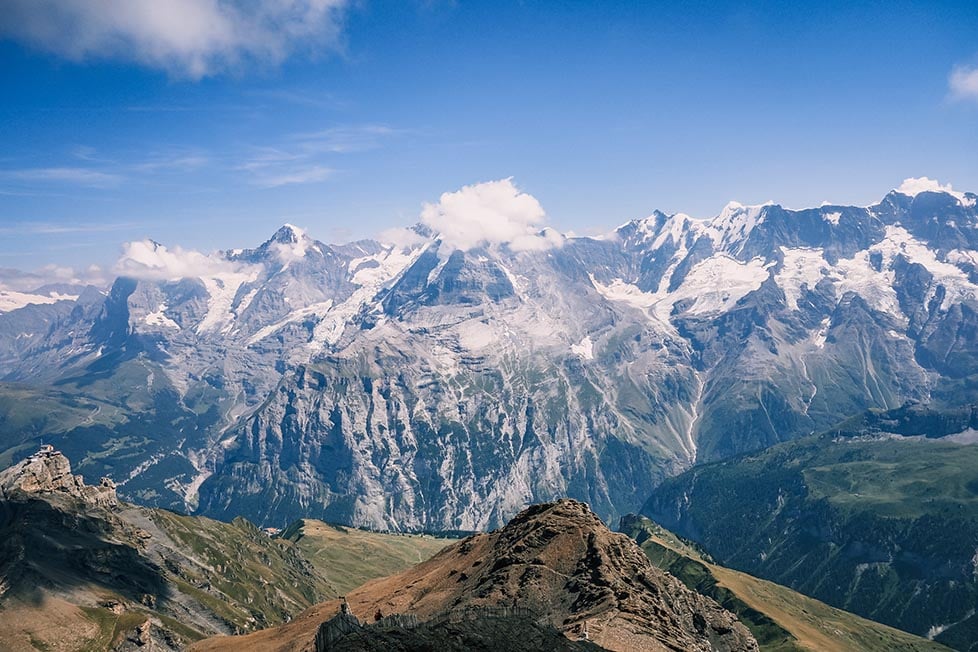
Image: Nic Hilditch-Short
The Broke Backpacker Route – Eastern/Southeast
- Best for: Backpackers, culture lovers, hikers, beach bums (there is something for everyone!)
- Pace: Medium-fast
- Budget vibe: Cheap
- Best season: April-October for warmer weather.
- Suggested route: Kraków – High Tatras – Budapest – Belgrade – Skopje – Lake Ohrid – Tirana – Kotor
- Short on time: Stick to one cluster of countries (e.g., Poland + Hungary or Balkans only). Distances can be deceptively long.
- Tight budget: Food, hostels, and transport stretch your money further than anywhere else in Europe. I still dream of the 1 euro Byrek and espressos in Albania. It’s the cheapest area in Europe to travel.
- Tip: The suggested route is through the cities. However, if you are more into nature or beaches, there are plenty throughout this region. Take a detour to Montenegro for mountains or hang out on the Albanian Riviera for Greek-like beaches.
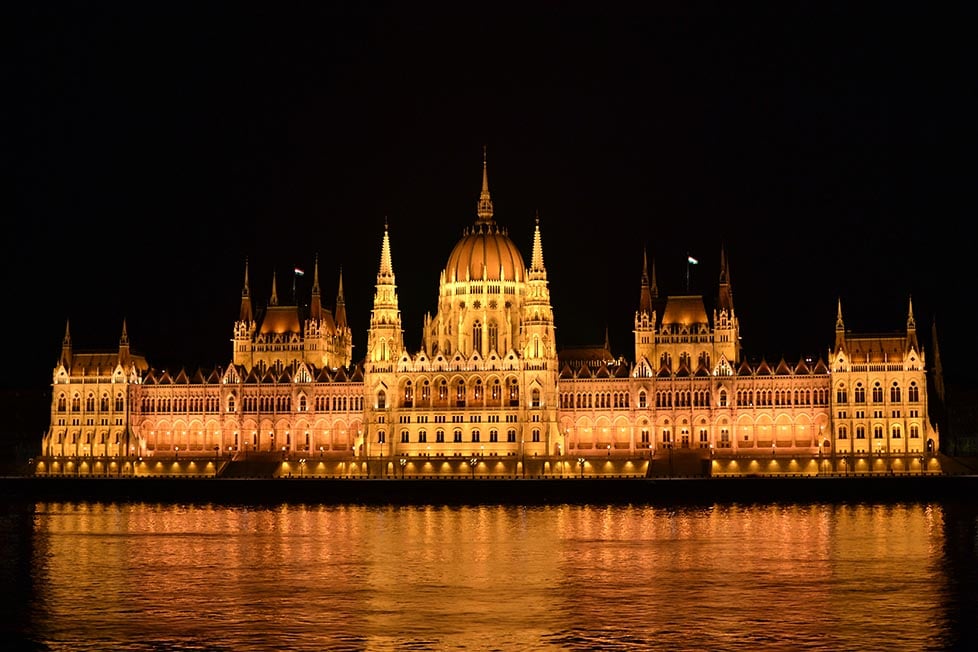
Image: Nic Hilditch-Short
Recommended Backpacking Europe Itineraries
Europe is fucking huge and it packs a punch too. This means that even on a (hypothetical) lifetime Europe backpacking trip, just accept it: you’re never going to see it all. Backpacking Europe is best when you can travel it slowly. But don’t stress it because there’s plenty of ground you can cover even on a shorter trip.
I’ve crafted the ideal two-week and one-month itineraries for each different travel style: classic capitals, coast and shine, mountains and lakes, cheap and cheerful (south)eastern.
Note that we have linked to our City and Accommodation Guides for each destination we recommend – they are well worth checking out.
1. Classic Capitals Route
For those of you who love to chase the iconic capitals across Europe, this one is for you. I’ve broken down two options: a two week and a month long adventure. If you’re dreaming of bouncing around the romantic cities of Europe, this one is for you!
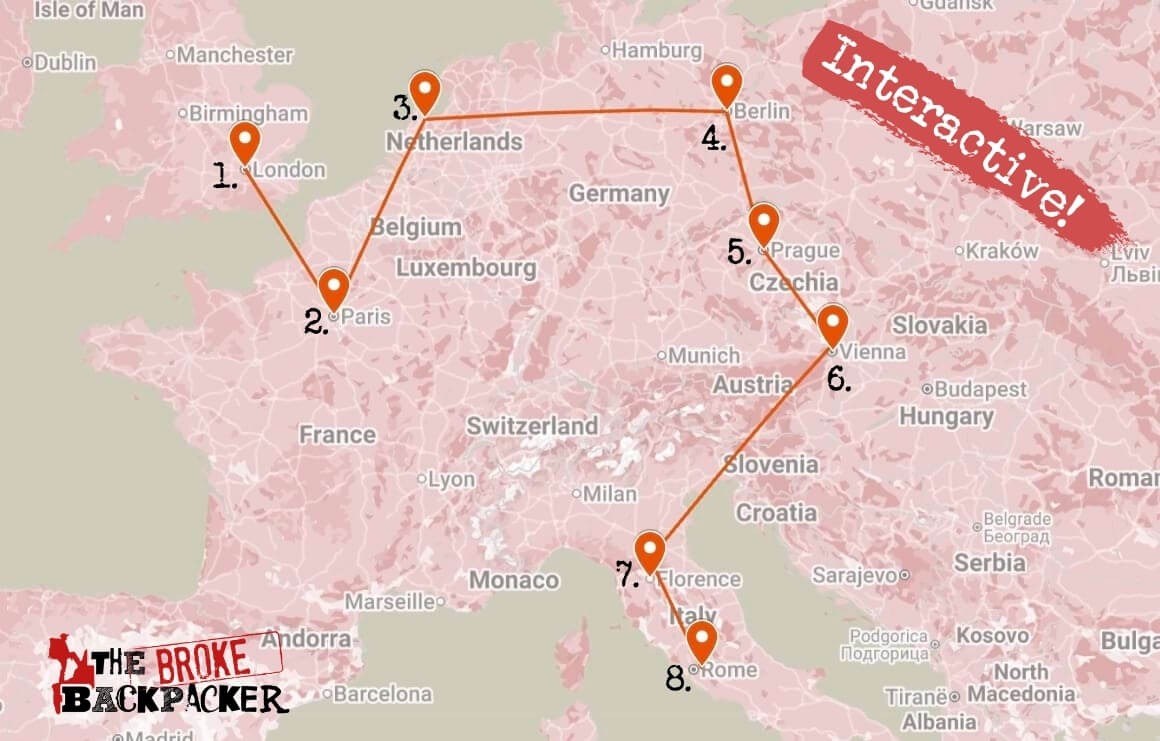
2-Week Travel Itinerary – Classic Capitals
This two week itinerary focusing on the traditionally “more popular” cities of Western Europe. Each is completely unique from the next.
- Stop 1 – London (England): Start your trip in London town and explore its boroughs. As one of the biggest transport hubs in Europe, it’s an easy place to fly into and start your adventure. Lap up the free museums, wander the markets and of course, head to a pub!
- Stop 2 – Paris (France): Next, take the Eurostar to experience the magic of Paris (it really is as romantic as people say!) It’s also full of cheap wine, outrageously good pastry and mesmerising architecture.
- Stop 3 – Amsterdam (Netherlands): Amsterdam is next on the agenda. This capital city is one of my favourites. Spend your days riding bikes, wandering the canals and eating a few too many stroopwafels!
- Stop 4 – Berlin (Germany): What a way to end a two week trip than in the iconic capital of Berlin. The city is unlike anywhere else in Germany, it’s raw, historic, artistic and honestly, just wildly fascinating.
Four stops in two weeks will allow for a good few days to truly experience each city. If you want to add a few more stops along the way, I’d recommend slotting in a stop in Brussels after Paris, or a stop in Hamburg before Berlin (if you want to experience a more “normal” side of Germany).
1-Month Itinerary Extension – Classic Capitals
If you have a couple more weeks to tack on to enjoy a full-month of classic capital exploring, I suggest that you continue your journey deeper into Central and Southern Europe. These are my top picks for the rest of your 1-month itinerary:
- Stop 5 – Prague (Czech Republic): The fairy-tale city of Prague is home to spires, cobblestones and beer halls. These guys take beer seriously! It’s also fairly affordable, so let your wallet enjoy a break.
- Stop 6 – Vienna (Austria): Up next, we have the rather grand, elegant Austrian city of Vienna. From palaces and classical music to the cosy coffeehouse culture, it’s a brilliant city to get lost in!
- Stop 7 – Florence (Italy): ok, so Florence isn’t a capital, sue me! But it can’t be missed on this list of glorious city stops in Europe. The city is the heart of the Renaissance. Home to magnificent art, architecture and some damn fine Tuscan food! Savour it all.
- Stop 8 – Rome (Italy): There is no better place to wrap up a month of European city hopping. The eternal city of Rome is a fascinatingly, ancient place to explore. Plus, the food is some of the best you’ll experience.
If you want to add a couple more cities I’d suggest popping to either Milan or Venice before Florence, or if you want to experience the edgy city of Athens, you could finish up there after Rome. It’s up to you how fast pace to want to take it.
2. Coast and Sunshine
This coast and sunshine itinerary is designed by a fellow beach lover. This is exactly how I would spend either two weeks or one month of beach hopping around the best spots in Europe.
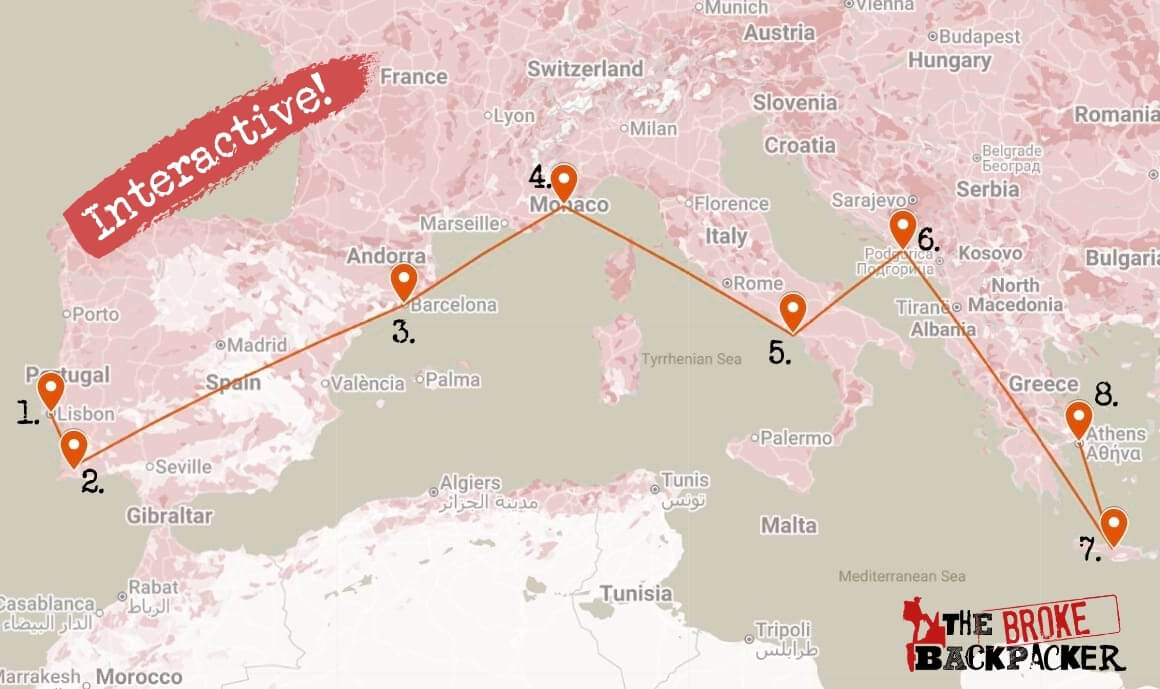
2-Week Travel Itinerary – Coast and Sunshine
Two weeks of coast and sunshine? Don’t mind if I do! This is how I’d suggest spending two weeks of beach hopping and chasing the sun in Europe.
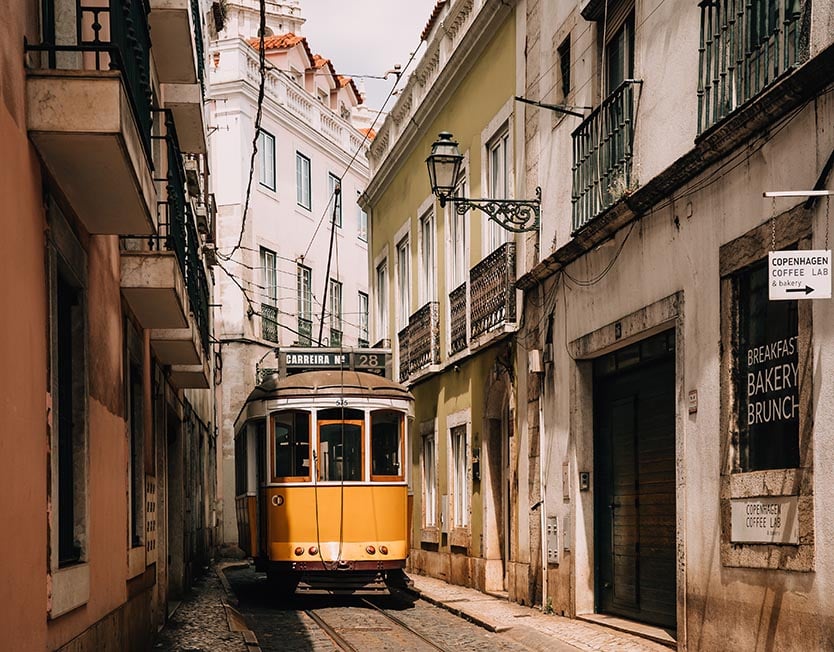
- Stop 1 – Lisbon (Portugal): Not only is gorgeous Lisbon a big transport hub to fly into, but it’s a gorgeous, colourful city that is surrounded by coast to explore. Pop out to visit beaches like Costa de Caparica or Cascais.
- Stop 2 – Algarve (Portugal): From Lisbon, we head south to the beautiful Algarve coast. Base yourself in Lagos, where the cliffs, turquoise waters and sea caves will blow your away.
- Stop 3 – Barcelona (Spain): You’ll then fly to Barcelona, a city full of culture, colour and tapas – you can spend your days swimming by the sea and marvelling at the magnificent works of Gaudi. If you also enjoy a bit of nightlife, you’ll find it here!
- Stop 4 – Nice (France): Along the French Rivieria, glamorous Nice has beautiful pastel buildings and peddle beaches. If you’re after a little bit of glam in your life, head on a day trip to Monaco or Villefranche.
If you want to speed up the pace of your trip and see a little more, I’d suggest including either Costa del Sol or Valencia, before or after Barcelona. You could also finish up your trip by heading down to Sardinia after Nice to experience a bit of the Italian beach beauty before heading home!
1-Month Itinerary Extension – Coast and Sunshine
If you have a couple more weeks to spare, you can continue on to a few more of my favourite beach locations to really maximise your intake of vitamin D:
- Stop 5 – Amalfi Coast (Italy): From France, we will move on over to the picture-perfect Amalfi Coast in Italy. Imagine dramatic cliffside towns, endless lemon groves and stunning boat days.
- Stop 6- Dubrovnik(Croatia): From Naples, you can fly east, over to Dubrovnik in Croatia. One my favourite places in Europe. If you’re a Game of Throne fan, you can’t miss this one. Surrounded by medieval walls, cliffside bars and endless views across the ocean. It’s absolutely magical.
- Stop 7 – Crete (Greece): Next, you’ll hop over the largest of the Greek islands, Crete. Home to golden beaches, mountain villages and some of the best food in the med!
- Stop 8 – Athens (Greece): Finally, Athens makes for the perfect final stop. As one of Europe’s biggest transport hubs it’ll be easy to fly home from – or you can get a ferry to some Greek Islands. It’s a funky city full of ancient sites and edgy vibes.
Again, if you enjoy the pace being a little faster, you could either slot in another Greek island after Crete (Paros is a good option!)
3. Mountains and Lakes
The mountains are gorgeous nearly all year around. Snowy peaks in winter, blooming flowers in spring, falling leaves in autumn and warm sunny vibes in summer. No matter the time you hit this itinerary, it provides. But choose your season wisely depending on the activities that you want to do. If you want to go hiking, don’t go in winter. If you want to go skiing, don’t go in summer. Basic logic, right?
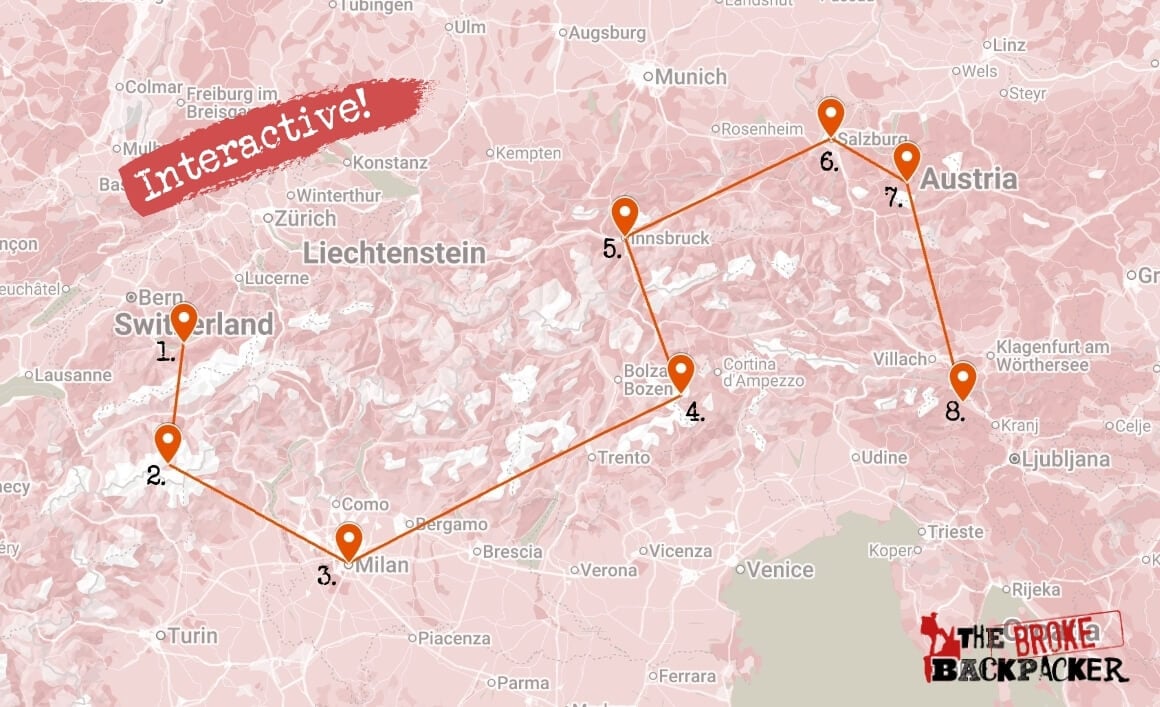
2-Week Travel Itinerary – Mountain and Lakes
Two weeks of mountain hopping around the most iconic peaks in Europe? Yes, please. Below is my dream itinerary for any lover of peaks and lakes heading to Europe:
- Stop 1 – Interlaken (Swiss Alps): This epic itinerary starts in Interlaken, the perfect base for exploring lakes Thun and Brienz, Lauterbrunnen Valley, Mürren and Grindelwald. It’s super accessible, with trains coming direct from Zurich or Geneva airports so it’s a good starting point!
- Stop 2 – Zermatt (Swiss Alps): You can take a scenic Swiss train south via Visp to reach Zermatt. Home of the infamous Matterhorn and some of the most glorious alpine scenery that Europe has.
- Stop 3 – Milan/ Lake Como (Italy): On the way to your next destination, you can stop into the famous city of Milan and the gorgeous Lake Como.
- Stop 4 – Dolomites (Italy): Next you can head up into northern Italy to marvel at the jagged limestone peaks of the Dolomites – one of my all time favourite mountain ranges. It’s dramatic, incredibly photogenic and wildly different from the peaks of Switzerland.
For those of you who like to operate at a slightly faster pace, you could slot in a trip to Lake Lucerne from Interlaken, with boat trips and epic viewpoints, it’s a fab addition.
1-Month Itinerary Extension – Mountain and Lakes
If you have the time for enjoy a whole month of exploring, there are plenty of other mountains and lakes to explore beyond the usual two week route.
- Stop 5 – Innsbruck (Austrian Alps): Continue onto the gorgeous, colourful town of Innsbruck, sitting below mighty peaks, with cable cars leaving right from the city centre.
- Stop 6 – Salzburg (Austria): Next you’ll head east to Salzburg, a city that is surrounded by lakes and wrapped with towering mountains. The old town is gorgeous and there are plenty of epic day trip opportunities. Don’t miss a visit to Salzkammergut.
- Stop 7 – Hallstatt (Austria): Next on the agenda is Hallstatt, a tiny lakeside village in Austria that is postcard perfect. It’s the perfect place to slow down for a day or two; stroll the waterfront, go on a boat day out and just relax.
- Stop 8 – Lake Bled (Slovenia): If you fancy yourself a lake enthusiast, Lake Bled is one of the most beautiful spots in Europe – with it’s island church, cliff-top castle and huge pool of calm blue water.
If you want to extend your time in the peaks a little longer, you can further past Slovenia to the High Tatras in Slovakia/ Poland. These have to be the most underrated mountains in Europe. They are rugged, affordable and fairly accessible.
4. The Broke Backpacker Route – Eastern & South-eastern
Finally, this the route I’d recommend if you’re keen to save a few bucks and embrace a raw travel style by heading to places that see fewer tourists. They are just as gorgeous and can save you more than half of the cost of travelling in Western Europe.
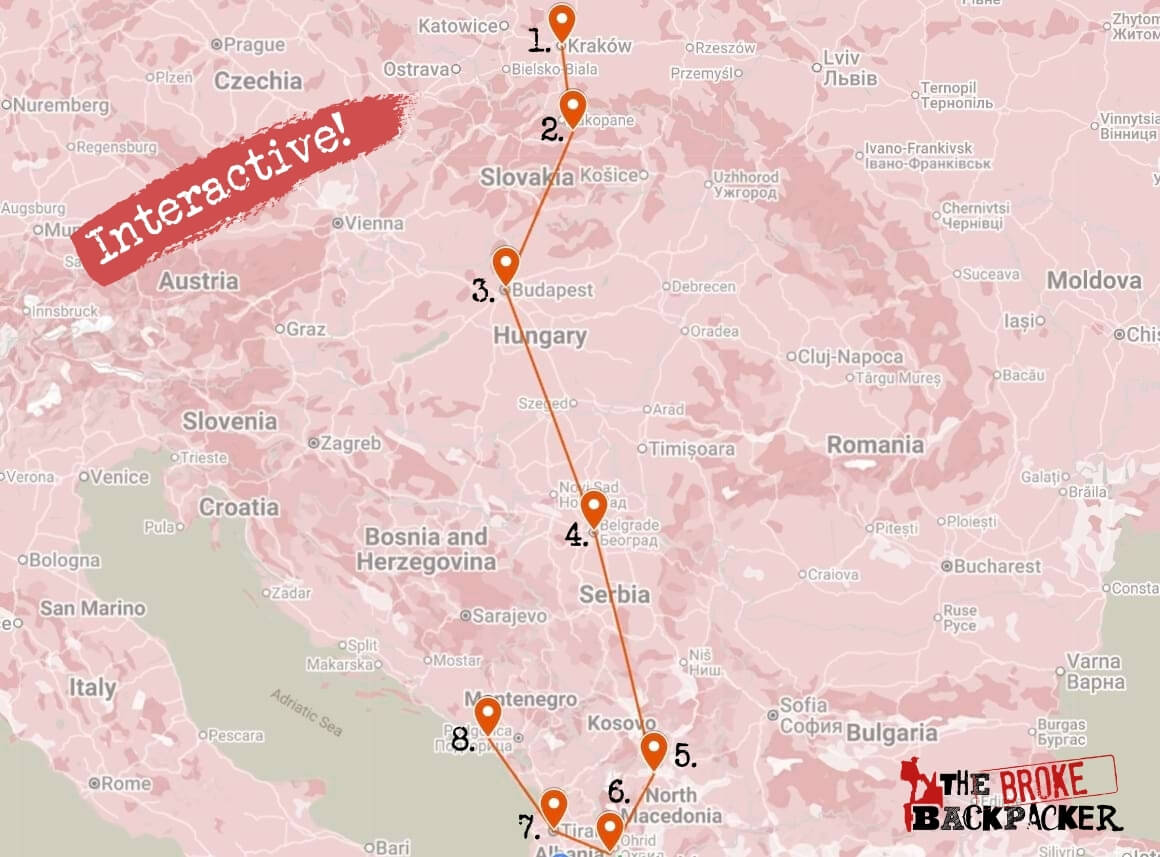
2-Week Travel Itinerary – The Broke Backpacker Route
If you’ve only got two weeks up your sleeve, this is how I’d spend it exploring Eastern Europe:
- Stop 1 – Krakow (Poland): Kicking things off in Krakow, this is one of Europe’s most beautiful and most affordable cities. Soak in the old town, explore the Wawel Castle and sip on cheap pierogi.
- Stop 2 – High Tatras (Slovakia): Jump on a super easy, super cheap bus to then head up into the rugged mountain range for insane views and stupidly good value. Hike to the lake, eat a massive meal for €6 and sleep like a baby in a cute mountain hut.
- Stop 3 – Budapest (Hungary): Budapest is up there with one of my favourite cities. You can relax in their thermal baths, party in ruin bars, stroll along the Danube and marvel at some outrageously impressive architecture. It’s a must-visit.
- Stop 4 – Belgrade (Serbia): The finale for this two epic week budget-friendly adventure is in Belgrade, a creative, edgy, kinda intense city in Serbia – heart of the former Yugoslavia. Here you’ll find riverside bars, old fortresses and huge food portions at tiny prices. You can’t beat it.
Again, a couple of extra stops for the faster paced travellers. After Krakow, you could stop in at Wraclaw for a colourful, underrated city full of gnome statutes and cheap bars (random, I know, but it’s kinda awesome). Or, if you want more mountain time, head up into Zakopane in Poland. It’s right on the way to the High Tatras.
1-Month Itinerary Extension – The Broke Backpacker Route
If you have a couple more weeks to spare, you can continue on to South-eastern Europe:
- Stop 5 – Skopje (North Macedonia): Strange little Skopje is a place that is wonderfully weird in the best way possible. Expect giant statutes, quirky architecture, cheap eats and a buzzing bazaar. It sits beneath Mount Vodno, so you’ll also get to soak in mountain views. It’s an experience!
- Stop 6 – Lake Ohrid (North Macedonia): And here is where we can breathe. I found Lake Ohrid to be the perfect place to relax, take in the views and just eat some damn good fresh seafood.
- Stop 7 – Tirana (Albania): Albania is one of the coolest countries I’ve ever visited. If you can extend your time here, do it. Tirana is awesome for learning about it’s history and for serving up insane food, but get up into the Alps or down to the Riviera, if you have the time. It’s a very cool country!!
- Stop 10 – Kotor (Montenegro): The dramatic Kotor bay surrounded by mountains reminded me of Queenstown in New Zealand. It’s absolutely stunning here. You can climb the fortress, swim in the bay and enjoy a cold beer on the waterfront. What a trip!
A couple of extra stops that you could make are Prizren in Kosovo, this will add a a slice of something quite unique into your itinerary. It’s backpacker safe and is home to gorgeous Ottoman-style buildings with epic mountain views.
Backpacking Europe Costs
Backpacking Europe does not have a reputation as a budget-friendly place for travellers. The prices in the popular tourist destinations have sky-rocketed in recent years, and it doesn’t look like they’re slowing down any time soon.
It’s pretty cunning actually. The cheap flights entice you in and BOOM: you’re stuck paying the price for it – literally.
Though, where there’s a will, there’s a way! There is, and always have been, savvy travellers making their way around Europe with clever tricks to save money.
Daily Budget Ranges
I have broken down the average daily travel costs in Europe you can expect in order to help you get to grips with your own Europe backpacking budget.
| Country | Dorm Bed | Food/ day | Local Transit/ day | Intercity hop <3h | Activities/ day | Daily total (Shoestring) | Daily total (Mid) |
|---|---|---|---|---|---|---|---|
| Portugal | $20-40 | $20-35 | $6-10 | $10-25 | $5-20 | $55-75 | $95-140 |
| Spain | $25-45 | $25-35 | $6-10 | $15-30 | $12-25 | $65-90 | $115-160 |
| France | $35-60 | $30-45 | $6-14 | $20-40 | $12-30 | $85-120 | $150-205 |
| Italy | $30-55 | $25-40 | $6-12 | $20-35 | $10-25 | $75-100 | $125-180 |
| Switzerland | $50-75 | $40-55 | $10-20 | $30-50 | $15-35 | $120-165 | $190-255 |
| Austria | $35-50 | $30-40 | $6-12 | $15-30 | $10-25 | $75-100 | $125-170 |
| Germany | $30-45 | $25-40 | $6-12 | $15-30 | $10-25 | $70-95 | $115-170 |
| The Netherlands | $40-60 | $30-45 | $10-15 | $20-35 | $10-25 | $90-125 | $145-200 |
| Belgium | $30-55 | $25-40 | $8-$15 | $20-30 | $15-25 | $80-100 | $135-185 |
| UK | $35-60 | $30-45 | $8-$15 | $20-30 | $15-30 | $85-120 | $145-200 |
| Ireland | $35-60 | $30-45 | $8-$15 | $20-30 | $15-25 | $85-115 | $140-190 |
The Big Cost Drivers
Backpacking Europe on a budget is absolutely doable (don’t let anyone tell you otherwise). However, your costs can swing wildly depending on a few key factors. These are the things that I’ve found make the biggest different to how far you can get your budget to stretch.
Season
Europe carries a very different price tag depending on the season that you visit in. Summer (June-August) is nearly always the most expensive time to travel. Hostels are packed, flight prices go through the roof and food prices can even creep up in the more popular hot spots.
- Best value seasons: March-May (Spring), September-November (Autumn)
- Most expensive season: June-August (Summer)
- Cheapest: December-February (Winter). Unless you’re visiting the ski fields or Christmas destinations – these can still be hella expenny.
If you have some flexibility in your schedule, it’d recommend travelling outside of the peak summer season to cut your budget up to half!
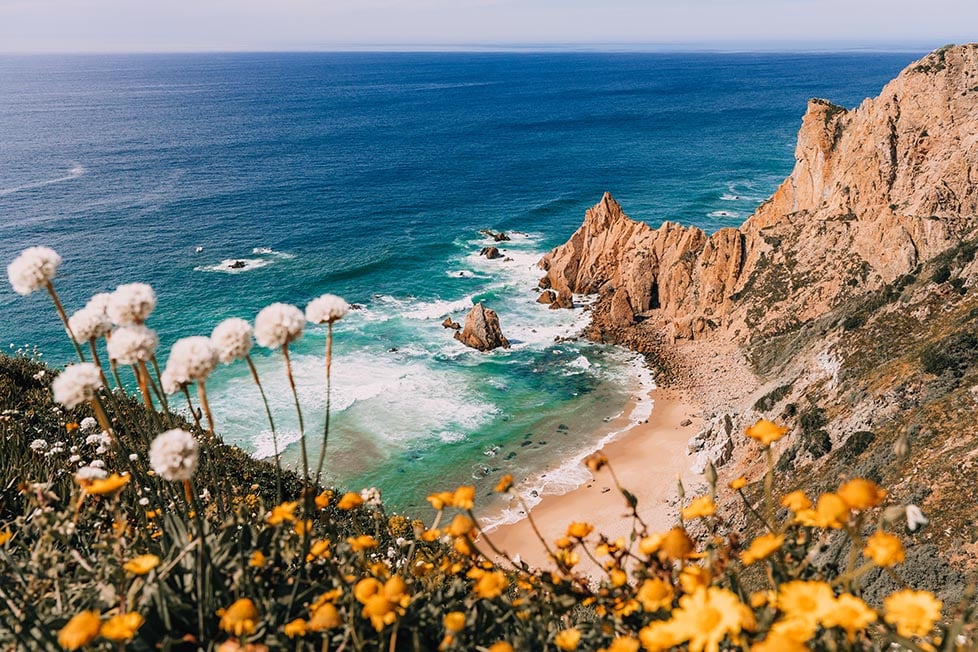
Image: Nic Hilditch-Short
Country Choice
The route that you choose is probably the biggest factor of them all. Western Europe is gorgeous, but it will chew through your budget fast. Eastern and South-eastern Europe, on the other hand, offer top-tier backpacker value. Think mighty big portions, cheap beer, low-cost transport and affordable beds.
- Most expensive: Switzerland, Scandinavia, France, UK
- Mid-range: Italy, Spain, Portugal, Germany
- Best Value: Poland, Slovakia, Hungary, Albania, Montengero
Choosing the right countries can literally double (or more!) the length of your trip for the same buck. If there are some expensive countries that you want to visit, do it – just follow my budget tips above, and then try to balance it up with a cheaper country next.
Transport Style
How you move around can have a HUGE impact on your spend. Trains are an iconic part of travelling Europe, however, no one talks about how damn expensive they can be – especially in Western Europe. Buses are slower, but they cost a fraction of the price.
- Cheapest: Buses, rideshares, regional trains
- Mid-range: Long-distance trains (when booked early)
- Most expensive: High-speed trains (when booking last min) and internal flights
- Free: Hitchhiking!
If you’re a proper broke backpacker, buses and hitchhiking will become your bread and butter to keep costs low in Europe 🙂
Activities
The cost of activities in Europe can range hugely depending on what you want to do. There are plenty of free activities, especially when you’re exploring places where the landscape is the activity. However, there are some that will drain your funds fast.
- Free or cheap: Hiking, markets, city walks, viewpoints, beaches, (some) museums
- Mid-range: Castles, cable cars, day trips, cooking classes
- Expensive: Boat tours, adventure sports (skiing, sky diving), and big attractions like the Eiffel Tower, the Colosseum, etc.
If you want to do the mid-range and expensive activities, just factor them into your budget. Try to just pick a couple of stand outs that you want from each country and keep the rest cheap and cheerful.
Nightlife
The nightlife in Europe is legendary – but one thing I’ve noticed everywhere that I’ve travelled, is that drinking eats into your budget massively.
On my first backpacking trip in Europe, I was €30 for a single cocktail… however, once I hacked where to party and where not to party, I was spending €5 a cocktail in Spain and €2 a beer in Montengero.
- Cheapest: Balkans, Poland, Slovakia, Hungary
- Mid-range: Spain, Portugal
- Most expensive: UK, Scandinavia, Switzerland
A night out in Budapest or Albania is cheap and fun. A night out in Paris or Copenhagen is… not so much. Party-wisely, folks.
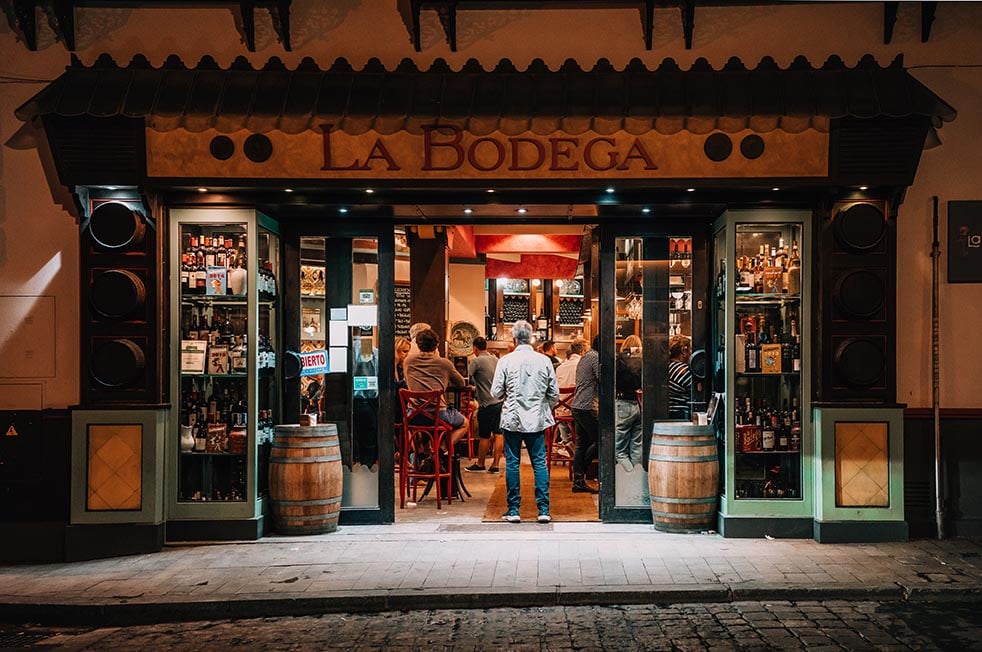
How I Save Money in Europe
Okay, so now that you got an idea of the average costs for backpacking in Europe… What if I told you that you could save even MORE? Here are some of the best money saving tips for travelling that I do on my shoestring budget:
- Camp: With plenty of awesome beaches, forests, stunning countryside, and far-flung mountains, camping whilst backpacking Europe on a budget is a great option. Grabbing a solid backpacking tent is never a bad idea! Just be aware that wild camping is illegal in most of Western Europe. So if you want to do it, you gotta be a little sneaky about it.
- Cook for yourself: Eating out every meal quickly adds up, especially in Western and Northern Europe. Staying somewhere with a shared kitchen and picking up groceries from local supermarkets is one of the easiest ways to keep your budget in check.
- Hitchhike: Hitchhiking is a 100% free and adventurous way to get around. In Europe, it’s pretty safe and easy although some countries are tougher than oters.
- Couchsurf: The Portuguese, Greeks, Spanish, Germans – they are all awesome folks. Get to know some! Check out Couchsurfing to make some real friendships and see a country from the perspective of locals.
- Sort out your travel banking. Currency conversions and ATM fees stack up.
- Learn to pre-drink (aka – buy cheap drinks from the supermarket to drink a home before going out).
- Booking flights, trains, and buses in advance. That way, flights go for as little as $20 and buses $10. The same goes for accommodation: the sooner you book, the better deal you will get (usually).
- Dive some dumpsters: Dumpster diving helps if you’re even a little broke too for a store-bought meal. There’s an art to it but you can soon get the hang of it.
- Travel with a water bottle. Tap water is safe to drink across most of Europe, so a reusable bottle is an easy way to save money and reduce your plastic waste. If you’re unsure about the local water supply, simply ask before refilling.
- Travel by overnight train or bus. On longer routes, overnight transport can save you both a night’s accommodation and a day’s travel.
- Use city tourist cards selectively. If you’re planning to visit several museums or use public transport a lot, city passes can offer good value, but check the maths before buying.
- Shop at local supermarkets. Chains like Lidl, Aldi and Carrefour are great for affordable breakfasts, picnic lunches and snacks between destinations.
- Stay just outside the city centre. In many European cities, accommodation drops in price dramatically just a few metro or tram stops from the main sights.
- Travel in the shoulder season. May, June, September and early October often offer the best balance of good weather, smaller crowds and lower prices.
- Take advantage of free walking tours. They’re available in most major European cities and are a great way to get your bearings. Just remember to tip your guide if you enjoyed it.
- Pack light. Budget airlines across Europe often charge hefty baggage fees, so travelling with hand luggage only can save a surprising amount.
Where to Go in Europe
Wherever you decide to go on your Euro backpacking trip, the magic will surely blow your mind. Each country in Europe is unique, full of surprises, and requires its own individual approach and strategy with regard to your travel budget in Europe. Some European cities are overrated – and it’s handy to know which are.
Uh, just one thing: Europe, as a whole, has dozens of countries. (44 or 51, depending on what kind of geographical allowances we’re making…) These are just some of the most popular and my favourites.
But don’t despair! There’s plenty more to explore in Europe.
Italy – Ancient Wonders, Colourful Coastline and Carb-Filled Joy
- Best for: food, culture, mountains & beaches
- Budget vibe: Mid to pricey. Italy is aamazing but it’s not the cheapest; costs jump fast in big cities and peak season, but regional food & shoulder season can help stretch your dosh further.
- Don’t miss: Bologna (a criminally underrated city), the Dolomites, Puglia + Sardinia beaches (yes, the “Maldives of Europe” thing is legit), Rome’s ancient city.
- Overrated: Venice in high season. The Leaning Tower of Pisa; the tower is fine, the selfie circus is not.
- Where to base yourself: Rome for culture, history and a lil’ chaos, Bologna for food and nightlife, Dolomites (Ortisei / Cortina) for mountain time.
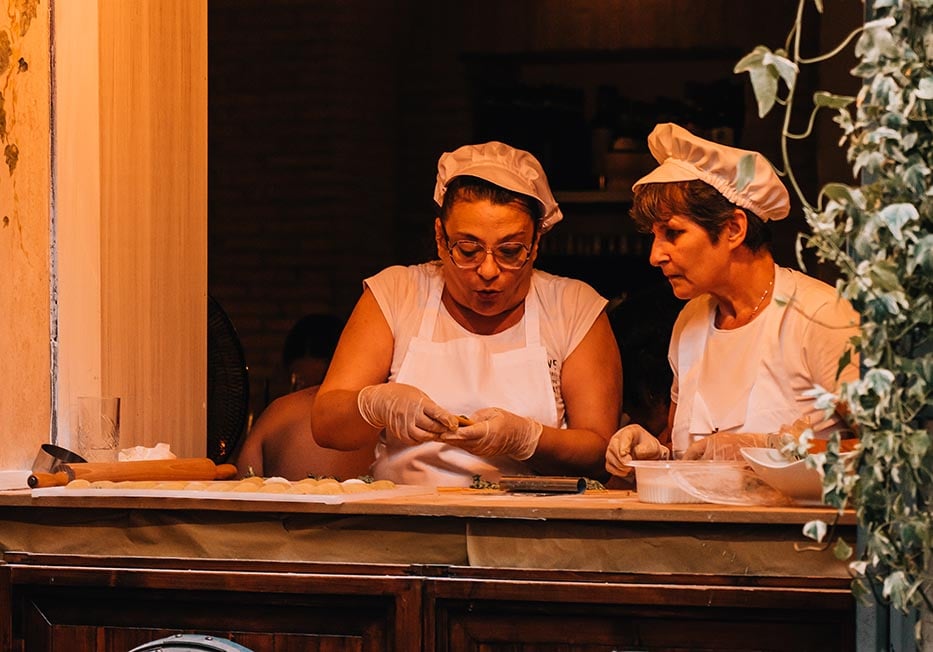
Image: Nic Hilditch-Short
Italy has been a popular vacation destination for a looooonggg time. Tourists have been coming here for years to see the likes of the Colosseum, drink wine while staying in Tuscany, tour the canals of Venice – and all that touristy stuff.
Consequently, when deciding where to stay in Italy, few people stray far from the main backpacking route. As such, many say that tourism here has become a bit calcified. Some might say that Italy can offer nothing else besides the same postcard views and disgruntled baristas.
But there’s a lot more to see in Italy besides the usual attractions because, let’s be honest, everything in Italy is beautiful. Pound for pound, Italy might be one of the most beautiful countries in the world and you’d be hard-pressed to find a single ugly stone here.
To find out more, hit the button below to see our full Italy Backpacking Guide.
France – Romance, Rich Culture and Ridiculously Good Wine
- Best for: Food, culture, outdoorsy travel
- Budget vibe: Mid to pricey. Big cities and the Riviera rack up the costs fast, smaller towns and countryside regions can stretch your budget further.
- Don’t miss: The French Riviera (Menton, Nice, Eze… all super dreamy), Bordeaux for wine, watching the Eiffel Tower sparkle – it’s packed with tourists but it is pretty special.
- Overrated: Paying to go up the Eiffel Tower… once you’re up it, you can no longer see it. Save your cash, find a free viewing point that you can see the tower from.
- Where to base yourself: Paris for art and history, Lyon or Bordeaux for food and wine, Nice or Marseille for beaches.
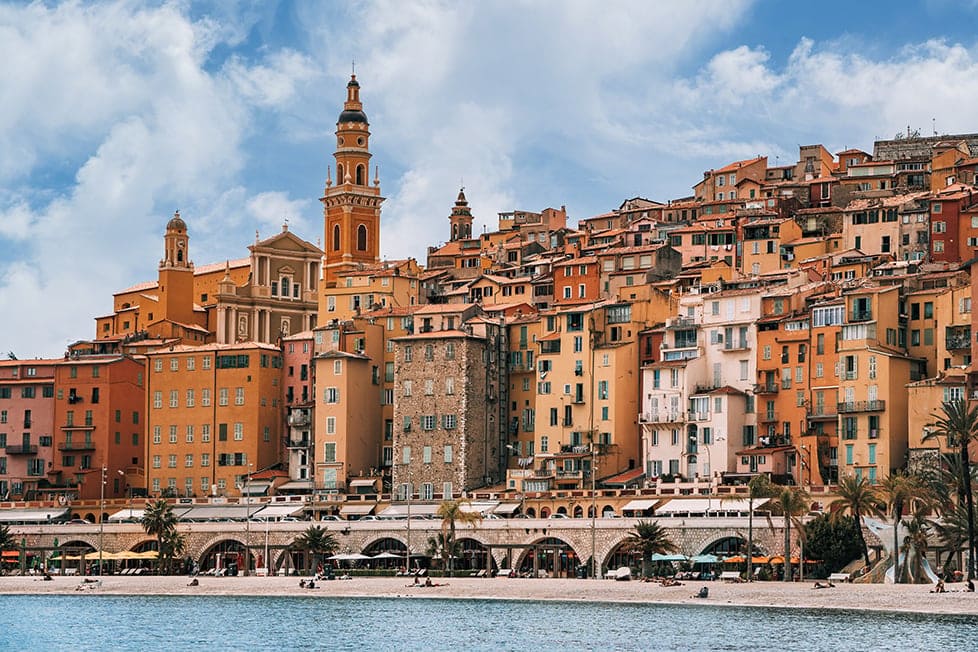
Photo: Nic Hilditch-Short
France might just be one of the most diverse countries you’ll set your foot in whilst backpacking through Europe. There are so many places to stay and experience. In addition to two coasts and two mountain ranges, France has a wide variety of cultures, landscapes, and food packed into one country.
Wherever you turn, you will find different kinds of wine, cheese, and even variations of the French language. From stunning medieval castles to picturesque villages and cities, backpacking in France is truly an unforgettable experience.
And forget about the old stereotypes about the French being rude and uptight. The French can be like soft-boiled eggs: they have a shell on the outside but with it removed they are softies at heart. France is full of lovely soft-boiled eggs, uhm I mean humans…
To find out more, hit the button below to see our full France Backpacking Guide.
Portugal – Golden Beaches, Slow Living and Seriously Good Seafood
- Best for: Beach, food, culture, van life, solo travel in Europe
- Budget vibe: Cheap to mid. It’s a slower pace of life in Portugal, which I loved. The prices are lower than a lot of Western Europe so us budget backpackers have a better chance of stretching our budget.
- Don’t miss: Sipping on port on Porto, Sintra’s fairytale castles, sunsets in the Algarve (home to the best beaches in Portugal) and sampling the seafood in Lisbon!
- Overrated: I’d steer clear of places like Albufeira or Vilamoura in the Algarve. These spots can be cool if you’re into glossy, resorty, all-inclusive vibes but are a world away from the “real” Portugal.
- Where to base yourself: Lisbon for colourful buildings, food, nightlife and easy day trips, Porto for cheaper, student-vibe city or the Algarve for insane coastlines and outdoor beauty.
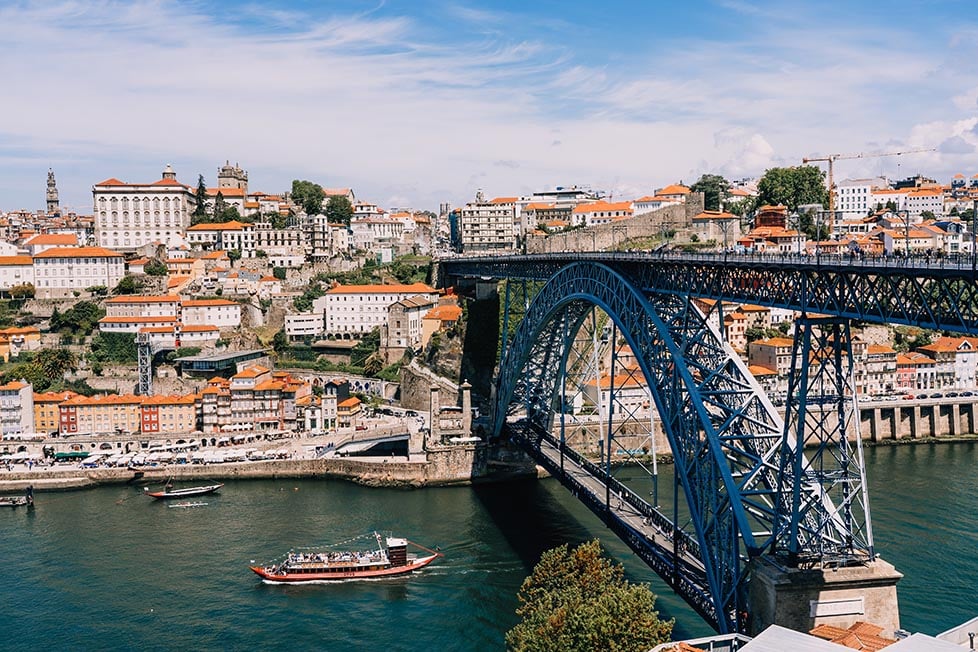
Image: Nic Hilditch-Short
Portugal is a grand paradise of sorts. The pace is slower than other European countries (and compared to other offenders on this list, cheaper, too). The country is packed with friendly locals, charming villages, fun parties, and one of the most chill vibes you will come across anywhere on earth.
Portugal is also one of the easiest places in Europe to travel around. Buses and trains are simple to navigate and pretty cheap, plus English is widely spoken. Whether you’re getting lost amongst tiled backstreets, cruising between surf towns, or tucking into some fresh fish by the sea, Portugal has a way of making you slow down and just chill the F out.
Portugal also has two semi-autonomous island regions: the Azores and Madeira. Both are very different from the mainland and absolutely magical. Hiking in Madeira is uniquely epic! But visiting the Azores is like backpacking a mini-New Zealand. To find out more, hit the button below to see our full Portugal Backpacking Guide.
Spain – Sunshine, Tapas and Cities That Don’t Sleep
- Best for: Nightlife, food, culture, coastline and sun.
- Budget vibe: Mid – Spain is a backpackers paradise. Outside of the big cities, you’ll find great value. Andalucía offers some of the cheapest (and best) food in the country.
- Don’t miss: Sampling Valencia paella at the source, marvelling at the most impressive buildings I’ve ever seen – the Sagrada Familia, or the beaches and white washed towns in Andalucía.
- Overrated: Bullfights – many Spaniards now avoid them too.
- Where to base yourself: Visit Madrid or Barcelona for big city vibes. Granada or Seville for culture,, tapas and cheap eats. Valencia or San Sebastian for beach life.
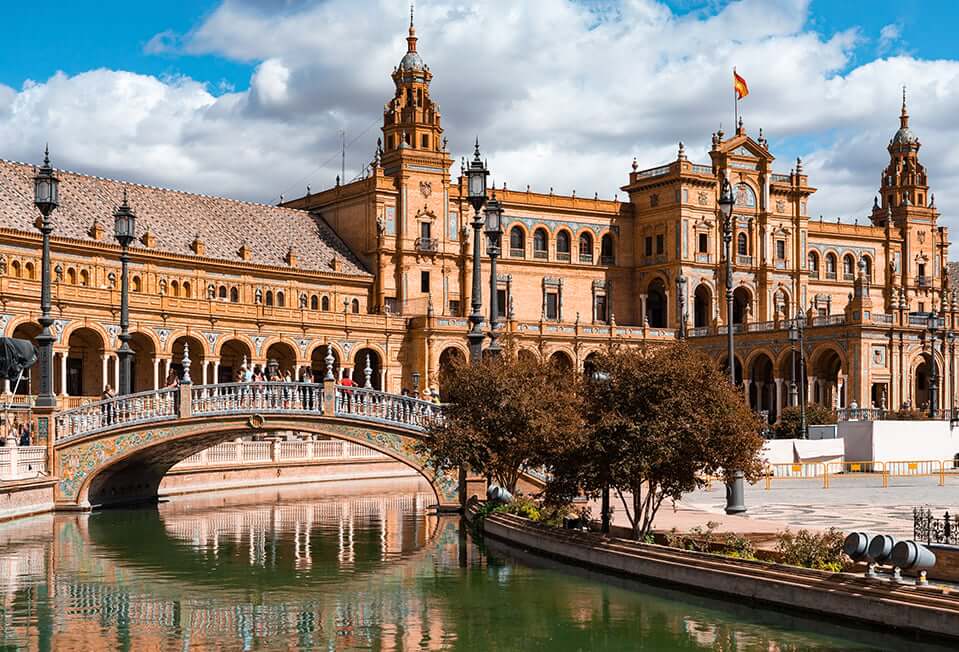
Photo: Nic Hilditch-Short
Many backpackers claim Spain as their favourite country. Are they right? I think so. You do not have to look too far to see why this country, in addition to producing some lovely human beings, is a magical land for backpackers.
Like to sleep? You came to the wrong country. The Spanish have breakfast at 10, lunch at 4, and dinner at midnight. Spain is a country that truly never sleeps. It’s in the culture to practice sleep deprivation in style. Maybe all those midday siestas help?
Spain just has a certain charm to it. Small plates of delicious tapas, cool, cold wine served with sweet orange and melon… Is it those fine beaches? Old olive groves running through tiny villages? Or the church in Barcelona that is a perpetual construction project? To find out more, hit the button below to see our full Spain Backpacking Guide or If you’re deciding where to base yourself, see our guide on accommodation in Spain.
Switzerland – Snowy Peaks, Scenic Trains and Pure Mountain Magic
- Best for: Hiking, nature, trains, dramatic scenery
- Budget vibe: Expensive. The prices; the pure, unadulterated, merciless, eye-gouging, seemingly unreal prices. You’ll need to employ every trick in the book to keep costs down.
- Don’t miss: the Bernese Oberland. This region features probably the most famous and stunning hikes in Switzerland. Check out the trails around Eiger and the Lauterbrunnen Valley.
- Overrated: Jungfraujoch’s price tag. The views are incredible, but your wallet will shed a tear.
- Where to base yourself: Interlaken or Lauterbrunnen for adventure and hiking, Lucerne for lakes and mountains, Zurich if you want to experience a polished Swiss city.
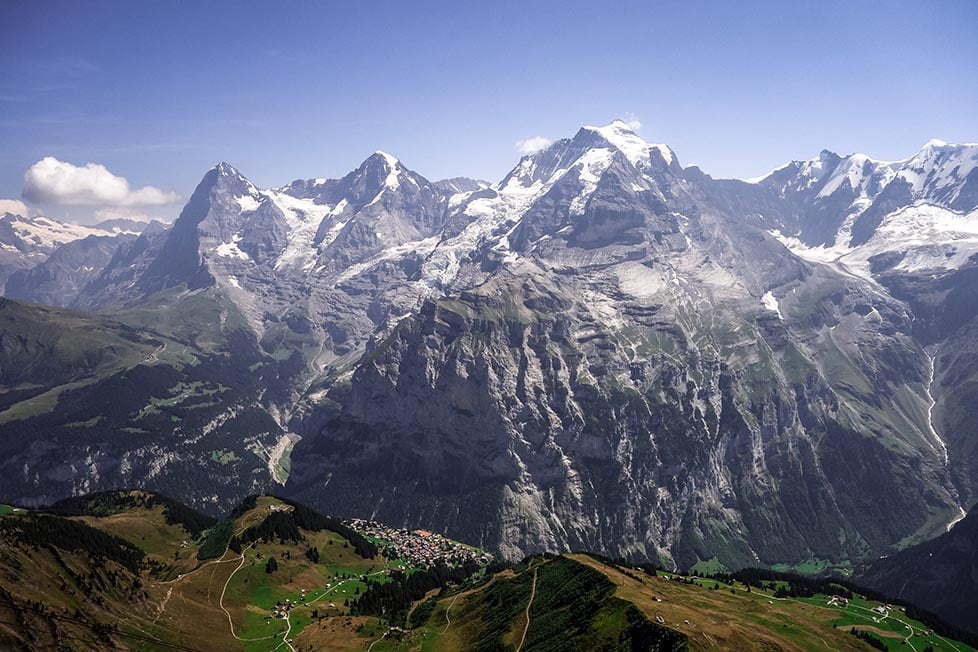
Image: Nic Hilditch-Short
If you are planning on spending time in the Alps, a hiking trip to Switzerland is an obvious choice. Switzerland is a land full of the Alps, quaint villages, and hip cities. In addition to its powdery peaks, Switzerland is also home to gorgeous alpine lakes. Take in some of the ancient castle fortifications lakeside by day and sip the legendary Swiss hot chocolate by night.
You do have to pay for the pleasure in Switzerland. For better or worse, the Swiss people have this whole thriving economy thing down to a T. As a country long resistant to changing over to the Euro, the Swiss Franc is as strong as ever before. For backpackers, this translates into a scenario of high cost, high reward. To find out more, hit the button below to see our full Switzerland Backpacking Guide.
Germany – Big History, Bigger Beers and Beautiful Old Towns
- Best for: History, beer-gardens, forests, fantastical castles, nightlife, efficiency.
- Budget vibe: Mid?range. Cheaper than Switzerland and France, but pricier than Eastern Europe. It can be great value if you stick to street food, bakeries and supermarket bevvies.
- Don’t miss: Visiting a beer hall. No one can drink like the Germans and by that, I mean with such control and enjoyment at the same time.
- Overrated: Munich. The city itself, whilst pretty, doesn’t offer a lot in the way of attractions. The locals can be pretty arrogant too. Sorry, not sorry.
- Where to base yourself: Berlin for culture, history and nightlife. Hamburg for a cooler, maritime vibe. Bavaria for gorgeous forests to explore.
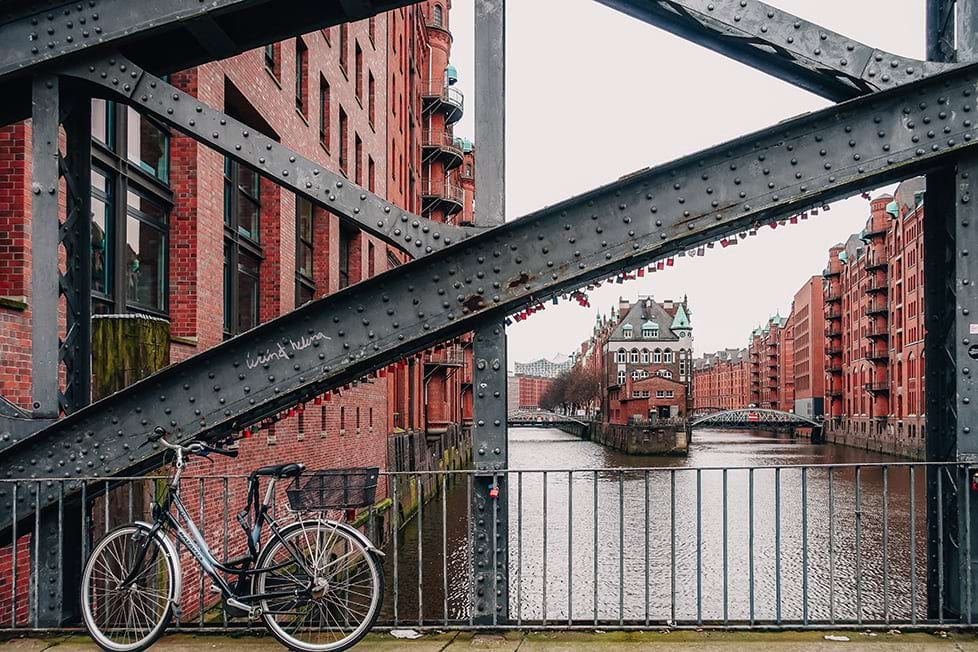
Image: Nic Hilditch-Short
After gaining a (justified) terrible reputation on the world stage in the first half of the 20th century, Germany has emerged over the last 50 years as an economic powerhouse and centre of culture in Europe. Modern-day Germany is an awesome place to go backpacking through Europe. You won’t be hard-pressed to find a great hostel in Germany.
As a lover of cool cities and good beer, I am totally enamoured with Germany. While famous for its fast cars and pretzels, there is so much more to see whilst backpacking Germany: historic towns, medieval monasteries and castles, culture-filled cities, fairy-tale forests, and majestic mountains.
For the full low-down, hit the button below to see our full Germany Backpacking Guide.
The Netherlands – Coffee, Canals, Cannabis and Windmills
- Best for: canals, cafes, cycling and chilled city vibes
- Budget vibe: Mid-range. Street markets, bakeries and supermarkets will help you keep the costs down here.
- Don’t miss: Cycling through Utrecht’s canals at sunset (it’s the most “Dutch” feeling ever). Check out the Rotterdam food halls.
- Overrated: staying in the HEART of Amsterdam – it’s overly expensive and crowded. One could stay outside the city, save a bundle, and then take the train in.
- Where to base yourself: I suggest finding a hostel in Utrecht for more local, backpacker vibes. Or you could stay in Rotterdam. Of course, if you want to fork out for the centre, you can stay in Amsterdam.
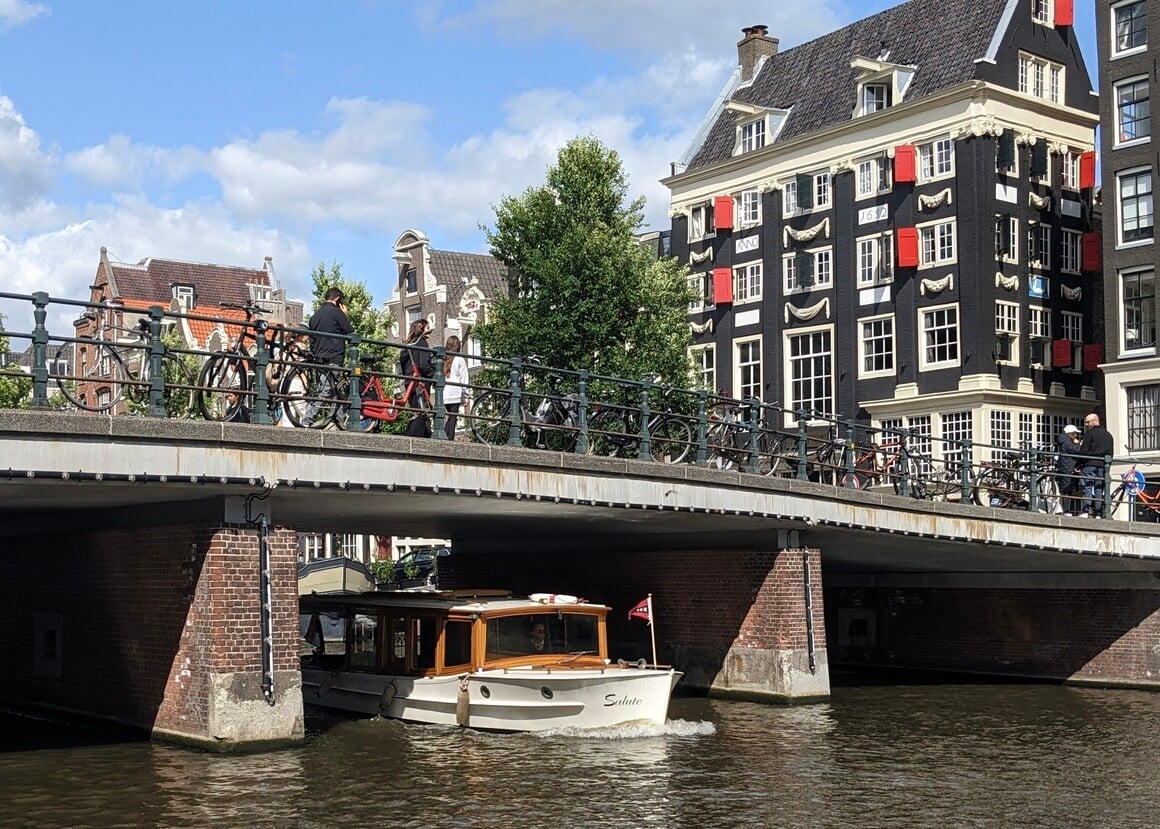
Visiting Amsterdam has long been a favourite backpacker haunt and is well worthy of exploration. It is THE place in Europe to (legally) rock into a coffeeshop, order a joint, and sit down to smoke it.
If you like riding bicycles long-distance, The Netherlands is a perfect country in which to feed that urge: The Netherlands is almost entirely flat. If you have had long challenging days trekking or biking in the Alps, the flatness here will be a welcomed change.
You will find that Dutch people often speak perfect English which is impressive as Dutch sounds nor looks anything like English. Because the country is relatively small, you can travel around here with ease whilst taking in a majority of it.
Most backpackers make a stop in Amsterdam and leave the rest of the country be. Don’t get stuck in the capital city – at least take a day trip from Amsterdam. To find out more, hit the button below to see our full Netherlands Backpacking Guide.
Belgium – Beer, Chocolate and Medieval Cities
- Best for: beer, food, medieval towns, art and architecture.
- Budget vibe: Mid-range. Pricier than the Netherlands, cheaper than France.
- Don’t miss: Staying in Ghent, the prettiest medieval town in Belgium. It’s mostly known for its canal houses and local mustard. Gruut, a precursor to today’s beer, is also made in Ghent.
- Overrated: Manneken Pis. It’s tiny, crowded and… that’s it.
- Where to base yourself: Ghent for it’s medieval town and affordability, Antwerp for fashion food and a more local vibe. Brussels only if you want museums and easy transport.
Photo: Nic Hilditch-Short
Let’s be honest: Belgium doesn’t offer much in way of stand-out attractions. There is no Colosseum, no Montmartre, no legalized drugs, or raging Berghains. Just a lot of charming houses, calories, and dreary weather.
And for these reasons, I LOVE Belgium. How amazing is it that Belgium places beer in such high and hallowed regard? Bless the Belgians who seem to have no problem smothering their fried potatoes in aioli and mussels with heavy cream. I love that you can go backpacking in Belgium with zero expectations and still be impressed.
It’s almost as if Belgium is a guilty pleasure of sorts. The whole country is just one big bar where you can eat and drink to your heart’s content and no one gives a shit. If you’re traveling between France and the Netherlands, it is absolutely worth stopping over in Belgium for a little while.
The United Kingdom – Pub Culture, Castles and Rugged Coastlines
- Best for: history, cosy pubs, rugged coast, countryside castles.
- Budget vibe: Mid to Pricey. London is pricey, but nearly everywhere else is more manageable. Pubs, meal deals (IYKYK) and a hostel kitchen can help a lot.
- Don’t miss: Going off the beaten path in the Scottish Highlands. If you really want a unique experience, try island hopping in the Hebrides. Or the Lake’s District in England.
- Overrated: Buckingham Palace. Just skip it.
- Where to base yourself: London for museums and food, Brighton for beachy vibes and colourful buildings, Edinburgh for history and access to the highlands.
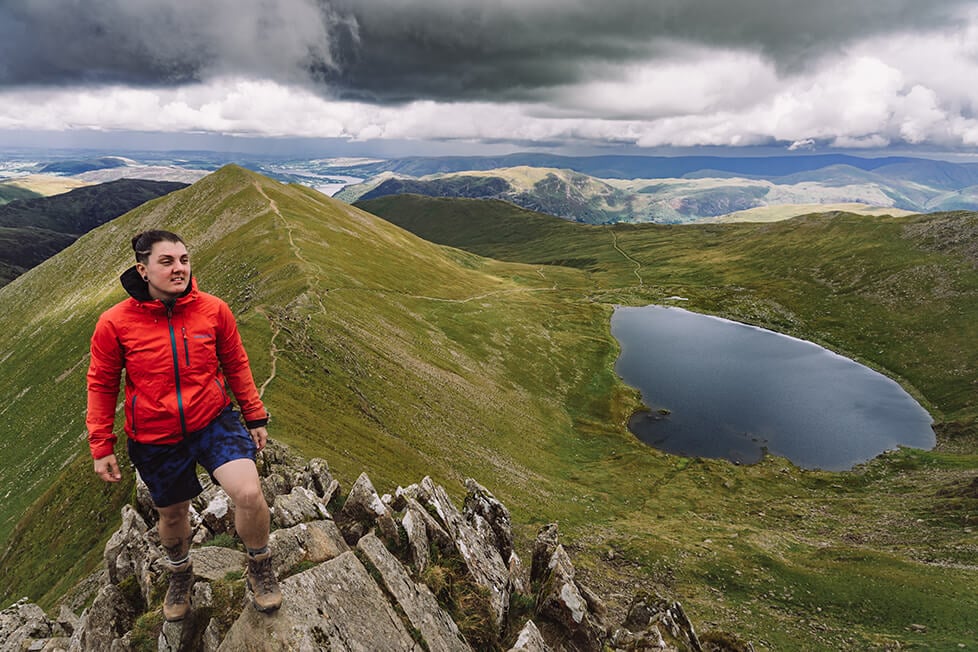
Image: Nic Hilditch-Short
The UK is just one of those places that I have fallen in love with over the years. If you are in the mood for a wonderful campervan and trekking adventure, backpacking in the UK is the journey you have been waiting for.
England and Wales have large sections of coast that are far off the beaten path and offer up excellent hiking/camping possibilities. The Highlands in Scotland have some of the last true wilderness areas in Western Europe. The Scottish Islands look like something out of a fairytale book.
Backpackers don’t go to Wales as often but for no good reason. It also offers awesome hiking opportunities, and Cardiff is a small-ish but cool, cultural city.
Note to my geographically challenged friends: The UK is comprised of 4 countries: England, Wales, Scotland, and Northern Ireland. And the Brits WILL get mad at you if you refer to the whole area as “England”. Our full UK backpacking guide below will break this down in more detail.
Ireland
- Best for: live music, coastal hikes, cosy pubs and folklore towns
- Budget vibe: Mid-range. Dublin is expensive, but once you venture into the smaller, more rural towns, your wallet will be much happier.
- Don’t miss: Watching an Irish sport (hurling or Gaelic football) game in a pub. Cliffs of Moher, the ancient streets of Galway, and the coloured houses of Cork in the capital of “authentic Ireland”.
- Overrated: Kissing the Blarney Stone. You’ll wait sometimes hours in line just to share spit with other people over a hole in the wall. Yes, it’s as unnecessary as it sounds.
- Where to base yourself: Dublin for music’s, pubs and an easy transport hub. Galway’s for music, coastal roadies and chill vibes. Belfast for street, history and a more rugged view of Ireland.
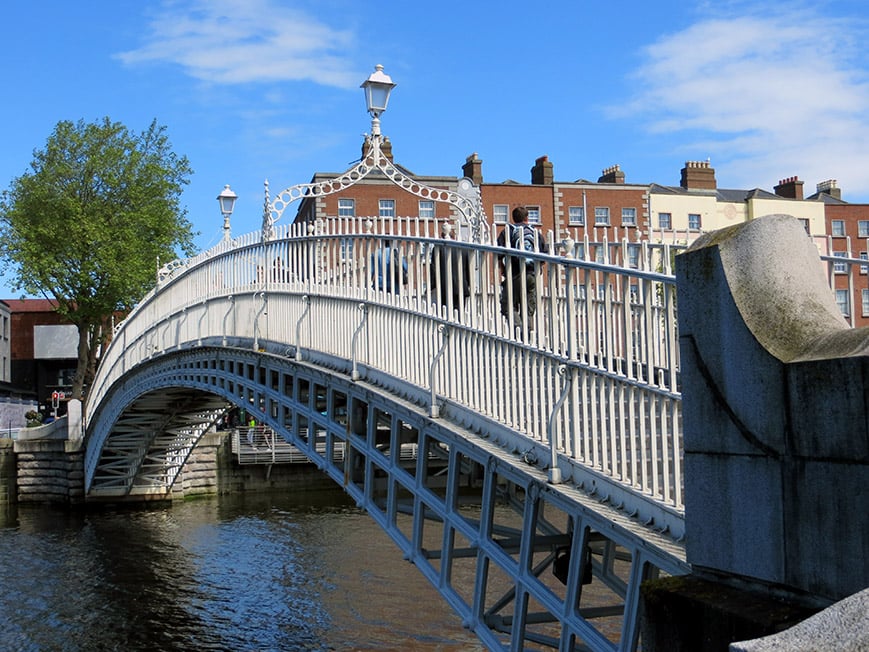
Image: Nic Hilditch-Short
The lush, green, enchanted, and enchanting island of Ireland perches serenely at the furthest boundary of Europe. Beyond it, there is nothing but the Atlantic until it reaches the New World.
Somehow, Ireland’s location and geography are encapsulated in its culture. It is European but only just; civilized, yet it’s wild and rugged. It rains a lot but remains perpetually pleasant and inviting.
Sometimes crudely dismissed as the UK’s little cousin, backpacking Ireland offers visitors the chance to explore the most plucky nation in the world and get a glimpse of a simpler world that has sadly vanished forever elsewhere. Note that its not so cheap anymore so be sure to book your Irish accommodation ahead of time to lock in an acceptable price.
If you are planning a trip to the Emerald Isle, hit the button below to see our full Ireland Backpacking Guide.
Backpacking Greece
- Best for: island-hopping, ancient history, beachy days, nightlife
- Budget vibe: Mid-range. Certain islands can spike in prices over summer (yes, I’m looking at you Santorini and Mykonos). However, the mainland and less popular islands can be surprisingly affordable if you plan smart.
- Don’t miss: The Ionian Islands. This part of Greek islands receives a fraction of tourists yet hosts some of the most beautiful places in the country. Zakynthos has good places to stay.
- Overrated: Santorini. It’s overcrowded, expensive, and on the verge of being spoiled.
- Where to base yourself: Visit Athens for history and transport, Naxos for beaches and hikes, Thessaloniki for nightlife and culture, Crete for beaches and gorges.
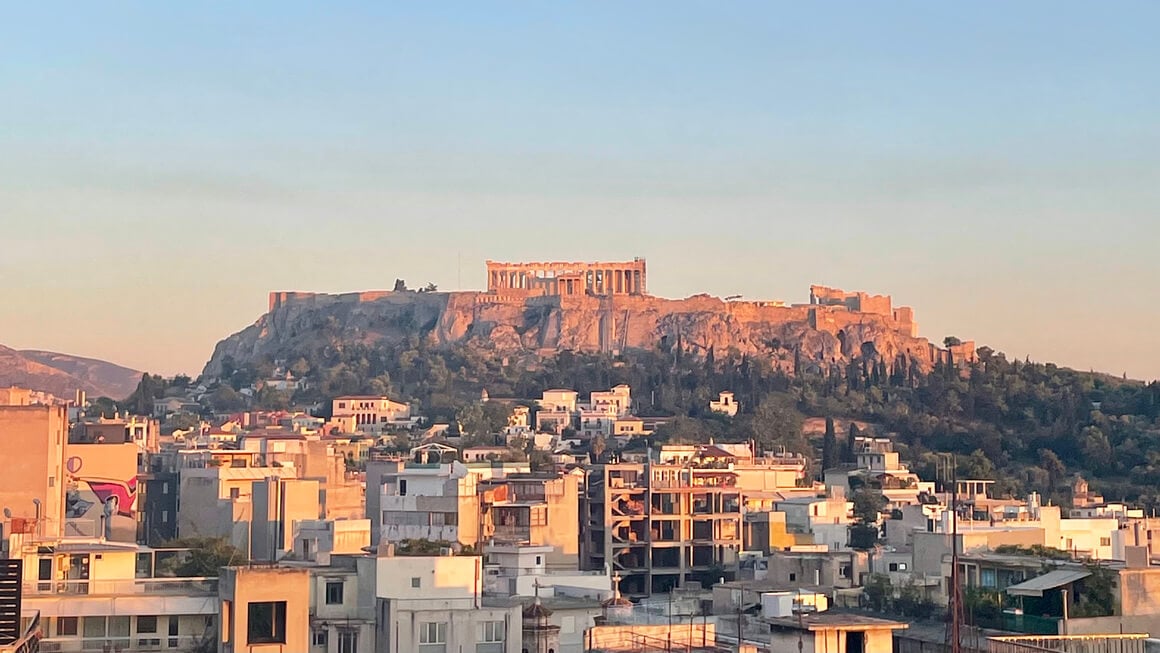
Getting to know Greece is one of the most rewarding backpacking trips to be had in Europe. Those blue and white houses and perfect Mediterranean landscapes you have seen on postcards live up to their hype in real life.
Greece is a charming, laid-back country. Backpacking the Greek Islands has been one of my favourite travel experiences. This is due not just to the beautiful views, but to the food, beaches, wonderful people, and plethora of history.
If you’re a history and/or mythology geek, backpacking Greece is gonna get your socks spinning out of excitement. Our full Greece Backpacking Guide below has loads of intel and insights.
Off the Beaten Path Adventures in Europe
Europe gets BUSY. Hundreds of millions of people, both from Europe and elsewhere, travel around it every year.
And you know what? 80% of those people do one of two things. Either they just visit a few cities or they go on cookie-cutter tours where they are shuffled around from one famous attraction to another, ploughing through a sea of baguettes, gelato, and, tapas along the way.
(Actually – that doesn’t sound half bad…)
Easy Detours that Don’t Break Your Route
It’s easy to get off the beaten path by visiting Europe’s hidden gems. In the Netherlands, go anywhere that’s not Amsterdam; in the UK, anywhere that’s not London.
Here are a few of my favourite detours to make long the usual “big hitter” route:
- Staying in Andorra, on the border between Spain and France, is a great idea. It’s particularly gorgeous in the autumn.
- Liechtenstein is one of the weirdest places in Europe. Full of cool stuff, most tourists visit the town Vaduz for a day but the Liechtensteinian Alps are worth a couple of days of hiking!
- Vatican City is super easy to include since it’s literally smack-bang in the middle of Rome – the world’s smallest country measures less than a square kilometre.
- Visiting Monaco for it’s glitz and glam is an easy day trip from the French Riviera
- San Marino is a dramatic hilltop micro-nation not far from Bologna, Italy.
- Luxembourg can be nice since it’s easy to get to and fro from Belgium, France or Germany. Here you’ll find forests, old towns and some very pretty fortifications. However, it might break your wallet.
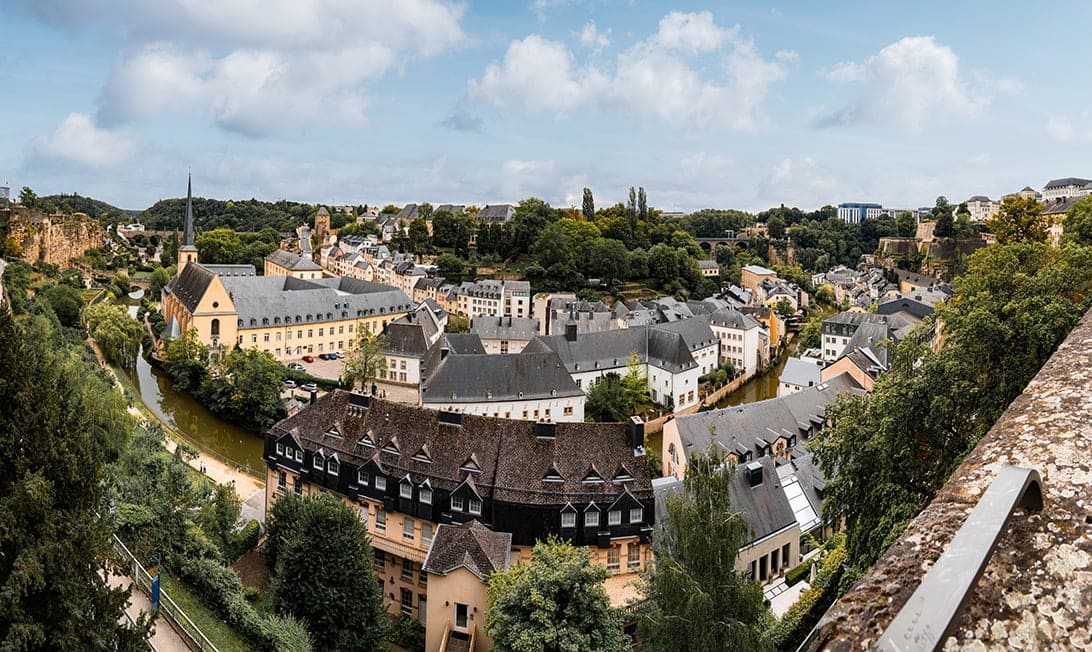
Image: Nic Hilditch-Short
Not in This Guide, but Worth It
There are also a few countries that have not been included in this guide yet, and I’d like to give them a little shout-out. They are not traditionally on the backpacker trail but they are awesome, plus they’re right on your route so it’s very easy to visit them!
For starters, Vienna in Austria is easily amongst the most beautiful cities in Europe. While staying in Vienna, everywhere you look there is some regal remnant of the Hapsburgs: a palace here, a monument there, and plenty of museums to go along with them.
Then there is Scandinavia. Think Fjords, saunas, well-designed cities and epic outdoor adventures. It’s expensive, but it’s underrated.
The Balkans. I did touch on the beautiful, backpacker-friendly Balkans in the Broke Backpacker itinerary. It’s the best place to travel for authentic experiences and to save a few bucks. My favourites are Albania, Bosnia & Herzegovina, Montenegro and Croatia.
And finally, Turkey. The country where Europe meets Asia, it’s a whole universe of its own. Home to beaches, bazaars, ancient ruins and one of the world greatest (and most popular) food cultures.
You could also just fuck off to Georgia for a bit to extend your stay, who cares if it is actually in Europe or not. Then head to the rest of the Caucasus – Armenia and Azerbaijan – because, why not?
Things to Do in Europe
Well, with dozens of countries and countless cities in Europe to visit, it’s a bit hard to pinpoint the BEST things to do in Europe. But you gotta start from somewhere.
So here my favourite things to do while backpacking in Europe:
1. Go island hopping in Greece
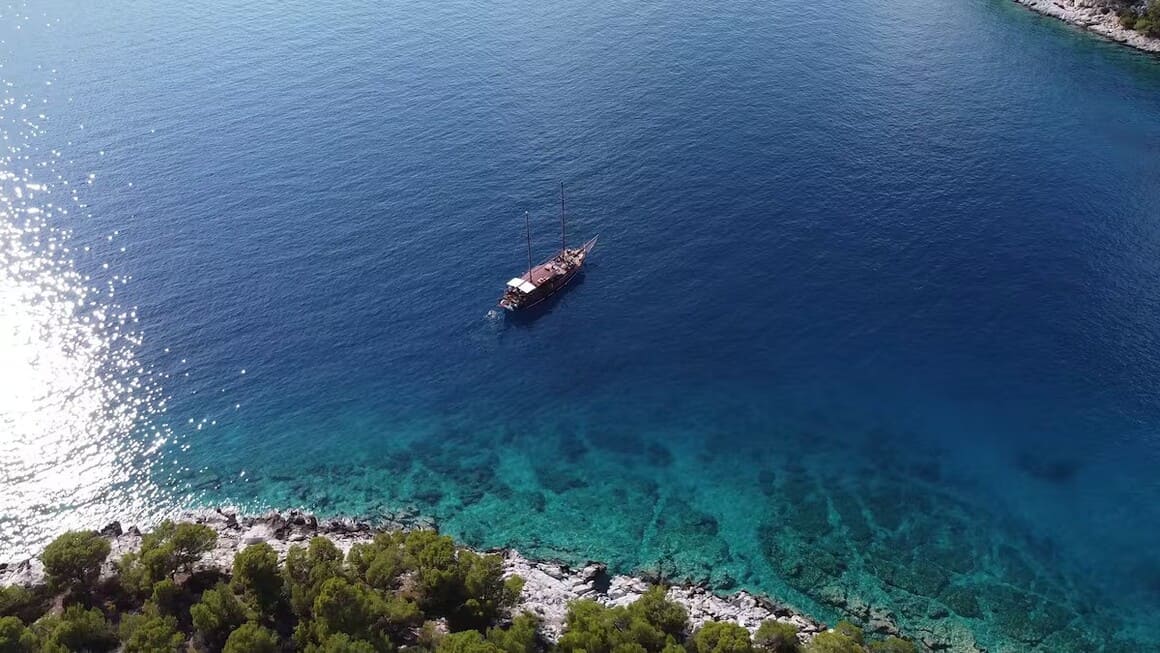
Greece is composed of over 227 islands – which means there are over 227 places to go on an adventure. Live out your mythical fantasies on the islands of Ithaca or Crete, escape the hecticness of life on Sikinos, or join the hordes of partiers on Ios and Mykonos. Your choice.
2. Hike in the Alps
Of all the great mountain chains in the world, the Swiss Alps are probably the most accessible. Over the years, it has been tamed and crisscrossed with so many trails that just about anyone can visit here. Tours around the 3 highest mountains in the range, Mont Blanc, Monte Rosa, and the Grand Combin, as well as the otherworldly Dolomites, are all exhilarating and among the best hikes in the world.
I you want to see similar views, at half the price tag, you can also head to Europe’s “other” Alps – the Albanian Alps. It’s quite literally the broke backpacker version of Switzerland. There is a bit of admin to get around these Alps, but we are all savvy here, plus Dani has written a guide on the Valbona Pass hike (the most popular trail) with everything you need to know!
3. Surfing in Europe
Many backpackers are unaware that there is some killer surf to be found all across Europe. Portugal is certainly famous for having massive waves and the associated surf competitions.
That said, if you are keen on surfing at some point as you’re backpacking through Europe, you do have some options. Below I have provided a shortlist of surfing hotspots in Europe.
- Biarritz, France: One of the oldest known surf meccas of Europe. The surfing here is great for beginners as well as seasoned rippers.
- Newgale, Wales: Surfing on this beautiful stretch of coast facing out towards the Irish Sea; the waves here are powerful and the views are epic.
- Belhaven Bay, Scotland: This surf spot is only an hours drive from Edinburgh! Make sure you have a good wetsuit. Not the warmest water in the world, but the waves are good at times.
- San Sebastian, Spain: When not eating and drinking, it is easy to hit the beach and catch a few waves before resuming the former.
- Lagos, Portugal: Probably the unofficial capital of surfing in Portugal. There are many surf schools across Lagos that will help you tune up your surfing game in no time.
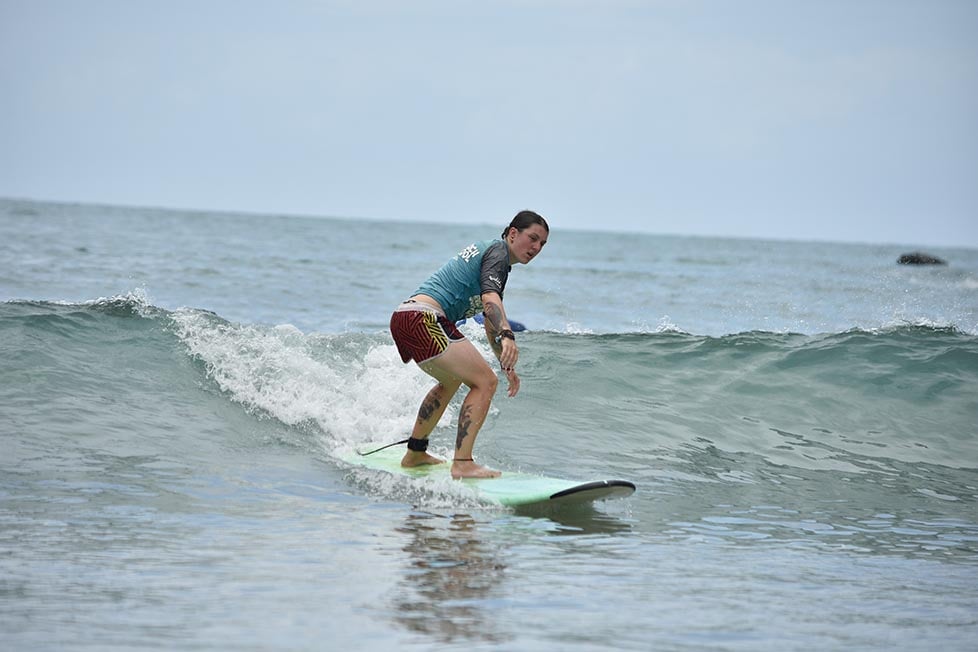
Image: Nic Hilditch-Short
4. Go to a one-of-a-kind festival
Europe loves to celebrate every little occasion they can, be it the death of a saint, a harvest, or even just a long weekend. Between the cultural holidays – of which there are MANY – the seasonal festivals, and the more modern musical festivals, you’ll have many opportunities to just let loose. And let loose is what you should do.
You could check out the Carnival at Venice, get wasted in Dublin on St. Patrick’s Day, and get tomatoe’d at La Tomatina in Valencia. Let alone some of the world’s best music festivals like Boom Festival (psytrance), Glastonbury (pop-adjacent), and Roskilde (also pop-adjacent).

Photo: Nic Hilditch-Short
5. Get cultured in Italy
The most historically significant and consequently most popular cities to visit in Italy are Rome, Venice, and Florence. These “museum cities” deemed culturally significant by the government are preserved as best as possible.
They are like interactive history lessons that you can walk amongst or even get lost in for days at a time. I highly recommend you make time for the Colosseum, the work of Di Vinci, and to visit the Vatican museums.
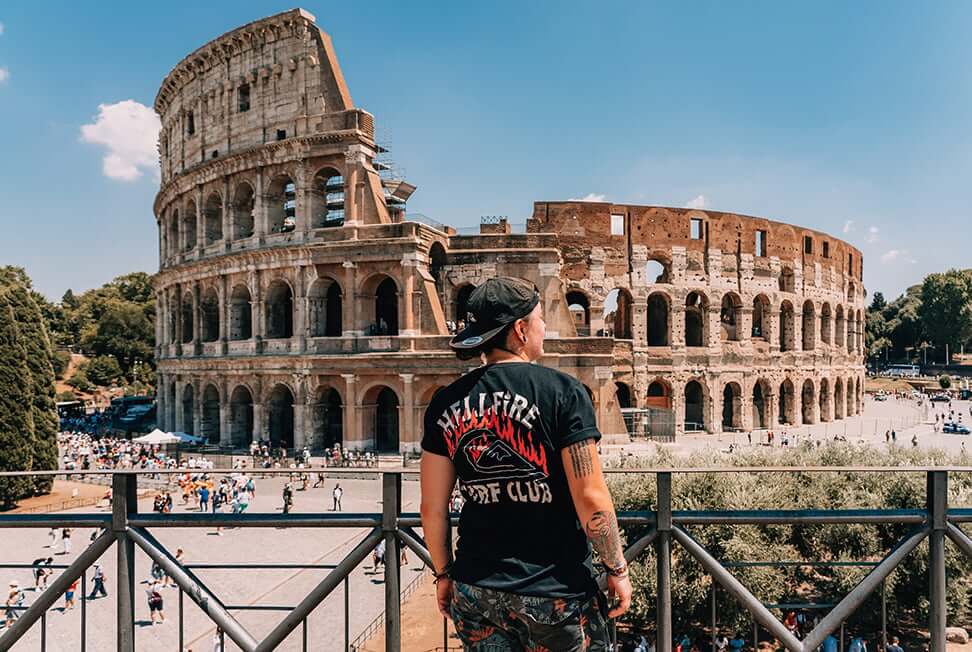
Photo: Nic Hilditch-Short
6. Dance like no one’s watching
Europe likes to party, a lot.
And not just one kind of partying, but all kinds of European Backpacking trip debauchery. There are your squats in Paris, beach clubs in Ibiza, warehouse raves in Berlin, music festivals in the Netherlands, all of that, and then some. You can’t beat chilling on some church steps at 3 am sipping negronis with friends either.
When it comes to partying, each culture has its own way of doing things. The Italians like the slow burn, starting with a spritz at aperitivo, then a nice dinner with wine, a cocktail at a local bar, before finally moving on to shots at the bar.
You get the gist though. If you’re going to tour the party cities in Europe, you need to choose your parties well.
There are a couple of parties that shouldn’t be missed:
- Staying at one of the legendary party hostels.
- Going to a nightclub in Berlin. (Berghain is overrated – there are multiple that stay open 24/7!)
- Drinking in the piazzas of Rome.
- Dipping into a baggy in Amsterdam.
- A night in the Delirium Brewery in Brussels.
The level of freedom and debauchery is enough to make even the most open-minded do a double-take. Even if you aren’t able to get into the infamous Berghain, you can take your nights (or days) whichever way you please.

7. Take the scenic route
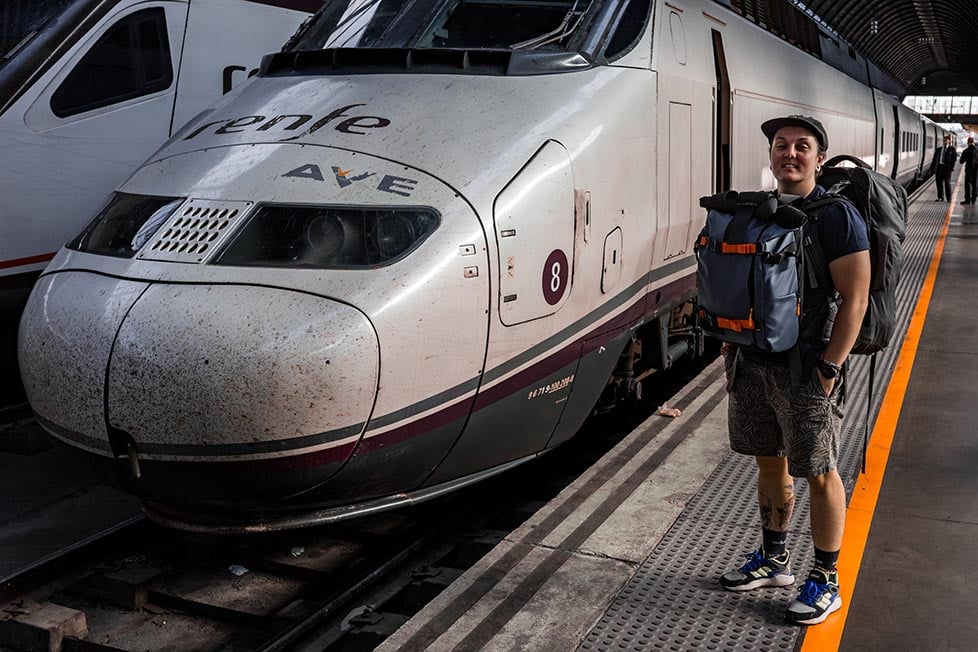
Europe has one of the most developed train travel networks in the world. You can get just about everywhere by rail, which is fantastic news when Backpacking through Europe!
These insane views and comfy carriages make some of the best train journeys in the world. It’s a classic; characters in The Murder on the Orient Express and Dracula have traversed the same rails. It’s damn romantic too, so settle down.
Granted, it’s more expensive than the bus so it’s not the best way to save money. But with high-speed trains, you can really make the most of your time on a Euro backpacking trip. So sometimes it’s worth the extra Euro.
8. Get High in Amsterdam
Would this really be The Broke Backpacker if I didn’t encourage you to sample some grade-A Dutch weed? The Dutch are very progressive when it comes to mind-altering substances so if you’re looking for a place to do some drugs safely and legally, Amsterdam might be to your tastes!
Just be respectful about it – residents of Amsterdam are not big fans of the hordes of drug tourists wandering the streets of the city.
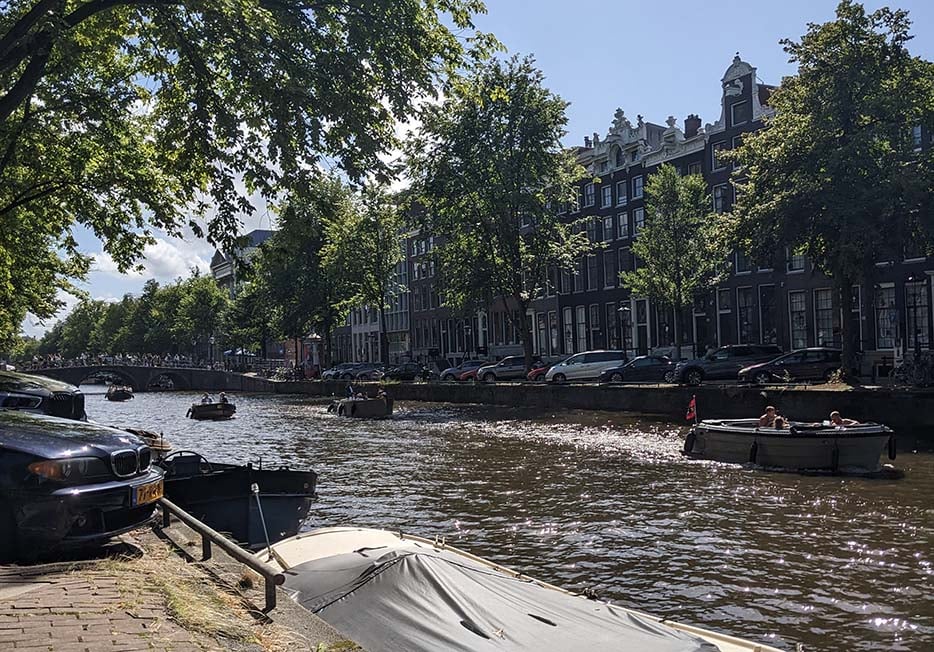
Image: @Lauramcblonde
9. Museums in Europe
Europe is the world’s best continent to tour museums, both art and history adjacent. (That might have something to do with plundering other countries’ national treasures and refusing to return them… But uh, let’s not focus on that…)
Europe’s best museum city is London. Most of London’s museums are free to visit, and they have some of the best collections of art and historical relics from everywhere in the world. (Again, for certain reasons…) My favourite museums in London are The National Gallery, The Natural History Museum, The British Museum, and Victoria and Albert Museum.
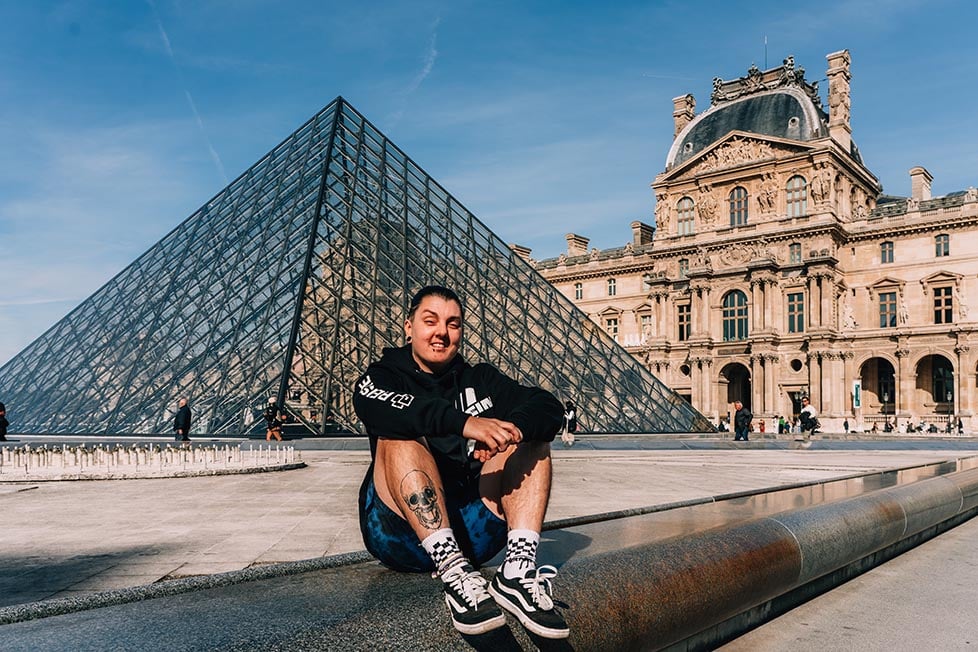
Image: Nic Hilditch-Short
Paris is strong in the museum game too. Definitely visit the Louvre and its most iconic resident Mona Lisa. Don’t grumble about it being small, it’s still awesome. For more morbid explorers, the Paris Catacombs offer a cool glimpse into the city’s history.
More honourable mentions to go Reina Sofia in Madrid, Rijksmuseum and Anne Frank House in Amsterdam, and Dachau concentration camp in Germany (it counts).
Bring your ID – some places, like the Louvre, have free admission to students and people under 25.
10. EAT EVERYTHING!
The food in Europe is so varied that my mind reels just trying to think about it. Where do I even begin?
First off, people are extremely proud of their culture’s cooking. Italians sing praise about the quality of ingredients and the simplicity of their style. The French boast about their prowess in the kitchen and complex techniques. The Spanish of course love to talk about their tapas culture.
Secondly, though European culinary traditions have very long histories, most changed completely in the last few centuries. The introduction of new ingredients from the new world was nothing short of revolutionary. The Italians received the all-important tomatoes, the English imported curry, and the Germans got the Turkish kebab.

Photo: Nic Hilditch-Short
Most European culinary traditions have very multicultural pasts. North African traders and immigrants have had a profound effect on the Mediterranean diets and cultures as distant as China have purportedly influenced the creation of pasta.
All I can say is that a backpacking trip through Europe will be like a tour of heaven for your stomach. There are so many different kinds of food to try and a staggering amount of diversity. My best advice: try the usual suspects but be sure to experiment a bit.
Must-Try Dishes in Europe
Here are some of the best foods you have to try while backpacking in Europe:
- Pasta (Italy) – A VERY general term: pasta can mean a lot of things. Be sure to have more than just spaghetti.
- Coq Au Vin (France) – A simple, yet delicious stew made from chicken, wine, mushrooms, and garlic.
- Pies (UK) – A staple of just about every pub and inn in the UK. Simple and satisfying.
- Haggis (Scotland) – A slightly spicy mixture of internal organs cooked in a lamb’s stomach is actually really delicious.
- Pastel de Nata (Portugal) – A small, custard-filled egg tart that originates in Lisbon.
- Paella (Spain) – Rice prepared in a special pan and often prepared with seafood.
- Moules Frites (Belgium) – Mussels prepared in different kinds of sauces and served with fried potatoes.
- Souvlaki (Greece) – What most people imagine to be “gyros” when gyros is just a general term for shaved meat.
- Schnitzel (Germany) – Meat flattened, breaded, and fried.
- Sachertorte (Austria) – A delicacy of Vienna and perhaps one of the best cakes in Europe.
- Stroopwafel (Netherlands) – The best sweet treat ever.
Where to Stay
Deciding where to stay while travelling in Europe can quite literally make or break your trip. It’s important to do your research about where you’re staying and find a place that suits you, your travel style and your budget.
I’m sure it comes as no surprise that the best places to stay as a backpacker, especially a solo backpacker, are hostels. There are many different hostels in most major cities and popular destinations offering a range of different sized dormitories and even private suites. If you have never stayed in a hostel before and are perhaps nervous about doing so, maybe start with renting a private room in one to get a feel for the hostel life.
As for where to find a hostel, we usually start with Hostelworld.com. It’s an absolutely essential travel resource which has become a true cornerstone of the backpacking life. Have a look now to get a feel how the site works, what it can offer and maybe even sign up and create your account.
It’s also worth noting that booking.com also offers hostels and sometimes, there is a wider selection or cheaper rates so its always worth checking both sites.
How to Pick a Great Hostel
Hostels are the most affordable accommodation option for backpacking Europe on a budget. Well, aside from dreamy mountain huts, your awesome tent, and a stranger’s couch. Lucky for you, Europe is THE place for living da hostel life in all its glory.
This continent might hide some of the best hostels in the world – but arguably also the worst…
The key things that I look out for when choosing are hostel are:
- A vibe that matches your travel style (more on that to come…)
- Clean bathrooms, once you start hostel-living, you’ll get it.
- Lockers that are actually big enough to fit your backpack
- A kitchen that has more than one fork
- Social spaces with more than a few sad sofas
- Staff who don’t feel like they hate their job
And how do you know this before booking? Look at the reviews. Hostelworld reviews can be a hilarious place. People really do tell it like it is. It can be savage. But you’ll really get a feel as to what to expect.
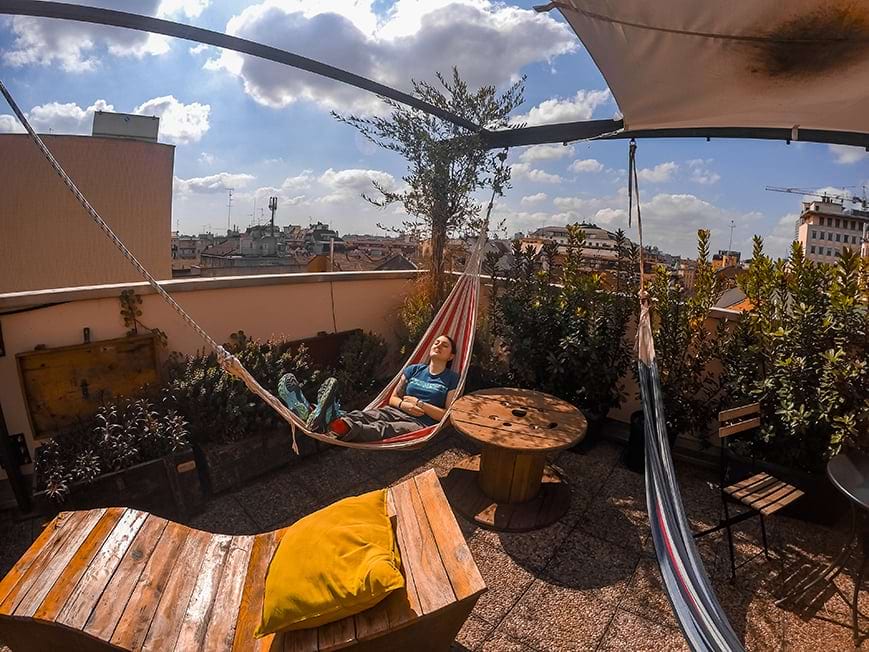
Image: Nic Hilditch-Short
Party vs Social vs Quiet Hostels
These incredible hostels in Europe come in all shapes and sizes. But remember, a cheap hostel isn’t necessarily a perfect hostel. In fact, it rarely is (but, yes, you can occasionally hit the jackpot).
But not all of them are dedicated to parties. You’ll also find loads of boutique hostels for flashbackers, quiet rooms for families, and even some female-only hostels for solo female travellers.
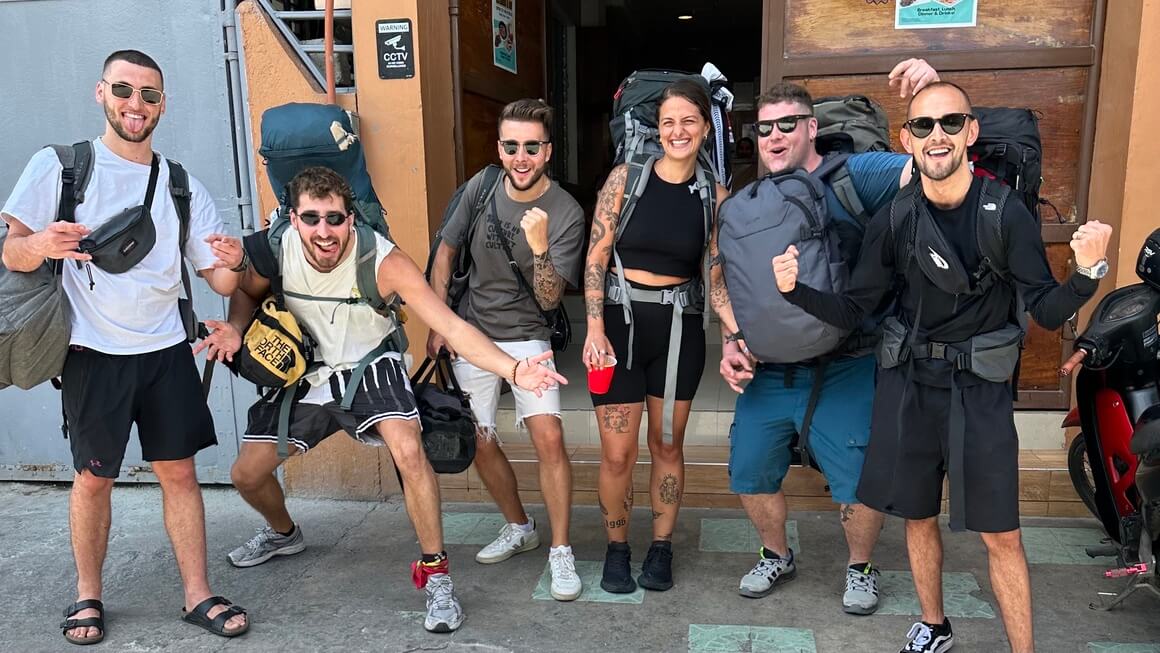
Photo: @joemiddlehurst
These are the most common types of hostels you’ll find:
- Party hostels: pub crawls, beer pong, usually bangin’ in the dorm rooms (you really do see it all)
- Social hostels: chill events, easy to meet people, no pressure to drink
- Quiet hostels: early nights, families, digital nomads, just an easy bed for the night.
- Boutique hostels: more expensive, comfortable, often more private rooms, great for couples.
- Female-only hostels: Safe, calm, supportive spaces for solo women.
If you’re wanting to plan a trip to Europe on a budget… well, you’ll have to make do with sharing the bigger dorms. Even hostels can sometimes be a bit pricey in Europe, especially in France or Switzerland. Still, they’re way cheaper than Airbnbs or hotels.
When Airbnb is Worth It (and When It Isn’t)
Airbnb is a great option if you want some space away from travellers and a more authentic experience. Though they’re not always the cheapest way. If you’re in a group, the prices can be more reasonable.
If you’re travelling as 2+ people and are craving some space, I’d recommend looking to Airbnb. When I travel with my partner it can often be cheap to book an Airbnb. However, if we are in the mood to make a few mates or we really like the vibe of the hostel, it can be worth a few more euros.
All of that said, it’s worth keeping in mind that some Airbnb hosts rent individual rooms – either in their own home or in some kind of HMO – and these can be very good value.
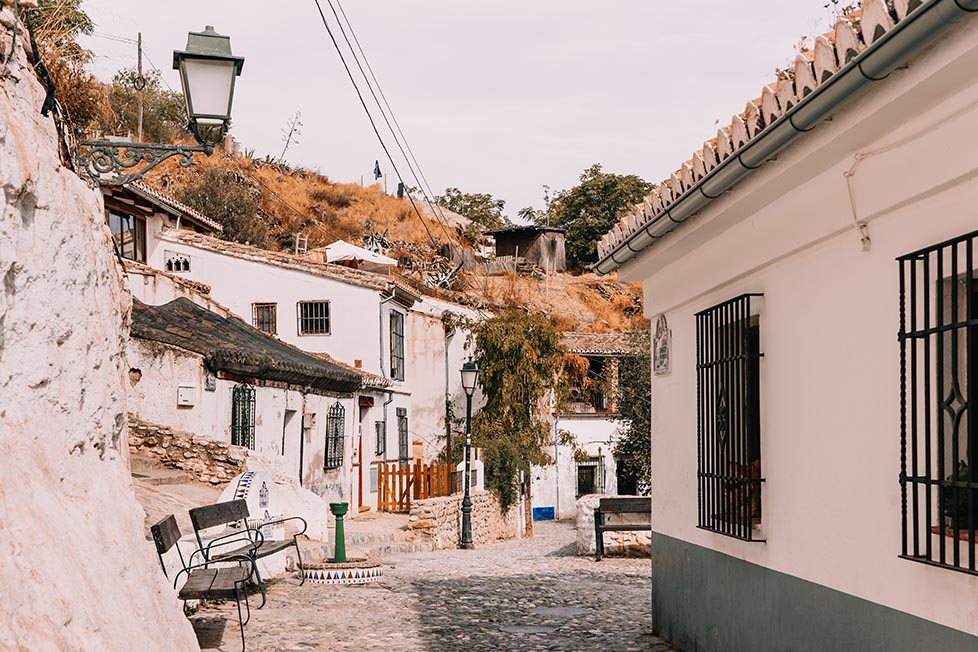
Image: Nic Hilditch-Short
Airbnb Pros
- Privacy and space
- Great for couples or groups
- Access to kitchens and laundry
- Often in more “local” neighbourhoods
Airbnb Cons
- Cleaning fees can be brutal
- Not always central
- Less social
- Prices spike in peak season
Camping Reality Check (Laws + Where It Works)
Camping in Europe can be a magical experience with misty mornings, mountain views and that feeling o freedom. But, the reality is that this isn’t always the case and the rules can vary wildly between each countries and regions.
Some countries welcome wild camping, some have been scarred from it and will slap a fine on anything the remotely looks like it. Most sit somewhere in the murky middle. If you’re discreet, respectful and flexible, you can usually make it work. But it’s not as easy as you think.
In general Scandinavia is the most relaxed, central Europe is the most regulated and southern Europe really depends on the region and what mood you catch the police in.
- Most relaxed: Scotland, Norway, Sweden, Finland
- Sometimes okay: Spain, Portugal, Italy, Germany, Austria
- Mostly no: Switzerland, France (especially in the national parks), Netherlands, Belgium
If you’re unsure, there are campgrounds nearly everywhere that allow you to park up for €10-€20. They have hot showers, charging points and sometimes even kitchens.
Of course, if you do decide to camp you will need a tent and a sleeping bag all of which will add pack weight. With this in mind, try to find lightweight camping gear. We have reviewed best backpacking tents and best backpacking sleeping bags previously.
Best Time to Visit Europe
So precisely when is the best time to visit Europe on a budget?!
Western Europe is a total madhouse in the summer; millions upon millions of tourists descend on the continent. Cruise ships fill the harbours, tour buses clog the road, and flight prices increase. Whilst the middle of the summer can be a very beautiful time to visit, the summertime is the most crowded season and it is also the hottest.
Portugal, Spain, France, Italy, and Greece can be so hot in July and August that all you want to do is switch places with that white wine bottle sitting in the bucket of ice. Europe is also very prone to seasonal pricing. Prices rise with the temperatures in the summer.
What to expect in summer:
- Crowded cities and tourist hot spots
- High flight and accommodation prices
- Wildly hot weather in Southern Europe
Point being, come in the summer if you must, but I don’t recommend it.
The spring and the fall seasons (the “shoulder” seasons) are the best time to visit Europe on a budget. The temperatures are mild, and a majority of the people who were here on summer holiday have now sulked back to their offices and suburban hells. Springtime in Paris and other European cities is as romantic as it sounds. Flowers are blooming and the birds are out. You can go in a t-shirt during the day without having the sun cook you alive.
What to expect in the shoulder seasons:
- Mild weather and fewer crowds
- Lower prices compared to summer
- Blooming flowers in spring and autumnal colours in fall
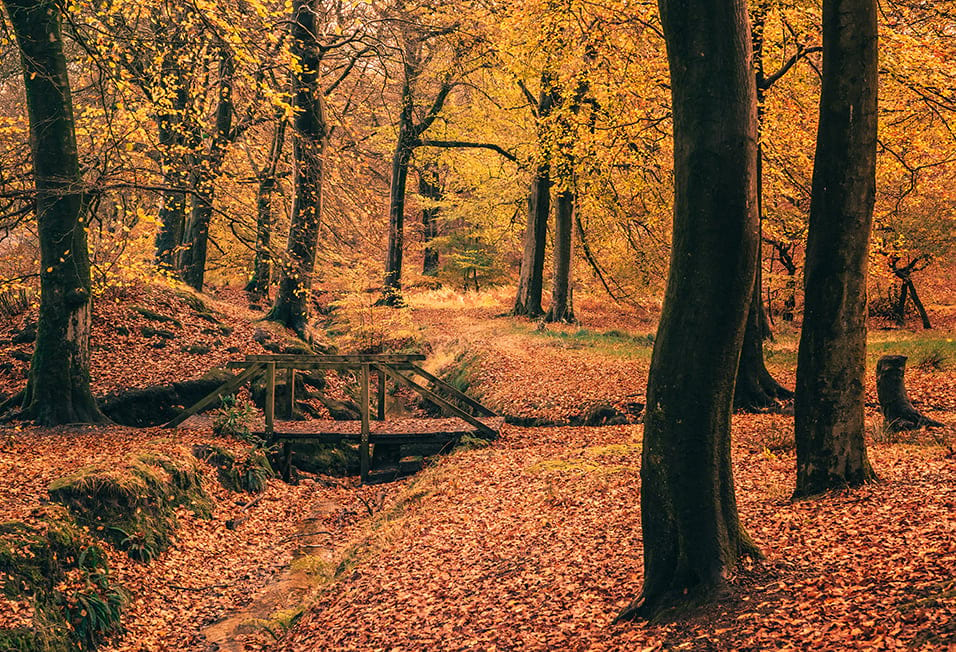
Image: Nic Hilditch-Short
You will find the lowest prices in most regions in the winter. Southern Europe – Algarve in Portugal, Andalucía in Spain, and Greek islands – is still pretty warm in the wintertime. Islands like Cyprus, Malta and the Canaries are perfect spots for a bit of winter sun. If you love winter sports, a winter visit is an obvious choice to explore the French, Swiss, or Italian Alps. Just note that pricing in ski destinations goes heads-up in the winter. The snow season is hugely more expensive than the summer.
What to expect in winter:
- Cheaper travel costs
- For warmer options head to Southern Europe and the Mediterranean Islands
- Ski resorts will be pricier, as this is their “in season”
Also, note on common European holidays: Europeans get around on their own continent a LOT during peak school holidays. This doesn’t necessarily mean higher prices but it DOES mean impenetrable crowds. Times to avoid outside of the peak summer season are usually mid-September, mid-February, Easter, and New years/Christmas.
Staying Safe in Europe
So how safe is Europe? Very, very safe, actually.
There’s very little violent crime in Europe, traffic is mostly organised, and there are few natural disasters… The possibility of something bad happening to you on your journey backpacking Europe is slim, to say the least. However…
Pickpockets + Theft Prevention
Your biggest concern is probably pickpockets and thieves. They particularly target crowded markets and train stations. Always be alert when moving about in big cities especially if you have all of your gear with you.
And those operating in big European cities are true pros – it’s not always enough to just keep your wallet in a purse instead of a back pocket. Keep a keen eye out, especially in Paris, Barcelona, and Rome.
I was with a mate once who got their watch stolen on the train in Paris. He didn’t even realise it wasn’t on his wrist until we got back to the hostel… these guys can be super sneaky.
A few key things to be conscious about:
- Avoid keeping valuables in back pockets or easy-to-access bags.
- Stay alert when boarding or exiting trains, as thieves often take advantage of the chaos in these situations.
- Use anti-theft backpacks or money belts when carrying passports, cash, and electronics.
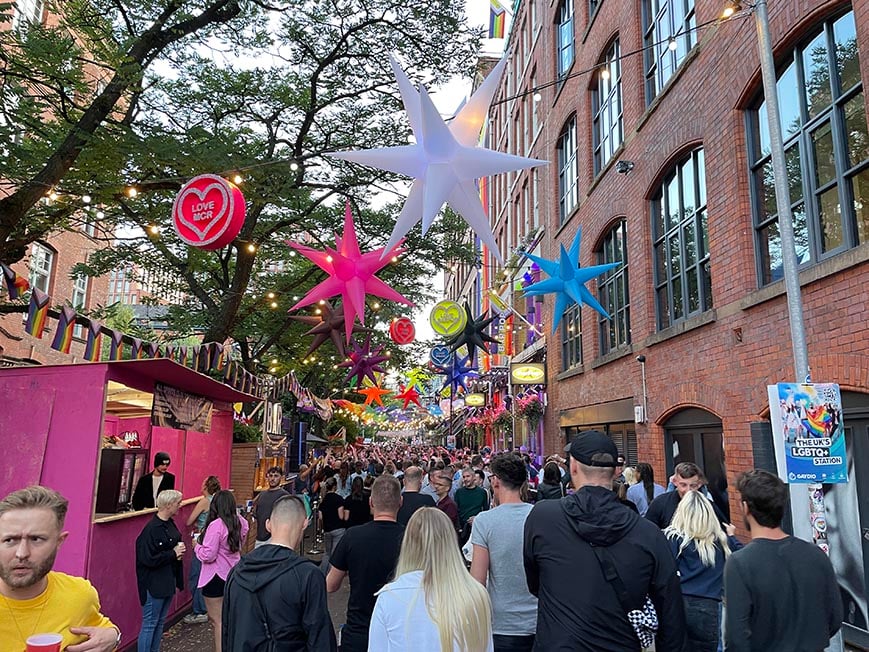
Image: Nic Hilditch-Short
Common Scams (In Stations, Tourist Zones)
The most popular European tourist sites are also teeming with scammers. With a little research on the most common tourist scams in Europe, it’s not hard to avoid them at all. These are a few key scams to keep an eye out for:
- Be wary of overly friendly strangers offering unsolicited help at train stations.
- Avoid exchanging money with individuals, still to official exchange offices.
- Double-check restaurant bills and taxi meters, especially in tourist-heavy zones.
Nightlife Safety
Europe’s nightlife is absolutely legendary, and should be experienced to it’s fullest. However, it is never a good idea to be out shit-faced drunk, alone, and loaded with cash – especially not at 3 am. Be smart, make good choices and it shouldn’t be too difficult to guard yourself and your belongings.
Solo Travel Notes (Women + Lgbtq+)
However, there are some happy news for other possibly-vulnerable backpackers: solo female travellers and LGBTQ+ travellers can thrive in Europe. Western Europe in particularly is generally a safe option. Places like Berlin, Amsterdam and Madrid are super inclusive with welcoming nightlife and accepting social norms. As you move to more conservative places in Europe, more toward the east, just check local attitudes before visiting.
Get Yo-Self Insured Before Visiting Europe
Europe is a safe place to travel but that doesn’t mean you’re completely invulnerable. Sometimes you fall down the stairs in a club in Athens… or get your iPhone nicked on the Paris metro…
Going anywhere without travel insurance is too risky – so do consider getting good backpacker insurance sorted before you head off on an adventure. The best kind of travel insurance will cover both your material stuff as well as your physical self.
Think of insurance like peace of mind. None of us want to spend money on it, BUT if anything happens you’ll be counting your lucky stars you got it.
Photo: Nic Hilditch-Short
How to Get into Europe
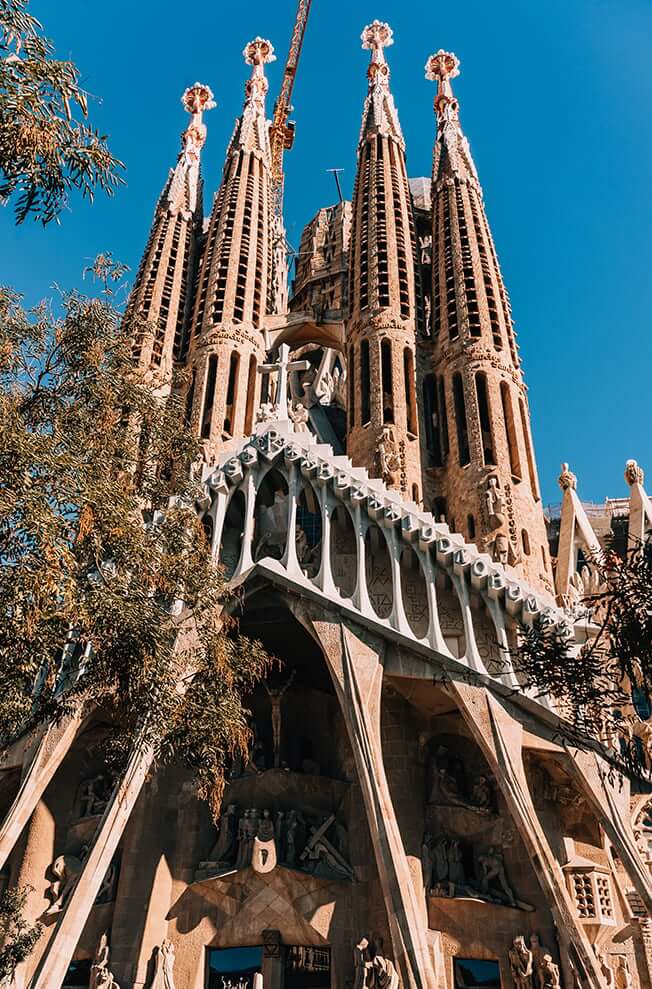
Image: Nic Hilditch-Short
Of course, there is no one answer to this question. Where do you want to go backpacking?!
Once you dial in where you plan to go, it is only natural to start your backpacking Europe trip in the country first on your list. Easy!
Cheapest Entry Strategies
Whilst looking for cheap airfare to your destination, I advise that you look at multiple cities and find cheap flights – even if that city isn’t in your targeted country. You can easily fly between capitals in Europe on the cheap, or take a super-cheap bus.
Note: Those “budget-friendly flights” often charge an arm and a leg for baggage. If you just travel with hand luggage, you’ll save money and spend less time in the airports. That means more time to actually visit Europe.
Entry Requirements Overview
EU citizens have free movement within the Schengen Zone and require only their passport or ID for travel.
Citizens of visa-exempt countries (including the UK, US, Canada, Australia and others) will need to obtain online travel authorisation, ETIAS (European Travel Information and Authorisation System), before visiting European countries in the Schengen Area. A small fee will apply. It’s similar to the US ESTA.
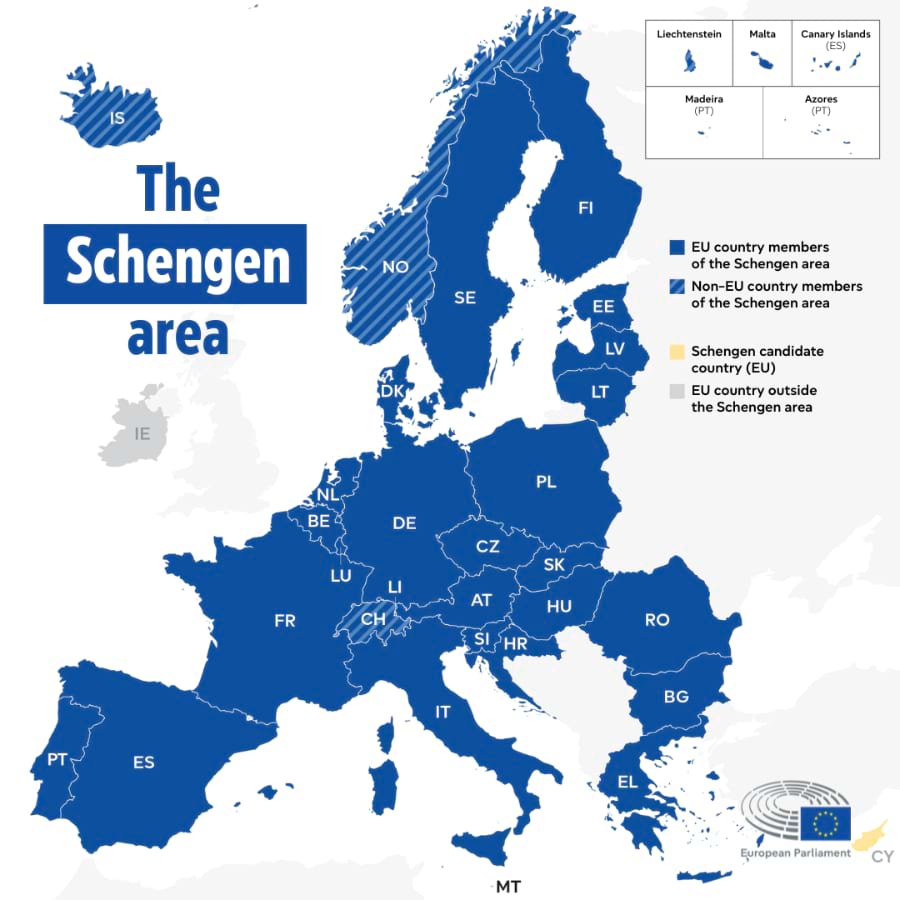
The EES (Entry/Exit System) is the digital border system for non-EU visitors to the Schengen Area. The system records passport details, fingerprints and facial image, replacing traditional passport stamps. Travellers do not need to apply for anything in advance. Registration happens at the border. First-time registration can add time to border crossings, so it’s worth being aware of potential delays.
Other nationalities may require a visa.
A lot of long-term travellers plan their travels around the Schengen visa accordingly, and we wrote a full guide to help you do just that! Work your way around it and you’ll be able to travel long-term in Europe.
Getting Around Europe
There are many great ways to get around Europe – and it’s super easy! Western Europe has excellent transportation networks and usually booking tickets online is hassle-free.
The cost of travelling around Europe CAN lighten your wallet though, especially if you travel a lot. To be able to travel Europe cheaply, you have to know the tricks to do it.
Here’s a quick breakdown of the best ways to travel Europe.
Image: Nic Hilditch-Short
Long-distance buses are probably the cheapest option, though they tend to be the most time consuming as well. A 9-hour journey with a company like Flixbus is likely to cost you between 25-50 Euros depending on when you book.
I like Flixbus because, if plans change, you can cancel for a small fee and re-book when you’re ready. You can score long-distance buses for as little as 10 Euros if you’re really on it.
Many Western European countries might also have their own national budget bus lines.
Train travel is an awesome way to backpack Europe. Many backpackers specifically build their backpacking Europe itineraries around travelling on a train – this is called interrailing.
They’re really easy to use and there are all different kinds. Smaller domestic trains connect all corners of the countries.
High-speed trains and sleeper trains connect countries. The central train stations are usually right in the middle of the major European cities, often making it more convenient than flights.
If you plan on hitting up multiple countries in Europe, the Eurorail Pass is a great option. You can buy a rail pass for one country or for all of Europe. Buying train tickets individually adds up fast, so buying a pass is a great trick to travel Europe on a budget
Renting a car is surprisingly affordable in Europe and will give you unrestricted freedom to go and do what you want. And finding a car rental is no trouble at all.
Booking in advance is the best way to ensure you score the lowest price and your choice of vehicle. Often, you can find the best car rental prices when you pick up the rental from the airport. You can easily rent a car from any major city in Europe.
Driving in Europe is also pretty easy with lots of well-maintained highways and clear signage ahead!
You don’t feel like driving yourself? BlaBlaCar is a great website for connecting drivers with people interested in carpooling. You do have to pay for the ride. However, it’s usually cheaper than a train, faster than a bus, and more fun than travelling alone!
Check Car Rental PricesTravelling by campervan is the most classic, most awesome option. You have unparalleled freedom and access to places you would not otherwise have. You also eliminate the need to pay for accommodation every night.
If you’re travelling long term, it can be a great way to travel Europe on a budget if you buy your own campervan. For shorter term travellers, renting a campervan is easy to do all across Europe. Then you get complete freedom within the continent.
Those long, long highways of Europe are just begging for someone to get on them on two wheels… Europe is an excellent destination for long-distance motorbikers and bicyclists.
For motorbiking, France and Germany are particularly popular. For bikepackers, the Netherlands is pleasantly flat to cycle around.
Europe is one of the best places in the world to hitchhike, even long distances. I recommend studying a map before sticking your thumb out there.
Try to get an idea of which roads you need to take to get to your destination. Europe is full of tiny, winding backroads that splinter off in all directions.
It goes without saying that you should not try hitchhiking in major cities. While hitchhiking in Europe is safe generally, it is important to be on your guard and use good judgement when accepting rides.
From personal experience, hitching rides in Western Europe can be tricky. Finding rides along major highways – that Western Europe is full of – can be hard as there aren’t good places for cars to stop (looking at you, Germany and Northern Greece).
In other places, like Spain, I struggled to find rides because lots of people (falsely) seemed to think that hitchhiking was illegal. Plus, Western Europeans’s got places to be and might not be receptive to picking up a stranger.
The best hitching luck I had was in Switzerland, Austria, and France. I highly recommend trying it everywhere though!
Onwards Travel from Europe
Europe is home to many major global travel hubs and international airports. This means you can get anywhere in the world – often with a direct flight – depending on where you’re going. If you are on a grand European or world tour, heading to Eastern Europe and making your way into Turkey and beyond is a straightforward affair.
In fact, you can fly from London or Paris to Istanbul for as little as 20 Euros with some forethought (although rare). Plus, you’ll find lots of train options going to Istanbul from all over Europe.
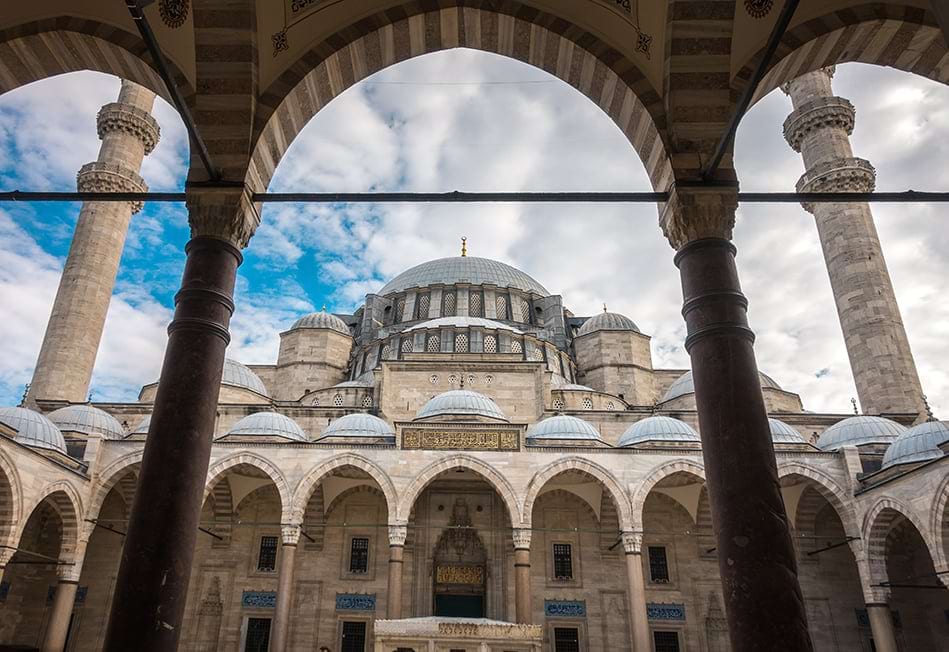
Photo: Nic Hilditch-Short
Keep in mind as well that countries in North Africa are sometimes just an hour or two flight away. Backpacking Morocco and Tunisia are great options after travelling Europe on a budget. There are also daily boats from Southern Spain to Morocco for about $40 USD – not too pricey at all!
Boats run to North Africa from Sicily too, so if you fancy marauding in Tunisia, you can easily hop over from Italy. I would strongly advocate for this, because backpacking Europe is not complete without a little Africa.
Work, and Longer Trips
Want to spend more time in Europe? No problemo!
Work Basics
While the cost of living in most Western European countries is quite high and work visas can be tricky to navigate, there are lots of options available for industrious backpackers. (Though you DO need a work visa pretty much everywhere.)
The UK and Ireland are especially popular for native English speakers; there are tons of Kiwis & Aussies living in London. EU nationals don’t usually need visas to work in other EU countries so things are easier for them (lucky, sods!)
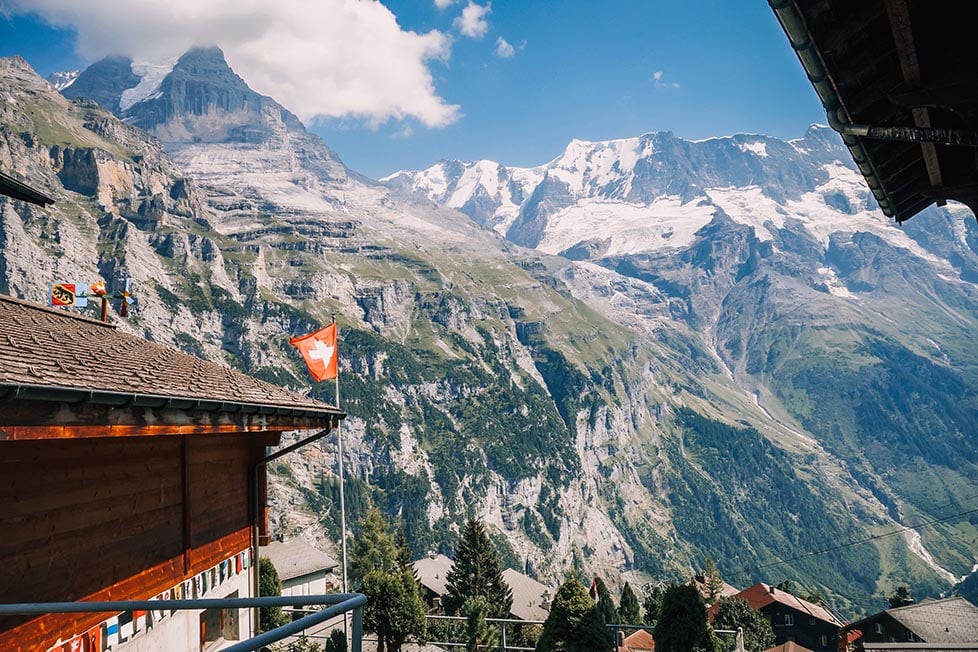
Image: Nic Hilditch-Short
If you do need a work visa for a country that you want to work in, just head to their govt website to find out what’s involved in applying. It’s not always a cheap option…
And you didn’t hear this from me… but there might be a chance for backpackers to do a bit of work under the table as well. Get chatting with locals, stay open, and keep your ears perked. There are lots of backpackers earning a bit of extra cash from helping out in bars, farms, and festivals, especially in the summer travel season.
The Digital Nomad Scene
Despite certain weather challenges, Europe is HUGE for digital nomads. Sure, most countries in Western Europe are real expensive to live in. That doesn’t mean they wouldn’t attract digital nomads.
London, Berlin, Lisbon and Amsterdam all have massive digital nomad communities, these nomads often sit on the higher-earning end. For those just starting to learn how to be a nomad prefer to head to eastern Europe – Bulgaria, Romania, Albania, Montenegro and Hungary. These are all top destinations for the broker nomads among us.
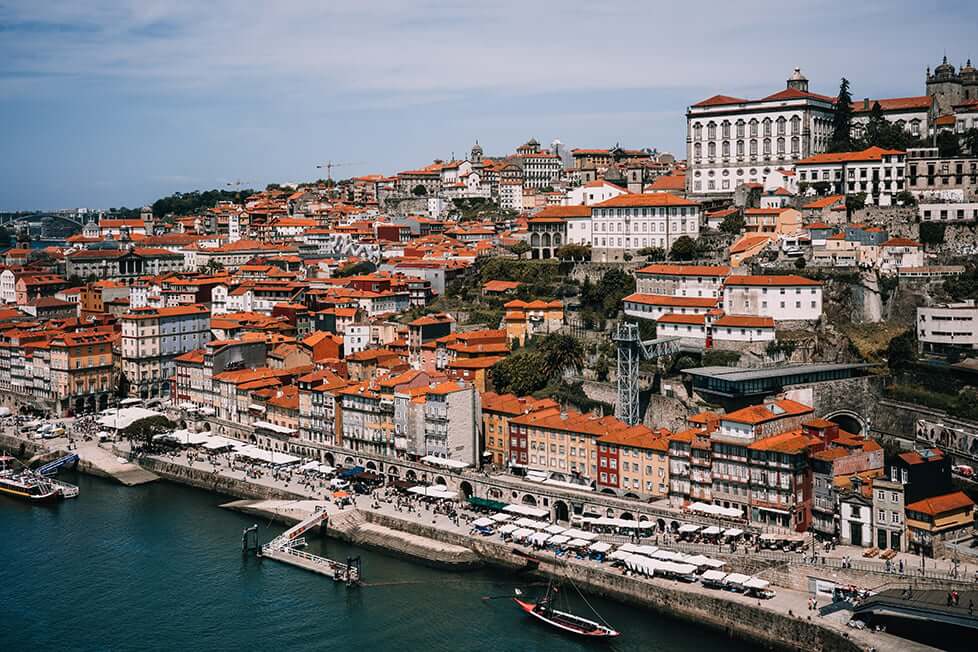
Image: Nic Hilditch-Short
Internet is pretty much a non-issue in Europe. Most of the major cities have high-speed fiberoptic cables lain and the more remote villages have decent coverage. Whilst hiking the Dolomites, I even got 4G using my Italian SIM card. I could’ve worked in a local rifugio for a few days! Note that you if you are an EU or UK resident, you normal Sim will work across much of Europe. If you are visiting from outside the EU though, then we suggest getting a Europewide eSIM package which will work seamlessly across borders.
Volunteering/ Work Exchange in Europe
One of the best ways to extend your trip is to “volunteer”. This is not offering your services for free, which is what one might imagine. But backpackers talk about volunteering, we mean exchanging our services for a free bed and often food.
There are plenty of different volunteer projects in Europe including teaching, construction, agriculture, and more. The list of volunteering opportunities is pretty much endless. Will you run pub crawls at a hostel in Spain? Help herd sheep in the French Alps? Give hand to a music festival in the UK? The sky’s the limit!
Photo: Elina Mattila
Short-term volunteers usually won’t need a permit, but anyone from outside the EU will need a Schengen Visa to volunteer in Europe for over 90 days. There are many ways to find volunteer opportunities but the best way is to start online. Check out some of the best work exchange websites to get started.
Longer-stay Routing Using Non-Schengen Areas
Ok, so we talked about the Schengen area earlier in this area. So, for all you travellers who want to travel for more than the allocated 90 days of travel within a 180-day period… this section is for you.
So, lean in close and take notes, this section is gold.
To extend your stay in Europe without overstaying your visa, you need to mix up the countries that you visit. You can spend your 90 days in the Schengen area, but then you need to visit some of the non-Schengen countries for the other 90 days. These 90 days don’t need to be in a row. Once your 180 days is up, you can start all over again.
Non-Schengen European Countries (as at Feb 2026):
- The United Kingdom
- Ireland: (EU Member, but not Schengen)
- Cyprus: (EU Member, but not Schengen)
- Balkan & Eastern Europe: Albania, Bosnia & Herzegovina, Montenegro, North Macedonia, Kosovo, Serbia, Moldova, Ukraine, Belarus, Russia
- Others: Türkiye, Georgia, Armenia, Azerbaijan, North Africa
All of the countries above have their own visa rules and are NOT included in your 90 days. Some of these countries offer generous visa on arrivals, with many of the Balkan/ Eastern European countries offering up to 90 days for each. Take a look at each countries government website to check your specific nationality rules.
What’s New for Europe Travel
Travel requirements are an ever changing game. Governments seem to change their minds more than we backpackers book flights. Recently, there have been a wave of changes that have come out across Europe, some have been in the planning phase for a while and some are brand spanking new. So, rather than get caught out upon arrival, this section will have you all clued up before you touch down.
- Schengen’s new Entry/ Exit System (EES) is fiiinally live. Instead of a passport stamp, your entry and exit are logged digitally. Because of this change, you can expect self-service kiosks at most airport, slow queues and stricter tracking of your 90/180 day rule. A few pros and a big con in there.
- ETIAS is Europe’s fancy, new pre-travel authorisation and is not required for visa-exempt travellers (similar to the US ESTA). It’s not a visa but you must apply online before boarding. It is said to cost €20 and will be valid for three years (or until your passport expires. This is kicking off at the end of 2026.
- Romania and Bulgaria have joined Schengen. Good for them, sad for us long term travellers. This means that their days now count toward your Schengen 90/180 rule.
- The UK’s new “No Permission, No Travel” rule is out which is their ETA system (Electronic Travel Authorisation). Dual British citizen MUST travel with the correct passport and documentation or they will be denied boarding. In short, if you need an ETA you must have it before you get to the airport.
- Payments in Europe are “card-first”, not “cash-free”. Most of Europe you can tap away with your contactless payment, especially west/ north Europe. But while you can mostly carry a card, don’t assume cash is dead. Many more rural or eastern European destinations will prefer, or only accept, cash.
- Heatwaves are changing where people travel. Summers are getting hotter and hotter and travellers aren’t coping. The European Travel Commission reports that 28% of Europeans now actively seek destinations with milder temperatures or lower extreme?heat risk. Scandinavia is becoming a more popular spot as travellers try to avoid the blistering heat.
Packing for Europe
When you’re backpacking Europe, depending on where you’re going and WHEN you’re going will change your packing list. Spain in the summer looks very different from Germany in the winter. But on every adventure, there are some things that are an excellent addition to your backpacking packing list that will really help your Europe backpacking trip.
Summer Packing
European summers can be gloorious, but they can also be absolutely brutal. The likes of Spain, Greece or Portugal can hit whopping temps of between 30-40°C. You’ll want breathable clothes, sun protection and bathers!
- Lightweight clothing (linen, cotton)
- Sun hat/ cap
- Sunglasses
- Comfortable sandals/ trainers – the cobblestones in Europe are a rolled ankle just waiting to happen
- Refillable water bottle
- Light scarf or cover up for breezy nights or visiting religious places
- Small crossbody bag
- A small tote bag for beach days
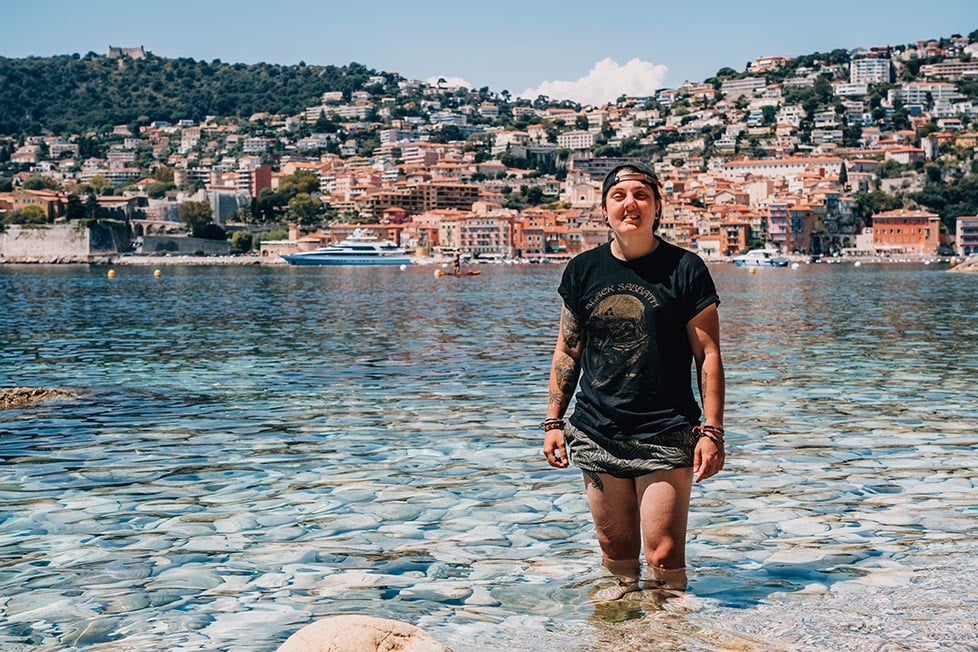
Photo Nic Hilditch-Short
Shoulder Season Packing (Spring/ Autumn)
The shoulder season are my favourite time of year to travel, but they do take a little more preparation and packing space. You need to prepare for sunshine, rain and chilly evenings. You never quite know what you’re going to get.
- Light waterproof jacket
- Laying tops (t-shirts/ long sleeves)
- Mid-weight jumper/ fleexe
- Comfortable closed in shoes
- Compact umbrella
- Jeans/ travel pants
Winter Packing
When it comes to European winters, you usually can’t roll with a carry on only. The jumpers and jeans can take up a bit of space. Especially if you’re heading to Scandinavia or Eastern Europe. Western Europe can be milder but also hella damp. To survive the winter in Europe, we will need to insulate and waterproof ourselves.
- A warm coat, an essential if you’re heading to sub-zero temps!
- Thermal layers for non-bulky warmth
- Wool jumper
- Waterproof shoes/ boots
- Gloves, hat and scarf – the wind chill can be real
- Moisturiser and line balm to nurture your skin from the dry, cold air
Image: Nic Hilditch-Short
Getting an eSIM for Europe
It’s worth acknowledging that our phones are now an integral part of the travel experience. As such you need to think about how you will stay connected when backpacking Europe. These days the most effective method is to buy an eSIM and install it onto your phone. You can buy individual country eSIMs or look for a Europe wide package. There are loads of providers out there now offering a whole range of different plans but I’d personally plump for this 30 day, 30GB, $30 package from Jet Pac.
Small Items That Save Your Trip
You don’t want to carry around a lot of small shit that you don’t need. But you will want to carry a few essential small items that you WILL need. These are complete game-changers.
- A universal travel adaptor (with USB-C)
- A portable power bank
- Reusable shopping/ tote bag
- Mini-medication/ first aid kit with painkillers, plasters and antihistamines
- Copies of travel documents for border checks, lost passports or hotel check-ins
- Laundry soap sheets or sink-wash packets, there’s not always a quick laundry around!
- Zip-lock bags for liquids, snacks or even wet swimmers!
- Small padlock for hostels or lockers
- A pen! A small but very handy item to have on hand.
European Culture
A heap of the European cultural identity is built on its history. Italy and Greece are home to some of the most brilliant ancient cultures; France is considered the origin of enlightenment; Portugal has a strong (although complicated) history in seafaring and exploration.
It’s no coincidence that Europe has more UNESCO World Heritage sites than any other continent. When it comes to art, heritage, sports, and music, Europe is considered by many to be the heart and origin of Western culture.
The first and absolutely most important thing that you need to know about culture in Europe is that people are not “just European”. According to Britannica, there are over 160 distinct cultures in Europe, though if we’re being honest this number could be higher. Within each of these cultures are sub-sections and divisions with their own national, religious, and historical identities.

Image: Nic Hilditch-Short
What this means is that many people are very proud of their cultural identities and can be mildly offended if you try to paint everyone in the same colour. For example, the Scots are very proudly Scottish, and you definitely shouldn’t try to call them English.
Football fans are crazy everywhere though, that much is true!
When travelling in Europe, here are a few key suggestions from me to level up your cultural experiences:
- Make an effort with the local language. Even just a small attempt to say a simple hello, please or thank you can go along away. You don’t need to be perfect, just show that you’re trying. You’ll be surprised at how well it can be received.
- Respect monuments and historic sites. These places aren’t just pretty to look at and make for a fab Instagram photo. But they are often memorials or sacred spaces. Don’t climb on statutes and ruins, dress modestly in religious sites, treat war memorials with the seriousness that they deserve and follow photography rules.
- Spend locally. Globalisation is wild these days, you can find a McDonalds or a Starbucks in places you’d never expect. But one of the easiest ways to give back to the places you’re visiting is to spend at local cafes, markets and artisans.
The One Piece of Advice I’d Give Myself
Congratulations! You made it to the end of my Europe travel guide! I hope the information I have provided will help you navigate the exciting European journey you have decided to embark on. Backpacking in Europe will be one of the most fun experiences of your life, I have no doubts about that.
Here are a few of my final words of wisdom that I’ll leave you with before we go our own ways:
- When you can, make an effort to learn at least a few words of the local language of the country you are backpacking in. It’s a challenge as every country has a different language, but a little effort goes a long way. The world need not revolve around us native English speakers!
- Have fun on your Europe backpacking journey – but like my mum would say, not too much fun! Partying every day is one of the most common backpacker traps that travellers fall into.
- When visiting historic sights or religious monuments, be respectful. Certainly do not climb on old ruins or touch priceless paintings. Europe is full of historical treasures. Don’t be that dickhead that contributes to their demise and destruction.
- Do your best to support local artisans, organic farmers, and craftspeople while travelling around Europe. Keep your dollars local, especially in small villages or towns.
- Never take it for granted that you are healthy and financially able to go travelling. Show the world around you some gratitude and help to make a positive impact on it.
Most of all, have the time of your life and spread the love!